...

중국의 수영 및 다이빙 장비 브랜드 제조업체, 도매업자, 이후 OEM 프로젝트 1993.

소싱 & OEM

Junior Swim Goggles Wholesale: MOQ, Assorted Sizes, and Pricing Structure

Junior Swim Goggles Wholesale: MOQ, Assorted Sizes, and Pricing Structure

Junior goggles are the wholesale line that looks simplest on a pro forma and behaves worst in a warehouse. The unit cost is small, the pitch is volume, and buyers reasonably assume a junior assortment is a fraction of the complexity of an adult range. Then the first season lands: a size band sells out by March, two colors sit through August, a school-program account wants four hundred units in eleven days, 그리고 “simple” junior line is consuming more expediting calls than anything on the adult planogram. The difference between a junior goggle program that compounds and one that bleeds cash is almost entirely in how MOQ, size assortment, and pricing structure are set up before the first container moves.

This guide covers that setup for wholesalers and distributors: how per-color minimums actually work with goggle factories, how to size an assorted buy against real demand curves, what legitimately moves the wholesale price ladder, and how to structure reorders so a seasonal category stops surprising you.

주요 시사점

  • Junior goggle MOQ is set per color, not per order — a common factory baseline is 300 pieces per colorway, so assortment width multiplies your minimum commitment fast.
  • Demand in junior bands is not flat: the 6–12Y band typically carries school-program volume while 3–6Y turns slower and loss-prone; weight the buy accordingly rather than splitting evenly.
  • The wholesale price ladder is driven by color count, 포장 형식, and order cadence — not by squeezing the first quote.
  • A factory holding stock SKUs with 48-hour dispatch converts your junior line from a betting game into a replenishment game; that capability is worth more than a few cents of unit price.
  • Inspect the seal, strap anchor, and gasket bond on incoming lots — in junior goggles, fit failure is the return, and returns kill wholesale margin faster than landed cost does.

How does MOQ actually work on junior goggle programs?

For established goggles factories, the working number to plan against is 300 pieces per color — the minimum the injection and assembly line will schedule for one colorway of one model. Three consequences follow that wholesale buyers routinely mis-model:

  • Width is expensive. Four colorways across two size bands is eight line items; at per-color minimums that is a 2,400-piece floor before you have “an assortment.” Distributors who want a rainbow shelf fund it with inventory, not with sales.
  • Color is the unit of commitment, size is not. The same mold family in S/M bridge options can often be split within one color MOQ, so size banding is a packing decision while color is a purchasing decision. Ask the factory which of their junior models share color tooling across bands before you design the assortment.
  • Repeats are cheap, firsts are not. Factories with existing junior molds ship stock and near-stock programs quickly; a bespoke color or a new tool restarts the 15–30 day prototyping clock and pushes the production window to 30–60 days. The wholesale trick is building a program where most reorders land on the fast path.

For context on what sits inside a junior goggle before it becomes a line item — age grading, construction types, safety expectations — the junior swim goggles category guide covers the product definition; this article stays on the purchasing mechanics.

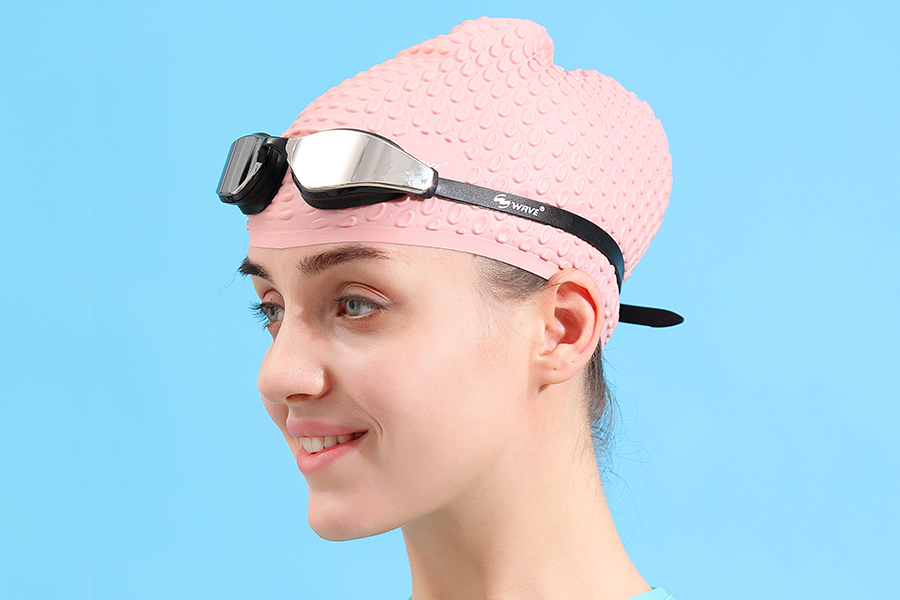
Junior and adult swim goggle worn with silicone cap in retail-ready presentation
Per-color MOQs mean every added colorway is an inventory commitment — design the assortment around proven bands first.

How should a wholesaler size an assorted junior buy?

Even splits across sizes and colors feel neutral and are wrong almost every time. Junior demand clusters by use occasion, and the occasions are not evenly distributed:

The learn-to-swim base (roughly 3–6 years)

Parent-driven, program-driven, and loss-heavy. Volume arrives in term-start blocks from swim schools and camp accounts. Sell-through per unit is steady but the absolute band is smaller, and a meaningful share of “demand” is replacement of goggles that simply vanish. Depth here should follow your confirmed program accounts, not a guess.

The school-age squad (roughly 6–12 years)

The volume band. Club and school teams buy in team orders, which is where wholesale junior programs are actually made — one club account can equal a retail shelf’s season. This band also tolerates less color risk: team orders often want two colorways in quantity, which plays directly with per-color MOQ economics.

A practical opening structure for a distributor testing the category: one proven junior fit model, four colors, weighted 60/40 toward the older band, held shallow, reordered from stock rather than committed deep. The alternative — three models in six colors at minimum depth each — multiplies your MOQ commitment while splitting each SKU below the velocity that justifies shelf conversation. For fitting logic between the bands, hand your accounts the children’s goggle size guide; it reduces the wrong-size return traffic that erodes wholesale margin at both ends.

What actually moves the wholesale price ladder?

Buyers negotiate unit price; factories move price on cost structure. The levers that genuinely change a junior goggle quote, roughly in order of impact:

Lever Direction Notes for junior programs
Order quantity per color Down with depth Concentrating volume into fewer colorways beats spreading across minimums — same budget, better ladder
Stock vs scheduled production Down on stock programs Buying from a factory’s ready inventory trades lead time for price and enables 48-hour dispatch
포장 형식 Down with simpler packs Bulk poly vs color box vs retail hangtag is a real per-unit cost step; match format to channel, not catalog
Component spec Up with features 성형된 김서림 방지, mirrored lenses, and interchangeable bridges each add cost; reserve for the squad tier
툴링 상태 Up with custom Existing junior molds amortize across all buyers; a dedicated tool loads its cost onto your program

Two of those levers — stock programs and packaging format — are where a smart wholesaler wins without asking for a discount. A manufacturer carrying ready-to-ship inventory lets you split one deep purchase into a first delivery plus a bonded second tranche, improving cash cycle at the same unit economics; 그만큼 ready-to-ship program page shows how factories typically structure that. And stepping the assortment into tiers — a basic bulk-packed band for program accounts, a feature-rich retail-packed band for shelf sales — buys you a lower average cost on the volume tier than a blanket spec would.

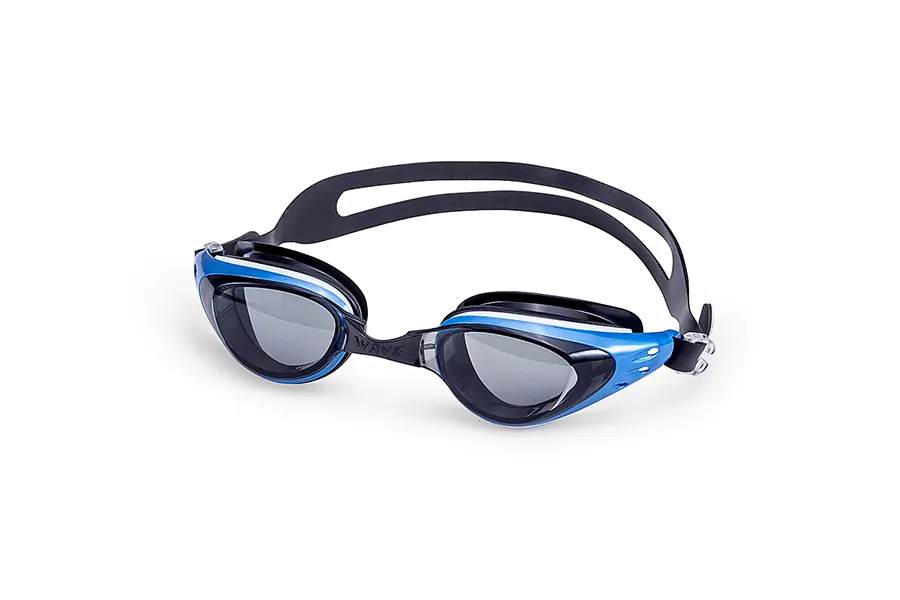
Wholesale junior swim goggle in low-profile racing fit for team program orders
Team orders concentrate volume into few colorways — the structure that earns the best price ladder.

What belongs in a wholesale receiving inspection?

Junior goggles fail in three predictable ways, and all three are catchable at receiving before they reach accounts:

  • Seal failure. Press the gasket against a smooth surface and check the rebound; a co-injected gasket should return to shape without a crease line. Adhesive-bonded copies show a visible seam and are the first thing to leak in the field. The manufacturing reason is covered in the co-injection and anti-fog construction guide.
  • Strap anchor weakness. Tensile the buckle junction on a sample lot — child use loads straps far past adult norms, and anchor pull-out is the classic junior warranty claim.
  • Coating inconsistency. On anti-fog or mirrored tiers, spot-check lens batches under steam; coating processes drift between production runs, and a mixed lot becomes a mixed reputation.

A factory running ISO 9001:2015 processes should supply the inspection report with the shipment — sealing, strap tensile, and anti-fog duration data — and the certificates behind its OEKO-TEX and CE/FDA claims should match the shipping entity. Agree the sampling plan (lot size, AQL level, who pays for re-inspection on a failed lot) in the purchase order rather than discovering it at the container. If the paperwork arrives only when you chase it, that is a process signal, not a paperwork preference — and it predicts how the next shipment, and the one after it, will be handled.

How should reorders protect a seasonal category?

Junior goggle demand is a calendar: program sign-ups, camp starts, swim-meet seasons, and retail holiday spikes that all land in narrow windows. The reorder plan has to be built around that calendar rather than around a generic stock turn. Three rules that hold across markets:

  • Commit shallow, replenish fast. Cover the first four to six weeks of a program window from your committed buy, then ride the factory’s stock-dispatch capability for the rest. A supplier quoting 30–60 day production cannot support this model; one with 48-hour dispatch on stock items can.
  • Lock color cadence before the season, not during it. Mid-season color changes restart MOQ clocks. Reorder the proven colorways and let next season’s assortment review be the place where new colors enter.
  • Keep one tier on the fast path. Whatever happens to the retail range, hold your program tier — the plain, 튼튼한, bulk-packed band — as a standing item. School accounts buy late and buy all at once, and being the distributor who can ship is worth more than being the cheapest quote in the RFQ pile.

Distributors comparing the full wholesale mechanics across goggle categories will find the broader structures in the 경기 고글 도매 가이드, and wholesalers sourcing a kids line under its own brand label should read the kids swim goggles manufacturer sourcing playbook — many of the same factories bundle junior, 경쟁, and adult tiers onto shared tooling and shipping, so the assortment decision is rarely confined to one shelf.

Building a junior goggle wholesale program? Vanguard produces junior and competition swim goggles on patent-protected co-injection lines, with 300-piece per-color MOQs and 48-hour dispatch on stock programs. 견적 요청 and compare the assortment math against your current program structure.

자주 묻는 질문

Is junior goggle MOQ per model or per color?

Per color in most factories, ~와 함께 300 pieces per colorway a common baseline for goggles that share existing junior molds. Size options within one color are often packable inside the same commitment, but confirm it model by model — that is the difference between a four-item and an eight-item minimum on the same assortment.

How deep should a first junior goggle buy be?

Deep enough to cover the confirmed program windows and roughly the first six weeks of retail demand, no deeper. Junior lines size out and season out; a factory with fast stock dispatch lets you correct within weeks, while slow-reorder suppliers turn a deep first buy into end-of-season clearance.

What is the best way to lower landed cost without cutting spec?

Concentrate volume into fewer colors, buy from the factory’s stock programs where timing allows, and match packaging format to the channel that receives it — bulk packs for team programs, retail packs only where the shelf demands them. Those three levers usually beat a headline discount negotiation on a wider assortment.

Do junior goggles need different documentation than adult SKUs at customs or retail?

Customs classification is usually the same, but retail and program channels apply kidswear-adjacent expectations to children’s products: OEKO-TEX 표준 100 materials reports and clear age labeling appear on more buyer checklists for junior SKUs than for adult ones. Carrying that file closes school and chain accounts that the adult line cannot bid into.

이 기사를 공유하세요

수영 장비 프로젝트를 시작할 준비가 되었습니다?

제품 사양을 보내주세요., 목표 수량, 및 타임라인. 우리 수출팀은 영업일 기준 1일 이내에 가격에 대한 답변을 드립니다., MOQ, 그리고 리드타임.

견적 받기 제품 찾아보기
맨 위로 돌아가기
빠른 견적이 필요합니다? WhatsApp에서 수출팀과 채팅하세요.