중국의 수영 및 다이빙 장비 브랜드 제조업체, 도매업자, 이후 OEM 프로젝트 1993.

제품 가이드

What Is a Dry Snorkel and How Does It Work? A B2B Product Primer

What Is a Dry Snorkel and How Does It Work? A B2B Product Primer

Open a carton of returned snorkels from a resort shop or an online storefront and the complaint sheet tends to read the same: water in the tube, water in the mouth, a valve that stuck shut. Most of those returns trace back to a purchasing decision made months earlier, when a buyer picked a snorkel type without understanding what the top of the tube actually does. A dry snorkel is not a marketing label. It is a specific mechanical design, and whether it belongs on your shelf depends on who your customers are and where they swim.

This primer explains what a dry snorkel is, how its valve behaves at the surface and under water, how the design differs from semi-dry and classic snorkels, and which checks belong on your spec sheet before you place an order. It is written for distributors, retail buyers and e-commerce sellers who need to stock the right snorkel family for the right channel, not for end users looking for swimming tips.

주요 시사점

  • A dry snorkel is defined by its top: a float valve that seals the tube when the tip goes under, backed by a purge valve at the bottom for water that enters past the mouthpiece.
  • Semi-dry snorkels deflect splash and wave wash but never seal; classic snorkels are an open tube with no protection at all.
  • The dry design sells best to beginners, boat-based snorkelers and rental fleets, because it removes the learned skill of clearing a flooded tube.
  • Judge a dry snorkel on valve seal consistency, mouthpiece compound, tube flexibility and bore size, not on how many colorways the factory offers.
  • In mask-and-fin set programs the snorkel is often the cheapest component but the most complained-about one, so its specification drives your return rate more than its unit price does.

What Makes a SnorkelDry”?

Three families of snorkel share the market, and the difference between them lives almost entirely at the top and bottom of the tube. A classic snorkel, sometimes called a wet snorkel, is an open J-tube: air in through the top, water in through the same opening whenever a wave or a duck dive floods it. A semi-dry snorkel adds a splash guard, a shaped cap with vents that breaks up spray and deflects wave wash, so less water enters, but the tube still floods if the tip goes under. A dry snorkel adds a float valve inside that cap: when the tip submerges, buoyancy lifts a seal against the opening and closes the tube entirely.

That single component changes the product’s job description. A classic snorkel assumes a user who knows how to blast-clear a flooded tube with a forceful exhale. A semi-dry snorkel assumes the same user but gives them fewer floods to clear. A dry snorkel assumes nothing: the valve does the clearing work that the user’s lungs would otherwise do, which is exactly why it dominates beginner-oriented retail and rental programs.

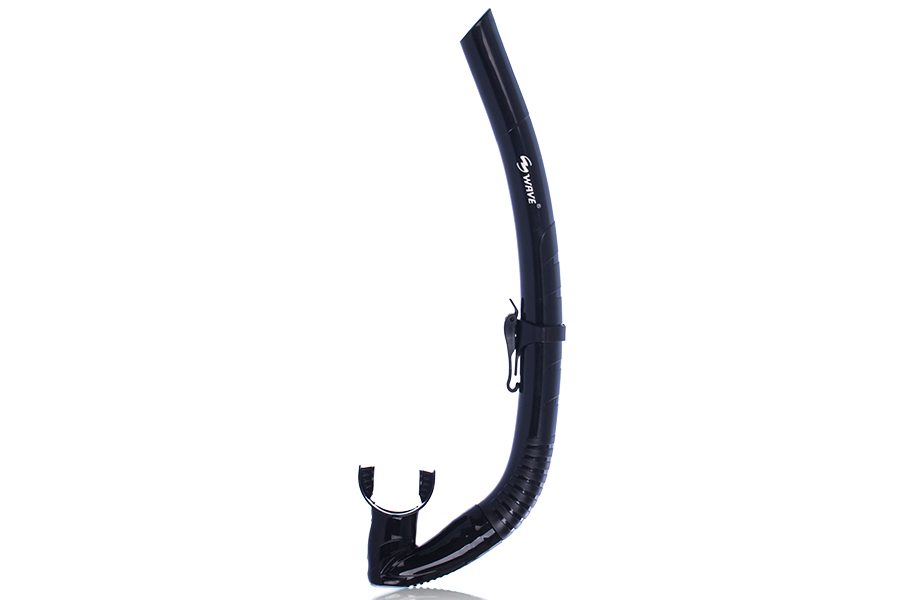
Black classic open-top snorkel with a rigid curved tube and corrugated flexible lower section
A classic open-top snorkel: one continuous tube, no splash guard and no float valve.

The fourth family buyers sometimes confuse with these three is the full face snorkel mask, which encloses the whole face and breathes through a separate chamber. It solves a different problem and carries a different compliance conversation, so this primer keeps it out of scope; the comparison that matters for a snorkel line sheet is classic against semi-dry against dry.

How Does the Dry Top Valve Work Under Water?

The mechanism is deliberately simple, which is why it survives salt, sand and rental abuse better than buyers expect. Inside the top cap sits a float, usually a sealed disc or ball, mounted so it can travel a few millimetres vertically. At the surface, gravity and the float’s own weight hold the seal away from the opening, and air moves freely. The moment the tip goes under, buoyancy pushes the float up against a seat and closes the air path. When the user resurfaces, the float drops, the seat reopens, and the first breath is clean air rather than a mouthful of sea.

Two details separate a good dry top from a cheap one. The first is the seal material and its seat geometry: a soft silicone seal on a well-machined seat closes at low pressure and releases cleanly, while a hard seal can weep or stick. The second is the cage around the float. It has to keep sand and debris out of the travel path without restricting the float’s movement, and it has to survive being dropped on a boat deck. Both details are visible on a cut sample, which is why serious buyers ask for one.

Below the mouthpiece sits the second half of the system, the purge valve: a one-way membrane that lets exhaled water drain out of the housing but does not let water back in. Even with a perfect dry top, a small amount of water enters past the lips or condenses inside the tube, and the purge valve is what keeps that from accumulating into a gulp. A dry snorkel is therefore a two-valve product, and a specification that only mentions the top valve is incomplete.

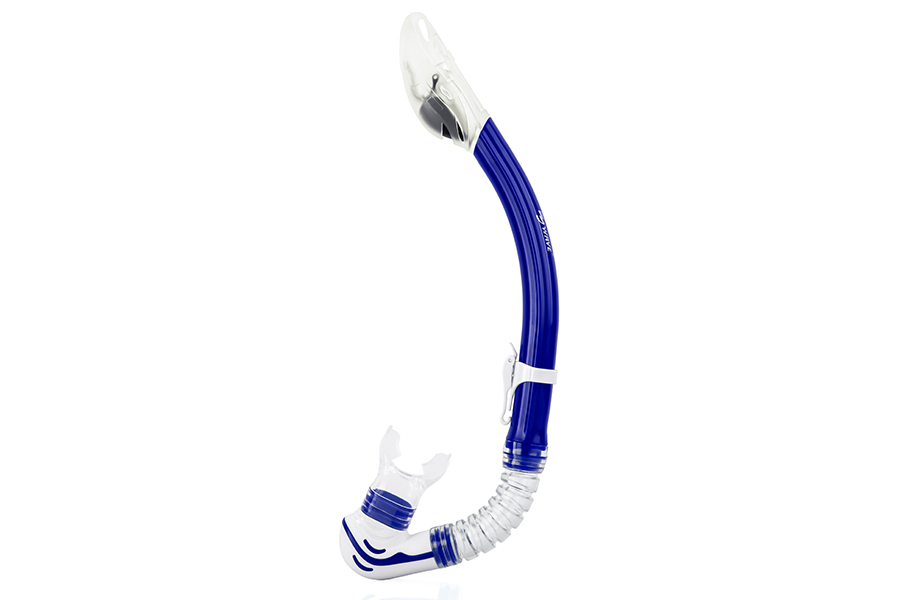
Blue dry snorkel with a transparent dry-top float valve, flexible corrugated tube and clear silicone mouthpiece
A dry snorkel: transparent dry-top cap with the float valve visible, corrugated drop section and silicone mouthpiece.

Dry, Semi-Dry or Classic: Which Family Sells Where?

Channel fit is the practical question, and it follows from the mechanism rather than from price. The table below is the short version of how the three families behave in the channels where snorkels actually sell.

Attribute Classic (wet) Semi-dry Dry
Top design Open tube Splash guard with vents Float valve that seals on submersion
Water entry when tip submerges Floods completely Floods, slower Sealed, minimal ingress
Purge valve at bottom Usually absent Common Standard
Skill required from the user Blast clearing every flood Occasional clearing Little to none
Component count and cost band 최저 Middle Highest of the three
Strongest channels Training clubs, freedive entry, price-led bulk Sport retail, experienced recreational buyers Beginner retail, resort and rental, boat tours, 전자상거래
Typical complaint driver Flooding expected but resented by novices Flooding in chop despite the guard Valve sticking or weeping when poorly made

Resort and rental operators buy dry snorkels because their customers get one twenty-minute briefing and no practice session; a valve that clears itself is the difference between a good review and a refund at the desk. Beginner-focused retail and e-commerce follow the same logic, amplified by review culture: the phrasewater in my mouthin a product review is a conversion problem for every unit you still hold. Sport retail with an experienced customer base sells semi-dry happily, because those users clear a tube without thinking about it and prefer the lighter top and lower price. Classic snorkels survive in training and club programs, and in price-led bulk tenders where the specification is written around cost per piece.

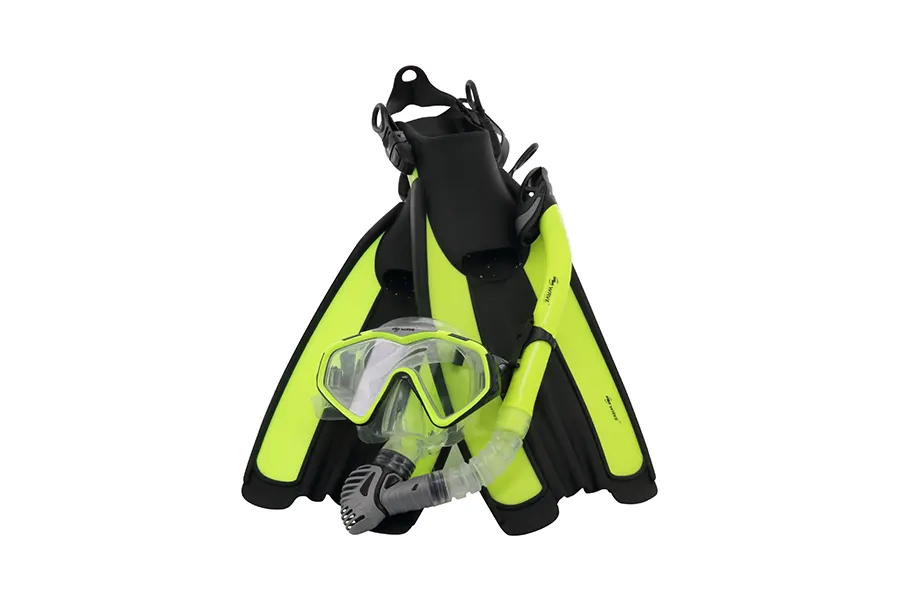
Neon green snorkeling set with clear-lens mask, dry-top snorkel and adjustable open-heel fins
In set programs the snorkel travels with a mask and fins, and its valve quality sets the return rate for the whole box.

What to Check on the Spec Sheet Before You Order

Start at the top and work down. Ask how the valve seal is tested and at what sample rate: a submersion seal test on a defined percentage of each lot is the minimum, and the result belongs in the inspection report rather than in a sales email. Ask for the seal material and the seat design, and ask to see a cut sample so your QC can watch the float travel. A valve that seals perfectly on day one and sticks after a week in salt water is a cage-tolerance problem, and tolerances are only visible on a cut part.

Then check the mouthpiece and the drop section. A food-grade silicone mouthpiece with a soft flange is the baseline for any mid-market program; PVC mouthpieces belong to the bottom price tier and show up in complaints about taste and lip fatigue. The corrugated flexible section between tube and mouthpiece matters more than buyers assume: it lets the mouthpiece drop away from the face when the user is not breathing through it, which is the difference between a snorkel that sits comfortably and one that pulls at the mask strap. Bore diameter is the quiet specification: too narrow and breathing feels restricted, too wide and the tube becomes bulky and slow to clear. Your factory should state the bore and the resulting breathing resistance rather than leave it to guesswork.

Finish with the commercial layer: mask clip or holder design, colorway depth per program, packaging format (bulk polybag, retail color box or hang card), and the compliance documents that travel with the goods. Vanguard’s snorkel range runs on the S-61 series tooling with silicone and thermoplastic options, and the same documentation discipline applies as on its mask lines: ISO 9001:2015 quality management, BSCI social compliance, and CE, FDA and OEKO-TEX Standard 100 coverage where the destination market requires it. If you are new to reading those documents, the wholesale buyer checklist at key considerations for wholesale snorkel gear buyers is a useful companion to this primer.

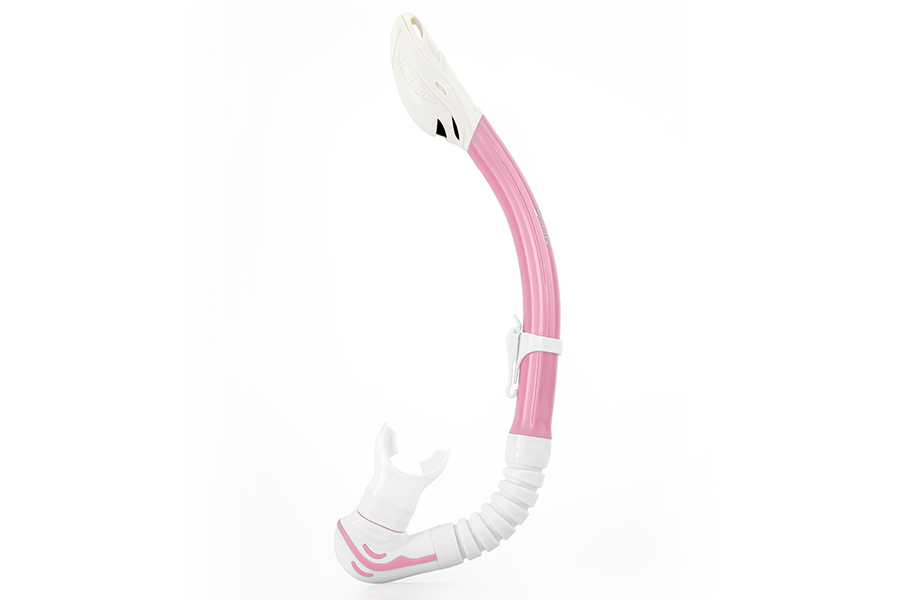
Pink snorkel with a covered top cap, flexible corrugated tube and white silicone mouthpiece
Colorway depth is a retail decision, but the valve and mouthpiece specifications underneath it are a quality decision.

How the Dry Snorkel Fits Into Sets and Private Label Programs

Few snorkels sell alone. In most retail programs the dry snorkel ships inside a mask-snorkel set or a mask-snorkel-fin set, and that changes how you should evaluate it: the snorkel becomes the component your customer handles most and understands least. A set with an excellent mask and a weeping dry top inherits the dry top’s reviews. This is why set buyers specify the snorkel with the same rigor as the mask, and why the snorkeling set category is where most volume actually moves.

Private label programs add a branding layer on top of the mechanism. Tube printing, mouthpiece color matching and retail box artwork are all standard customization points, and they interact with lead time: a branded tube color that is not in the factory’s stock palette moves the order from stock fulfillment to production scheduling. On minimum order quantities, the anchor to plan around is the mask and fin lines: at Vanguard the working MOQ is 300 pieces per color for masks, goggles and fins, and a set program is normally built around those lines with the snorkel colorway matched to them. Standalone snorkel programs are quoted per order against the existing S-61 tooling, which is also the reason a dry snorkel with your logo on it does not automatically mean new tooling cost.

If your program is still taking shape, the faster route is usually stock models with your branding rather than a fully custom tube, because it keeps sampling short and lets you test colorway depth against real sell-through before you commit to a mold change. 그만큼 snorkel range page shows the current stock families, and the attachment and fit guidance in how to attach a snorkel to a mask is the kind of after-sales content that reduces support tickets for set buyers.

Quality Checks That Keep Dry Snorkels Out of the Return Bin

The failure modes of a dry snorkel are few and predictable, which makes them cheap to test for. Valve sticking shows up in a submersion cycle test: seal, release, seal, release, several hundred times on a sample basis, ideally after salt exposure. Weeping shows up in a static seal test with the tube inverted under a head of water. Purge valve problems show up as backflow in a simple blow-and-suck check. Mouthpiece and tube problems show up in tensile and tear testing of the silicone compound, and in a chlorine and UV exposure sample for programs destined for pool-heavy markets.

Ask for these results in the shipment documentation, not as a verbal assurance. A factory that runs raw material inspection, precision molding, standardized assembly and performance lab testing as discrete gates can hand you a first-article and an out-of-box inspection report with real numbers in them; a trading company assembling cartons from three subcontractors cannot. That documentation gap, more than the unit price, is what separates a snorkel program that renews from one that ends after the first season.

Planning a dry snorkel line or a mask-and-snorkel set program? Send your target channel, colorway depth and destination markets, and we will come back with the matching stock models, the specification sheet for the valve and mouthpiece, and the sampling timeline for your branding. 견적 요청 or compare the current ready-to-ship snorkel stock first.

자주 묻는 질문

Is a dry snorkel the right choice for beginner-oriented retail?

예, and it is the single strongest fit in the category. Beginners have not learned to blast-clear a flooded tube, so a float valve that seals on submersion removes the main source of first-use frustration. That is why dry tops dominate resort rental fleets, boat tour kits and entry-level e-commerce listings.

What is the difference between a dry top and a splash guard?

A splash guard deflects spray and wave wash but leaves the tube open, so it still floods when the tip goes under. A dry top contains a float valve that physically seals the opening on submersion and reopens at the surface. The guard changes how much water enters; the valve changes whether water can enter at all.

Can a dry snorkel be used for scuba diving?

아니요. A snorkel of any type is a surface-breathing device and is not part of scuba life-support equipment; divers at depth breathe from a regulator. Dry tops are designed for face-down surface swimming, and scuba programs use purpose-built snorkels or none at all. Position dry snorkels for snorkeling and surface use in your listings to keep expectations and returns in line.

Do dry top valves fail, and how is that controlled in production?

The realistic failure modes are a seal that weeps and a float that sticks after sand or salt ingress, both of which are tolerance and material problems rather than design flaws. They are controlled with submersion cycle testing on a defined sample rate, cut-sample checks of the cage and seat, and tensile testing of the silicone compound, with results recorded in the first-article and out-of-box inspection reports.

How should a first order handle colorways and packaging?

Start narrow: two or three colorways in the packaging format your channel actually sells in, whether that is a retail color box, a hang card or bulk polybag for rental operators. Depth per colorway beats breadth across colorways on a first order, because it lets you read sell-through before you fund more tube colors, and it keeps the branding conversation on stock tooling instead of new molds.

이 기사를 공유하세요

수영 장비 프로젝트를 시작할 준비가 되었습니다?

제품 사양을 보내주세요., 목표 수량, 및 타임라인. 우리 수출팀은 영업일 기준 1일 이내에 가격에 대한 답변을 드립니다., MOQ, 그리고 리드타임.

견적 받기 제품 찾아보기
맨 위로 돌아가기
빠른 견적이 필요합니다? WhatsApp에서 수출팀과 채팅하세요.