Dive shops and water-sports distributors are adding freediving to their boards as the category keeps pulling new participants — and the first product question every buyer asks is the same: why are these fins so long? The question is not cosmetic. Blade length is the defining engineering choice of the category, and it drives everything downstream in your assortment planning: who buys the product, how it ships, how it merchandises, and which failure modes generate returns.
This primer covers the product mechanics a category buyer actually needs — what separates a freediving fin from the scuba and snorkeling models already on your shelf, why the long blade exists from a physics standpoint, how blade materials and foot pockets segment the line, and what sizing behavior to expect at retail. It is written for buyers new to freediving, not for competitive divers, so every section ends at a decision you have to make rather than a technique detail you do not.
Key Takeaways
- Freediving fins pair an elongated blade with a full-foot pocket; length is an oxygen-economy feature, not a style choice.
- The long blade converts each kick into more thrust and a longer glide, which is the core benefit freedivers pay for.
- Blade materials — polymer, fiberglass, carbon fiber — set the price ladder of the category from entry to premium.
- Interchangeable blade systems let a shop stock foot pockets in sizes and blades in performance tiers instead of doubling inventory.
- Fit runs generous on many long-blade models; expect size-down guidance in a meaningful share of retail reviews and plan your size curve accordingly.
What Defines a Freediving Fin
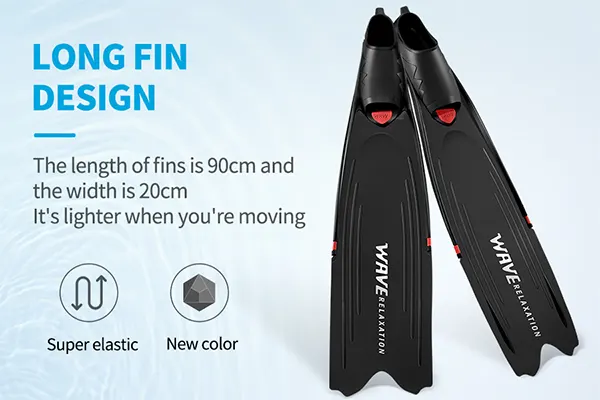
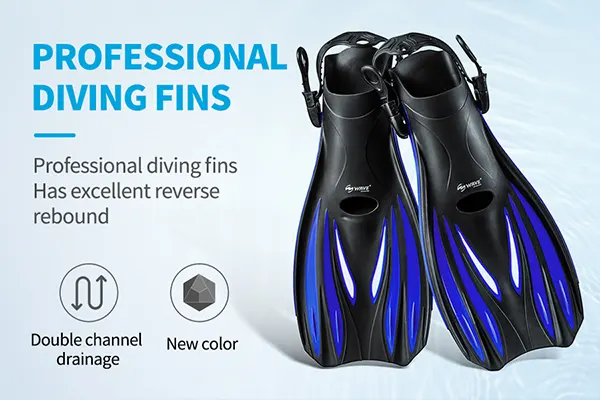
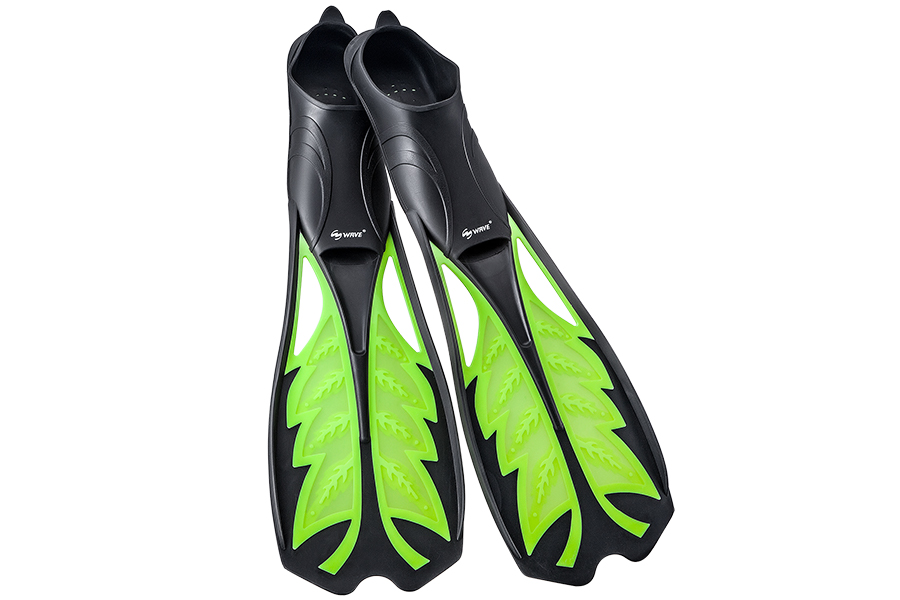
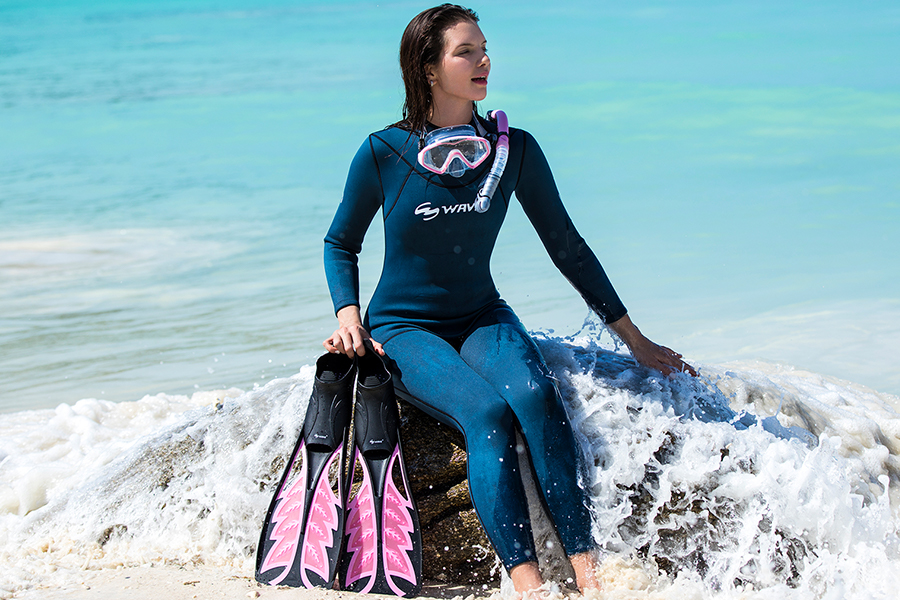
A freediving fin is built around two components: a long, flexible blade and a foot pocket that the diver wears barefoot or over a thin sock. Unlike open-heel scuba fins with adjustable heel straps and heavy buckles, most freediving pockets are full-foot designs molded in soft rubber or thermoplastic — lighter, more hydrodynamic, and faster to kick with. The blade itself is typically a smooth parabolic surface, sometimes with side rails that stiffen the profile and channel water flow along the blade edge.
Our own line follows this architecture across the F-68xx series, including compact travel formats and long-blade models with an S-bend spine that curves the blade slightly downward through its length. That bend is a deliberate tuning choice: it keeps the blade’s working surface angled into the kick cycle, which smooths the load on the diver’s ankles through each stroke. Reviews on these long models consistently flag durability and the included mesh carry bag as purchase drivers — practical details worth mentioning in your own product copy.
Why the Blades Are So Long: The Physics
Freediving is an oxygen-economy sport. Divers descend on a single breath, so every joule wasted on an inefficient kick is time cut from the bottom of the dive. A longer blade moves more water per kick, converting the same leg effort into greater thrust, and — more importantly — it extends the glide phase between kicks, when the diver moves without expending energy at all. Shorter blades demand a faster kick cadence for the same speed; long blades trade cadence for amplitude, letting the diver settle into a slow, low-effort rhythm.
The second reason is muscle loading. A freediver descends head-first and returns vertically, so the fin works through the full stroke in both directions. A long, progressively flexible blade stores energy as it bends and releases it at the end of the kick — the same principle a diver feels as a slight snap of acceleration. Stiff, short blades cannot store meaningfully more energy mid-kick, which is why the length and the flex pattern are engineered together. This balance between blade flexibility and thrust efficiency is exactly the engineering problem our fin portfolio is tuned around, using high-resilience polymers in the standard tier and carbon fiber laminates at the top of the range.
For a buyer, the takeaway is that blade length is the product’s positioning statement. A freediving fin is long because its user is counting seconds of breath-hold — and that same length is what your customers see on the peg wall, what your cartons measure in the container, and what your staff explain in every first-time fitting.
How Freediving Fins Compare with Scuba and Snorkeling Fins
If you already stock fins for other water sports, the fastest way to place freediving models is side by side with what you know:
| Attribute | Freediving Fins | Scuba Fins | Snorkeling Fins |
|---|---|---|---|
| Blade length | Longest — engineered for glide efficiency | Medium, broader and stiffer for gear drag | Shortest — ease of use at the surface |
| Foot pocket | Full-foot, barefoot fit | Open-heel with strap, worn with boots | Full-foot or adjustable, comfort-first |
| Blade materials | Polymer, fiberglass, carbon fiber | Polymer and rubber compounds | Polymer and soft TPR |
| Buyer priority | Performance per breath, weight, fit | Power against current and gear | Comfort, packability, price |
| Retail price band | Widest — entry polymer to premium carbon | Mid to upper-mid | Entry to mid |
The overlap is smaller than it looks on paper. A customer who tries to snorkel all afternoon in stiff long blades will come back frustrated, and a freediver in short travel fins will feel the difference within one descent. If you want the full segmentation logic for your shelf planning, our breakdown of freediving fins vs scuba fins vs snorkeling fins and the broader diving fins types explained guide cover the crossover cases in more detail.
Blade Materials: A Quick Orientation
Materials are the price ladder of the freediving category, and three rungs matter for assortment planning:
- Polymer (high-resilience thermoplastic): the entry and volume tier. Durable, UV-stable, tolerant of rental abuse, and the least expensive to produce. Stiffness decays slowly over seasons of use, which matters for dive schools that buy in bulk.
- Fiberglass composite: the middle tier. Lighter than polymer with a snappier energy return, priced between the two extremes. Often the first “upgrade” purchase for progressing freedivers.
- Carbon fiber: the premium tier. The best stiffness-to-weight ratio available, delivering the most efficient kick cycle for trained divers — and the highest price point on your wall, typically reserved for enthusiasts and competition-adjacent customers.
At the factory level, we produce both the high-resilience polymer blades and carbon fiber versions, which keeps the two ends of the ladder consistent in fit and finish. The material question also interacts with your market: resort and school channels lean polymer, specialist freediving shops carry the full ladder. Sizing and construction follow the same pockets across tiers, so customers can upgrade blades without changing the fit they already trust.
Foot Pockets, Rails, and Interchangeable Blades
Two construction details shape your inventory economics. The first is the pocket itself: a comfortable, anatomically molded pocket with a soft edge reduces chafing during long sessions and is one of the most-cited comfort features in customer reviews. The second is the attachment system. On many performance fins, blades mount to the pocket through rails or screws, which makes them interchangeable — a shop can stock a full run of pocket sizes and a smaller set of blade tiers, then assemble to order instead of pre-buying every combination.
Interchangeability also future-proofs the assortment. When a customer progresses from polymer to fiberglass or carbon, they replace the blade, not the whole fin — a retention mechanic that specialist retailers use to keep customers in the ecosystem. For wholesale buyers, that means blade-only SKUs deserve their own line in your opening order rather than being treated as accessories.
Sizing and Fit: What Retail Feedback Shows
Fit drives returns in this category more than any other variable, so the size curve on your opening order deserves attention. On our own long-blade models, customer reviews frequently mention that sizing runs generous and that many wearers end up choosing one to two sizes down from their usual shoe size — feedback consistent enough that our product listings carry explicit size-down guidance. Soft pockets stretch slightly with use, and a pocket that fits “fine” on day one often loosens after a few weeks of sessions, so erring toward the snugger size at the fitting counter prevents the most common return reason.
Stiffness is the second fitting variable. Heavier or stronger divers load a blade harder and often prefer a firmer flex; lighter divers extract more performance from a softer blade that bends fully at lower kick force. If your staff cannot test every combination, a reasonable default is to anchor the size range to your local customer profile and offer one flex option at launch rather than a full stiffness matrix — then let sell-through data argue for expansion.
Who Buys Freediving Fins: A Category Snapshot
The buyer profile is narrower than snorkeling’s and skews committed. Review data from our own long-blade listings (collected across 2021–2022 on Amazon) shows the freediving fin customer base at roughly 80% male, with a strong satisfaction trend around 4.5 stars — the highest of the fin types we track, alongside frequent praise for blade durability. Treat those figures as directional category signals rather than current-year market statistics: they tell you who is buying and how demanding they are, not the size of the 2026 market.
The practical read for a distributor: freediving customers research before they buy, recognize material tiers by name, and reward stores that carry a credible ladder from polymer to carbon. Pairing the hardware with category-adjacent content — what the sport is, why the gear looks the way it does, how it differs from scuba — converts that research behavior into shelf trust. Our introduction to freediving and its benefits is written for exactly that hand-off, if you need a reference point for your own category education pages.
Frequently Asked Questions
Why are freediving fins longer than scuba or snorkeling fins?
Long blades move more water per kick and stretch the glide phase between kicks, which conserves oxygen on a single breath-hold dive. Scuba divers carry tanks and kick against gear drag, while snorkelers stay at the surface, so neither needs the efficiency that length provides — and both pay a maneuverability price for it.
Do freediving fins run true to size?
Many long-blade models run generous, and reviews on ours consistently recommend sizing down one to two steps from street-shoe size. Pockets also soften slightly with use, so a snug fit on day one usually becomes the correct fit after the break-in period — build size-down guidance into your product pages and staff training.
What is the difference between polymer, fiberglass, and carbon blades for retail?
Polymer is the durable, affordable volume tier suited to schools and rentals; fiberglass is the lighter mid-tier upgrade with faster energy return; carbon fiber is the premium tier with the best stiffness-to-weight ratio for trained freedivers. Most specialist shops stock the full ladder, while general water-sports retailers start at polymer and add tiers as demand proves out.
Are interchangeable blades worth stocking for a small shop?
Yes, because they compress your inventory. You stock foot pockets across sizes and blades by performance tier, then assemble to order instead of pre-buying every size-material combination. Customers who upgrade later buy blade-only SKUs, which keeps them returning to your store instead of replacing the whole fin elsewhere.
Can a dive shop sell freediving fins to casual snorkelers?
Occasionally, but it is not the target customer. Long, stiff blades demand a stronger kick and feel cumbersome during hours of surface snorkeling, so mismatched sales tend to become returns. Position freediving fins for customers who breath-hold dive or free-dive train, and route casual snorkelers toward shorter, softer travel models.