Blade stiffness is the specification a fin shelf gets wrong most often, because it is invisible on a hangtag and buyers argue about it in a vocabulary that does not map to what actually sells. A soft blade and a stiff blade can look identical from three feet away, yet they serve different divers, turn at different velocities, and carry very different margin and return profiles for the retailer stocking them. Getting the stiffness mix right is a merchandising decision disguised as a performance one.
This guide is for the buyer deciding how to weight a freediving fin range across soft, medium, and hard: what each grade physically does to the kick, which diver level and application actually demands it, how material drives the feel and the price, and which grade tends to move units versus hold margin on a real shelf.
Key Takeaways
- Blade stiffness governs how much effort a diver must apply to load the fin: soft blades load early and suit smaller legs or high-cadence kicking; stiff blades store more energy but demand strength and a slow, powerful kick.
- Material drives the feel more than the label — a thin thermoplastic blade can feel softer than a thick one, and carbon fiber is prized because it can be both stiff and light with a fast recovery, not because “stiff equals carbon.”
- For most retail shelves, medium stiffness is the turnover band: it forgives fit and technique errors, which is exactly what keeps return rates down for a general customer base.
- Hard and competition-grade blades are a margin and authority play, not a volume play — they sell to trained divers and clubs, move slowly, but rarely get returned for “too hard” once correctly fitted.
- A balanced three-grade range, weighted toward medium, lets you serve the beginner-to-intermediate majority while keeping soft and hard as deliberate options rather than dead stock.
What does blade stiffness actually do to the kick?
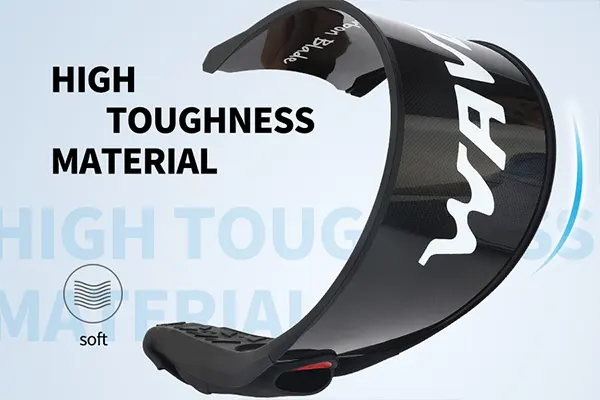
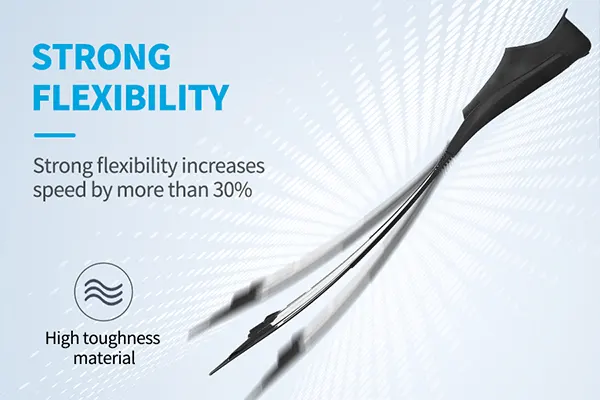
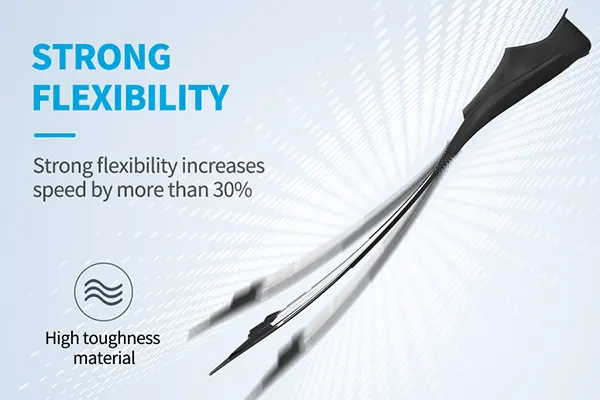
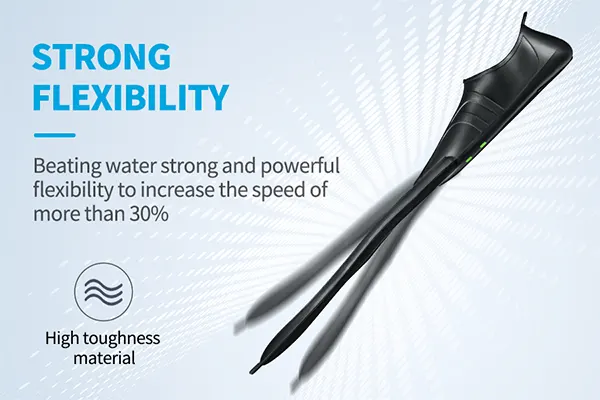
A freediving fin works by bending and then snapping back. As the diver drives the leg down, the blade loads — it bends, storing energy — and as the leg finishes the stroke, the blade releases that energy and straightens, pushing water. Stiffness determines how hard the diver has to push to bend the blade and how sharply it recoils.
A soft blade loads with little effort, so it feels easy at low speed and rewards a quick, light kick, but it saturates early — a powerful diver can over-flex it and lose the recoil efficiency. A stiff blade resists loading and only “comes alive” under a strong, deliberate stroke, returning more stored energy but punishing a weak or fast-cadence kicker with felt resistance and leg fatigue. Medium sits between the two, which is why it is the most forgiving and, for a general retail audience, the most saleable. When you evaluate freediving fins stiffness across a supplier range, judge it against the diver’s leg strength and kick tempo, not against a single “power” number, because the same flex rating behaves differently on a small-legged beginner and a muscular spearo.
How does material drive the stiffness a customer feels?
Retailers often assume stiffness is a design dial independent of material, but the two are entangled, and the price ladder follows material more than marketing copy.
Thermoplastic and rubber blends
Injection-molded plastic and TPR blades are the entry and mid workhorses. Their flex is a function of blade thickness and geometry — a thin, long plastic blade can feel surprisingly soft, a thick short one feels stiff. They are cost-effective, durable, and forgiving, which is why they dominate the volume band of most shelves. The fins materials guide covers how rubber, TPR, silicone, and composites age under repeated flex.
Glass fiber and carbon fiber
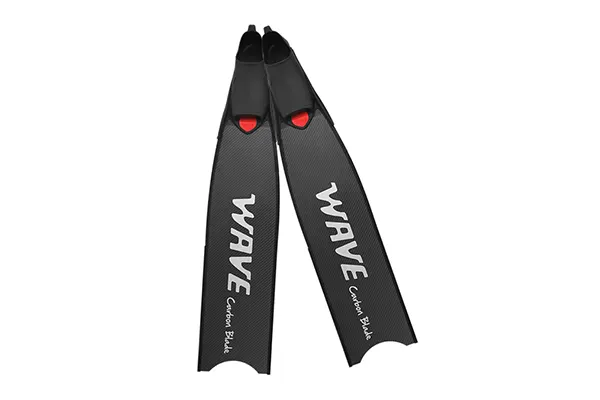
Composite blades change the equation: carbon fiber in particular can be made stiff and light simultaneously, with a fast, energetic recovery that a plastic blade of the same stiffness cannot match. That is why the long, high-performance end of a freediving range is where carbon lives — and where your unit cost and your customer’s expectations both step up. The economics and verification of that tier are laid out in the carbon freediving fins sourcing guide.
Which stiffness sells best on a retail shelf?
“Sells best” splits into two questions a retailer must not conflate: what turns units fastest, and what holds margin. The grades answer them differently.
| Grade | Suits diver | Typical material | Shelf behavior |
|---|---|---|---|
| Soft | Beginner, small legs, high cadence, travel | Thin plastic / TPR | Steady units, low-to-mid margin, occasional “too floppy” returns |
| Medium | Recreational to intermediate, most buyers | Plastic, some glass | Highest turnover, lowest return rate, the shelf anchor |
| Hard | Trained, strong, deep, spearo, competition | Glass / carbon | Slow units, high margin, authority signal, low returns when fitted right |
The honest answer on velocity: medium wins. It forgives the fit-and-technique errors that a general customer base makes, so it both sells more often and comes back less. Soft grades sell to a real but narrower slice — travel, warm-water, and beginners with lighter legs — and hard grades are a margin and credibility play aimed at trained divers, clubs, and spearfishing-adjacent customers who will pay for a stiff carbon blade and rarely regret it. A range weighted roughly 20/60/20 across soft/medium/hard covers the market without stranding the extremes, adjusting for whether your channel skews resort or dive-shop.
How does stiffness interact with fin length and type?
Stiffness does not exist alone; it is read together with blade length and the fin’s overall configuration. A long blade presents more surface, so a “medium” rating on a long freediving fin can feel stiffer under the foot than the same rating on a short travel fin, because there is more material to load. Split and short-blade designs (common in snorkeling and travel fins) change the loading curve again. That is why a stiffness conversation with a supplier should always be tied to a specific model, not a grade label — the types of snorkeling fins guide helps you keep blade geometry and stiffness as one decision rather than two.
For the training and depth market, longer stiffer blades paired with an open-heel foot pocket are the norm; for the travel market, shorter softer blades on a full-foot pocket dominate. Cross-referencing stiffness against heel type is essential, or you will sell a beginner a hard long blade they physically cannot drive.
One merchandising consequence follows directly: stiffness cannot be marketed as a standalone attribute on the shelf, because the customer experiences it as a whole-fin feel. A display card that says only “medium flex” without the blade length and heel type next to it will generate exactly the mismatched sale that becomes a return. Group the range by use case — travel, recreational, training — and let each use case carry its own sensible stiffness default, rather than asking a beginner to reason about flex ratings across six models of differing length.
How do you verify stiffness claims before you commit an order?
Stiffness is the specification most likely to be described loosely on a spec sheet, so treat it as something to test, not to trust.
- Order physical samples across the grade band. The only reliable read on a blade’s flex is to load it by hand and watch its recovery. A supplier supporting stock samples in 2-7 days lets you do that before a container.
- Check the flex rating against the model, not the material claim. Ask what the blade does at the size you will stock — a “stiff” label on a short blade is not the same feel as “stiff” on a long one.
- Confirm durability of the flex. A blade that feels medium out of the mold can soften permanently after a season of load if the material or bond is poor. Receiving inspection should include a flex-and-recovery spot check; the process is detailed in the fins quality testing guide covering blade flex and strap durability.
Where a supplier holds stock grades you can pull from, testing across a stiffness range costs you days instead of weeks; the ready-to-ship program shows how factories structure that for buyers validating a line before committing.
How should a retailer structure a stiffness range?
Treat the three grades as one merchandising system rather than three separate buys.
- Make medium the depth of the shelf. It is where units and low returns overlap, so weight inventory here and reorder it fastest.
- Hold soft as a targeted niche. Stock it for travel, warm-water, and beginner accounts — shallow, in the sizes your channel actually moves.
- Use hard as the premium anchor. Keep it present even if it turns slowly; a stiff carbon blade on the wall signals that the shop is serious and pulls the trained diver in, then converts them to the medium models that do not suit them yet.
Compare the full stiffness range and material options against your current assortment on the freediving fins category page, and use the grade-to-channel logic above when you decide where to commit depth.
Frequently Asked Questions
Which freediving fin stiffness sells the most?
Medium, by a wide margin on a general retail shelf. It is the most forgiving of fit and technique errors, which is exactly what a recreational customer base produces, so it turns faster and comes back less than either soft or hard grades. Soft and hard serve narrower, more intentional segments.
Is a carbon fiber fin always stiffer than a plastic one?
No. Carbon’s advantage is that it can be stiff and light at once with a fast recovery, but a thin carbon blade can be tuned soft and a thick plastic blade can feel stiff. Judge the flex rating of the specific model rather than assuming the material label dictates the feel.
Should a beginner be sold a soft fin or a medium fin?
Usually medium, unless the diver has genuinely light legs or is buying for high-cadence warm-water swimming. A soft fin is easy to load but saturates quickly and teaches poor stroke efficiency; medium gives a beginner room to develop strength without the fin feeling like dead weight or over-flexing.
How do I check a supplier’s stiffness claims are real?
Order physical samples across the grade band and load each blade by hand, watching its bend point and recovery. Spec-sheet stiffness is the loosest description on a fin sheet, so tie the rating to the exact model and size you will stock, and include a flex-and-recovery spot check in receiving so a “medium” that softened in the mold does not become your returns problem.