Ask three factories to quote the same freediving fin and you will rarely get three comparable numbers. One quote covers the blade only, another bundles the foot pocket, a third hides mold amortization inside a per-piece price that collapses the moment your order size changes. For wholesale buyers planning a season of fins inventory, the quote sheet is where margin is won or lost — long before a single pair reaches a shelf.
This breakdown explains how blade material shapes the wholesale price of freediving fins, which cost components sit inside a factory quotation, and how volume tiers, packaging choices, and hidden landed-cost items move the final number. The goal is practical: after reading it, you should be able to line up competing quotes and see exactly where they differ. Every benchmark below reflects the standard commercial terms offered by established Chinese fins manufacturers, including the MOQ and lead-time structure Vanguard applies to its own freediving fins wholesale programs.
Key Takeaways
- Blade material is the dominant cost driver: thermoplastic, fiberglass, and carbon fiber define three distinct price tiers that should map to three distinct slots in your catalog.
- Standard fins orders run on an MOQ of 300 pcs per color — the same benchmark Vanguard applies to masks and goggles, which simplifies multi-category programs.
- Repeat orders of standard private label models carry no mold fees; tooling cost is a first-order item, not a permanent tax on the program.
- Stock samples ship in 2–7 days, custom prototypes in 15–30 days, and first mass production in 30–60 days — pricing negotiations should happen alongside this timeline, not before it.
- A comparable quote must state the price basis (FOB or EXW), what packaging and compliance documents are included, and who owns the mold.
What Cost Components Sit Inside a Freediving Fins Quote?
A per-pair factory price looks simple because it is an average of several very different cost behaviors. When you decompose it, six components matter — and each one responds differently when you change order size, materials, or branding.
| Cost Component | What It Covers | How It Behaves at Volume |
|---|---|---|
| Blade material | Raw polymer or fiber laminate for the blade itself | Falls slowly with volume — material has a price floor set by the laminate grade |
| Foot pocket material | TPE or rubber injection for the pocket the blade mounts into | Modest volume curve; durometer and skin-safe grades add cost |
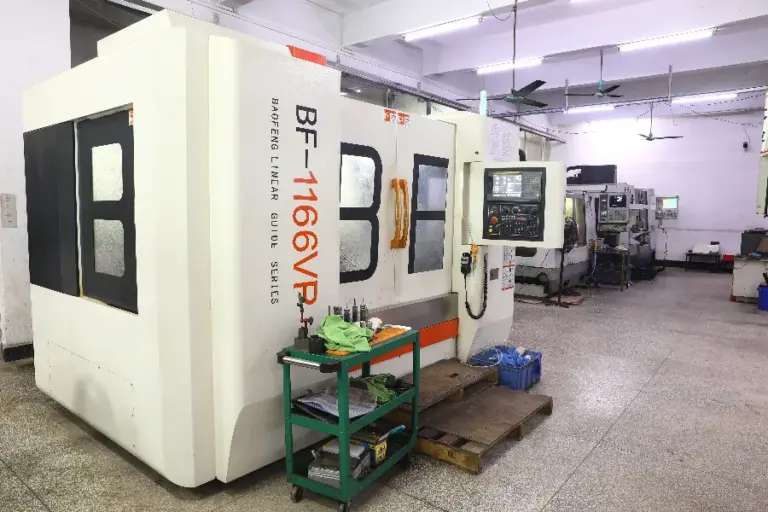
| Mold and tooling | CNC-machined tooling for custom blades or pocket geometry | One-time cost amortized over the program; waived on repeat orders of standard private label models |
| Assembly and finishing | Blade-to-pocket bonding, rail fitting, cosmetic inspection | Improves with line utilization — a reason factory scale matters |
| Packaging | Poly bag, printed insert, color box, or hang card | Wide cost range by format; print runs reward consolidated volumes |
| Compliance and documentation | Quality inspection reports (FAI/OQC), certification copies, digital asset pack | Mostly fixed per order — cheap insurance against customs and returns disputes |
Two structural notes on this table. First, factories with their own mold shops price tooling transparently, while trading companies often bury it — which is why identical-looking quotes can diverge wildly on a second order. Second, the assembly line is where a manufacturer’s real scale shows. A factory running multiple production lines and dozens of injection machines absorbs an urgent order without displacing your slot, and that scheduling stability is itself part of the price you are buying.
How Does Blade Material Move the Wholesale Price Per Pair?
Material tier is the first question any factory asks before quoting, because it changes the laminate, the process, and the reject rate. Three tiers cover the market, and a healthy wholesale assortment usually stocks all three rather than betting the program on one.
| Material Tier | Relative Cost Position | What the Extra Money Buys | Retail Margin Logic |
|---|---|---|---|
| High-resilience thermoplastic | Entry tier — lowest per-pair material cost | Durability, tolerance for rental and training abuse, simple logistics | Volume and turns, not margin percentage |
| Fiberglass composite | Mid tier — meaningful step up from plastic | Softer snap, better energy return, more forgiving of rough handling than carbon | The margin workhorse for advancing freedivers |
| Carbon fiber | Premium tier — highest material and process cost | Best stiffness-to-weight ratio, fastest blade response, enthusiast and professional credibility | Halo product that lifts the perceived value of the whole wall |
The pricing consequence of this ladder is not just “carbon costs more.” Carbon laminate is also more sensitive to process control: layup consistency, resin ratio, and cure discipline decide whether a batch performs like the golden sample or drifts below it. That is why carbon quotes from unknown workshops sometimes look too good — the savings are coming out of the laminate, and your return rate will find them before your accountant does. Established manufacturers position carbon explicitly as their premium segment; Vanguard’s own portfolio treats carbon fiber freediving fins as the trend-driven, margin-leading slot aimed at enthusiast buyers and professional dive institutions, built on the same production discipline as its volume products.
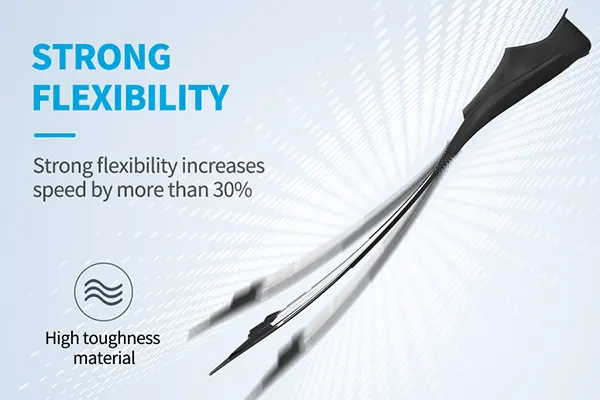
For wholesale planning, the practical move is to price the ladder as a system: plastic fins recruit entry buyers and school programs, fiberglass converts improving freedivers, and carbon protects your premium shelf position. A supplier that manufactures all three tiers can keep blade geometry and foot pockets consistent across the ladder, which simplifies spare parts, packaging, and staff training at retail.
Which Volume Tiers and MOQ Rules Apply to Fins Orders?
Wholesale pricing only means something against a quantity structure. For fins sourced from established Chinese manufacturers, the structure is predictable enough to plan a season around.

| Order Type | Standard Benchmark | Commercial Implication |
|---|---|---|
| Minimum order (fins) | 300 pcs per color | Same benchmark as masks and goggles — multi-category consolidation stays simple |
| Stock samples | 2–7 days | Cheapest de-risking step in the whole program; sample fees typically settle via PayPal |
| Custom prototypes | 15–30 days including tooling | Tooling paid once; quote should show it as a separate line, never blended into unit price |
| First mass production | 30–60 days | Longer end applies to fully custom molds; lock the golden sample before this window starts |
| Repeat orders | ~30 days, no mold fees on standard private label models | Steady-state economics of the program; reorder rhythm sets inventory turns |
| Ready-to-ship stock | 48-hour dispatch | Lets you trade while a custom program is still in tooling |
The mold-fee line deserves attention because it is where multi-year programs quietly leak money. On standard private label models, credible manufacturers waive tooling charges on repeat orders — the tool exists, it is yours to fill. If a supplier charges mold fees on every reorder of an unchanged design, either the design has silently changed or the “factory” does not own the tool it is billing you against. Both answers matter.
Sequencing is the other lever. Buyers who pair a custom blade program with a ready-to-ship stock assortment get market feedback in weeks, not quarters: stock models generate sell-through data on lengths, colors, and price points while the exclusive product moves through DFM, sampling, and production. You can review current platforms on the freediving fins product page, and the ready-to-ship program covers what dispatches within 48 hours.
How Do Packaging and Branding Choices Affect Landed Cost?
Between the factory’s per-pair price and your landed cost sits a set of decisions you control — and packaging is the biggest. A poly bag with a printed insert, a full color box, and a retail-ready hang card occupy three different cost positions, and the right answer depends on where the fin sells.
Dive shops and pro retailers often prefer boxed product that protects long blades in transit and displays brand identity on the shelf. E-commerce fulfillment favors compact, lightweight formats that protect the blade without paying for air to ship. School and rental programs frequently run bulk poly-b packing where toughness of the blade matters more than the box art. Because long fins are dimensionally awkward, packaging also drives freight: a box format that lets blades nest can meaningly change the number of pairs per carton, and therefore the freight cost per pair on a sea shipment.
Branding elements — logo printing, colorway matching, hang tags with barcodes and compliance text — are priced as separate line items and reward consolidated print runs. The decision framework is detailed in this guide to private label packaging for watersports gear, which applies the same logic to fins as to mask-and-snorkel sets.
What Hidden Costs Should Wholesale Buyers Budget For?
Quote comparisons fail when they ignore the items that arrive after the invoice. Five hidden lines turn a good-looking factory price into the real number your finance team cares about.
- Freight and dimensional weight. Long blades ship badly by air; sea freight amortizes well only if carton cubage is engineered. Confirm pairs-per-carton before signing packaging artwork.
- Duties and import compliance. Depending on destination, fins may classify differently from masks or apparel in the same shipment — verify tariff codes per product line, not per order.
- Third-party inspection. Even with a factory QC program, many importers add a pre-shipment inspection. Budget it as a fixed cost per order, and request the factory’s own FAI/OQC reports to make the inspection cheaper and faster.
- Sample and courier costs. Stock samples in 2–7 days still cost courier fees on express lanes; treat them as research spend with the highest ROI in the program.
- Quality drift insurance. The golden sample is your contract. Keeping a sealed reference pair on file costs nothing and settles any future dispute about what “correct” looks like.
None of these lines is large on its own. Together they routinely move effective landed cost by a double-digit percentage, which is why sophisticated buyers compare quotes at the landed level, not the FOB level.
How Do You Compare Quotes from Different Fins Manufacturers?
The final step is mechanical, and it is where most of the value of this entire breakdown lands. Put every quote through the same checklist, and require any supplier who cannot answer a row to say so in writing.
| Question to Put on the Quote | Why It Changes the Comparison |
|---|---|
| Price basis: FOB which port, or EXW? | A USD 2 gap between quotes can vanish — or double — once inland freight and export handling are normalized |
| Blade material grade and stiffness specification? | “Same as sample” is not a spec; laminate grade and flex target make quotes technically comparable |
| Tooling as a separate line, and who owns the mold? | Blended tooling makes reorder pricing un-auditable; ownership terms decide your exit costs |
| What packaging and compliance documents are included? | Color box, barcode labels, FAI/OQC reports, and certificate copies each carry real cost if sourced separately |
| Payment terms and sample policy? | Standard practice includes T/T and L/C for production and PayPal for sample fees; a supplier’s flexibility here signals how it will behave when a problem needs solving |
Once quotes are normalized on these five rows, price differences stop being mysterious — they become a readable map of what each factory assumes about your program. And assumptions, unlike prices, can be negotiated.
Review the freediving fins collection for current platforms and specifications, then request a quote — Vanguard’s team will break down blade material options, MOQ structure, and tooling terms against your target volumes. For a broader supplier perspective, start with this wholesale fins selection guide.
Frequently Asked Questions
What is the minimum order for wholesale freediving fins?
The standard MOQ is 300 pcs per color for fins — the same benchmark applied to masks and goggles. Consolidating multiple categories in one program keeps the per-color structure uniform instead of stacking separate minimums.
Do repeat orders of freediving fins include mold fees?
No. Repeat orders of standard private label models carry no mold fees — tooling is a one-time cost for a custom design. If a supplier recharges tooling on an unchanged reorder, ask where the mold physically resides and who owns it.
Why do carbon fiber fins cost more at wholesale than plastic models?
Carbon laminate carries a higher material floor and demands tighter process control — layup consistency, resin ratio, and cure discipline each add cost and reject risk. In exchange you get the best stiffness-to-weight ratio and the premium shelf position that supports stronger retail margins.
How should I compare two fins quotes with different prices?
Normalize five things first: price basis (FOB or EXW), blade material grade, tooling as a separate line with ownership terms, included packaging and compliance documents, and payment terms. Quotes that look USD 2 apart often converge or flip once these rows match.
Can I mix material tiers in one wholesale order?
Yes — stocking plastic, fiberglass, and carbon tiers in one program is standard practice for covering dive schools through enthusiast retail. Confirm with the factory that blade geometry and foot pockets stay consistent across tiers so packaging and spare parts remain simple.