Every anti-fog swim goggle quotation you receive will contain the same two words. Suppliers know buyers scan for them, so the claim appears on spec sheets, in Alibaba listings, and on retail-ready packaging alike. The words cost nothing to print. What separates a supplier worth an order from one worth a pass is whether the claim survives the questions an importer asks afterward: measured how, for how long, on which batch, and verified by whom.
This anti fog swim goggles buyer guide is built around those questions. It walks through what B2B importers and distributors should verify before placing an anti-fog goggle order — the QC documentation to demand, the certifications that actually apply, the sample tests worth running, the commercial terms to pin down, and the red flags that should end an evaluation. It assumes you are auditing the supplier as much as the product, because on anti-fog performance the two are the same thing.
الوجبات الرئيسية
- Treat “مكافحة الأسنان” as a measurable specification: demand duration data in the inspection report (FAI/OQC), not a marketing line — our own reports carry anti-fog duration alongside leak-tightness and pull-force results.
- Verify the mechanism as well as the number: surface coatings wear off with wiping and chlorine, while molded-in systems integrate the function into the lens — ask which one you are buying and test accordingly.
- Certifications split into two groups: material compliance (م, ادارة الاغذية والعقاقير, معيار OEKO-TEX 100) and management systems (ايزو 9001:2015, بي إس سي آي) — neither substitutes for batch-level anti-fog test data.
- Run your own steam, wipe, and chlorine tests on random samples before tooling, then repeat on production samples before shipment — and walk away from suppliers who only offer golden samples.
Why Anti-Fog Claims Deserve Their Own Audit Line
Fog is not a cosmetic defect. In the swim goggle category it is one of the leading drivers of returns, review damage, and repeat-purchase loss — and unlike a broken strap, it often surfaces weeks after sale, when the customer has already formed an opinion of your brand. The verification data we track on our own goggle lines shows the pattern clearly: complaints about lenses blurring mid-swim tend to arrive months into ownership, pointing at performance that decayed in service rather than units that were defective on arrival.
That timeline is exactly why the claim is hard to police at receiving inspection. A goggle that will fog badly in month three can look perfect in a pre-shipment check. The buyer’s only defenses are upstream: verify how the anti-fog function is engineered, how it is tested at the factory, and how the supplier proves consistency across batches. Which route the product takes matters here — a hydrophilic surface coating is a consumable layer that wiping and chlorine gradually remove, while a molded-in system builds the fog-management function into the lens during molding. Both can be legitimate product strategies at different price points, but they need different questions, and a supplier who cannot tell you which mechanism you are buying is a supplier who cannot stand behind the claim.
What Should Be in the QC Documentation?
A factory that measures anti-fog performance will document it the same way it documents any other specification. Ask for the inspection package that accompanies first article approval and outgoing shipments, and check that it contains the following:
- Anti-fog duration results, per batch. Our first article inspection (فاي) and outgoing quality control (أورينت) reports include measured anti-fog duration together with leak-tightness and pull-force data. If a supplier’s report has a pull test and a barcode scan but no anti-fog line item, the claim is not being measured.
- The test method, in writing. Duration numbers mean nothing without conditions: درجة حرارة الماء, ambient temperature, and test duration. Ask which protocol the lab uses and whether the same protocol runs on every batch or only on golden samples.
- Batch traceability. The report should tie results to production dates and batch numbers you can match against the cartons you receive. Batch-level traceability is also what makes a recall — or a supplier claim — manageable if something goes wrong after shipment.
- Material specs for the fog-management system. For coated lenses: which coating, applied at which stage, expected service life. For molded-in systems: what the function consists of and how molding controls it. Vagueness here predicts vagueness in everything else.
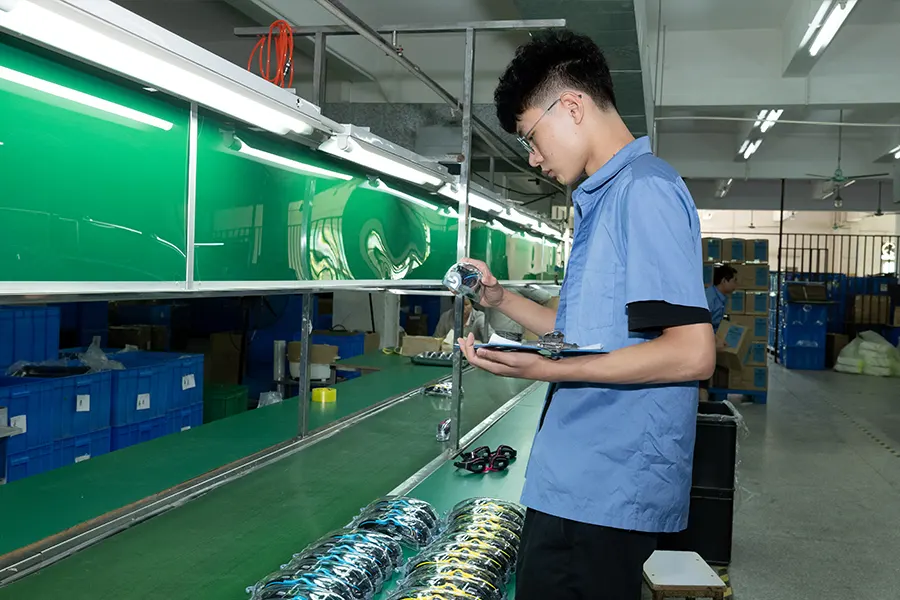
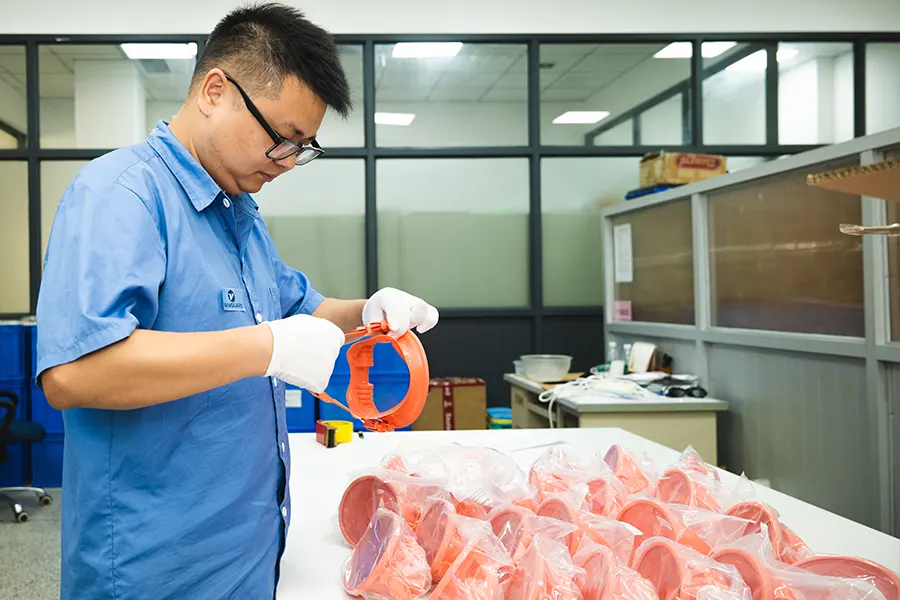
The five-stage quality flow we run internally — raw material inspection, صب الدقة, تجميع موحد, اختبار معمل الأداء, then packing and logistics — is a useful template: at each stage, ask what is measured and what document you would receive as evidence.
Which Certifications Actually Apply — and to What?
Certification confusion wastes more audit time than any other topic, so sort the documents into two piles before you evaluate them:
| Group | Typical Documents | What It Proves — and Does Not |
|---|---|---|
| مادة & product compliance | م, FDA food-contact/ material documentation, معيار OEKO-TEX 100 | The materials touching the swimmer meet market-entry requirements. It does not certify anti-fog performance. |
| Management systems | ايزو 9001:2015, بي إس سي آي | The factory runs documented, audited processes. It raises confidence in consistency; it still is not a performance test. |
| Performance testing | FAI/OQC reports: مدة مكافحة الضباب, leak-tightness, pull force | The only documents that speak directly to the anti-fog claim on your specific batch. |
A supplier holding all three groups — compliance documents, system certifications, and batch-level performance data — is demonstrating the full chain. A supplier flashing CE and ISO certificates while declining to provide anti-fog duration data is showing you two thirds of the chain and hoping you will not ask about the third. If you want the compliance side in depth, our export certification guides for snorkeling sets و أقنعة الغوص walk through the market-by-market requirements, and the same material logic applies to swim goggles.
How Should You Test Samples Before Committing?
Documentation tells you what the factory measured. Sample testing tells you whether you believe the factory. Three low-cost protocols cover most of the anti-fog risk before you commit to tooling:
- The steam test, twice. Hold the goggle lens over warm water and time the fog-free interval. Then wipe the inner lens once with a soft cloth and repeat the test. A coated lens shows a clear performance drop between the two runs; a molded-in system should hold nearly steady. Run the pair of tests on several units pulled from different boxes, not one showcase sample.
- The chlorine soak. Simulate a pool season in accelerated form: a measured soak in chlorinated water, followed by another steam test. Agree the exact protocol with the supplier in writing and make surviving it an acceptance criterion for mass production.
- The fit-and-wear reality check. Give samples to actual swimmers for two weeks — swim schools and club programs make willing testers. Real-use feedback exposes fit-driven fogging (poor facial seal pushes warm breath across the lens) that bench tests miss.
Repeat the steam test on production samples pulled at random before shipment. The purpose is not to catch the supplier cheating; it is to confirm the process you approved is the process that ran.

Which Commercial Terms Should Be Pinned Down Early?
Anti-fog performance is negotiated into existence during the commercial stage, not inspected in afterward. Before signing off, make sure these terms carry numbers rather than adjectives:
- Minimum order quantity by variant. Goggle programs typically start at 300 قطع لكل لون. Confirm how the MOQ behaves across a multi-color line and prescription diopters, which are usually ordered as separate variants.
- Sample stage and timing. Stock samples should ship within days; custom prototypes including tooling take longer. Benchmarks we work to: stock samples in 2–7 days, custom prototypes in 15–30 days, first mass production 30–60 days after sample approval, repeat orders around 30 أيام, and 48-hour dispatch from ready-to-ship stock when you need market tests fast.
- The acceptance criteria, in the contract. Write the anti-fog protocol — steam test duration, chlorine-soak survival — into the order terms as a pass/fail condition, alongside standard AQL sampling for defects.
- Tooling ownership and exclusivity. For custom models, agree who owns the molds and on what terms exclusivity applies, before the first tooling cut. NDA protection for your designs should be part of the same conversation.
- Support after shipment. Agree how claims are handled if a batch underperforms in market: استبدال, ائتمان, or re-test protocol. A supplier confident in its QC data will discuss this calmly; evasion here tells you what a future claim negotiation will feel like.
None of these terms is exotic. The pattern to enforce is simple: every performance promise in the brochure should reappear somewhere in the contract as a measurable condition.
Which Red Flags Should End the Conversation?
Most supplier evaluations fail quietly — not through scandal, but through vague answers that never quite resolve. Treat the following as stop signals rather than negotiation topics:
- No anti-fog data, only adjectives. “Military-grade,” “professional-level,” و “super anti-fog” are marketing vocabulary. If repeated requests for duration test data produce more vocabulary, the measurement does not exist.
- Golden-sample-only testing. A supplier who offers impeccable samples but declines random production sampling is showing you the best unit, not the process.
- Mechanism amnesia. If the sales team cannot say whether the product uses a surface coating or a molded-in system — and cannot find someone who can — the claim is copy-paste, not engineering.
- Certificates that do not match the shipment. Compliance documents that name a different factory, a different material grade, or an expired scope are worse than missing documents; they are a preview of how claims are handled when stakes rise.
- Refusal to put performance terms in writing. Any “don’t worry, we guarantee quality” that resists becoming a numbered clause in the order is a guarantee with no contents.
One honest caveat from the manufacturing side: no factory can promise physics. In cold open water, any lens can fog briefly regardless of the anti-fog system. What a good supplier guarantees is not the suspension of physics but a measured, consistent, documented performance envelope — and the willingness to let you test against it.
If you are assembling a broader sourcing file, this guide pairs naturally with our seven-point checklist for sourcing dive masks from a China manufacturer — the audit structure transfers directly to goggles. And when you are ready to shortlist, browse the swimming goggles range on our products page and ask us for the FAI/OQC package behind any model that interests you.
الأسئلة المتداولة
What documents should a supplier provide to prove anti-fog performance?
Batch-level FAI/OQC inspection reports that list anti-fog duration alongside leak-tightness and pull-force results, plus a written description of the test method and batch traceability. م, ادارة الاغذية والعقاقير, and OEKO-TEX documents cover material compliance, and ISO 9001/BSCI cover the management system — but only the inspection report speaks to anti-fog performance itself.
How can I test anti-fog goggles myself before ordering?
Run the steam test twice — once as received, once after wiping the inner lens with a soft cloth. A coated lens loses performance after wiping; a molded-in system holds nearly steady. Follow with a chlorinated-water soak and a third steam test, and give samples to real swimmers for two weeks to catch fit-driven fogging.
Is a CE mark enough to guarantee the anti-fog claim?
لا. CE relates to market compliance, not anti-fog duration. The same applies to FDA material documentation and OEKO-TEX Standard 100 — they prove the materials are compliant, not that the fog performance will last a pool season. Always pair compliance documents with batch-level performance test data.
What MOQ and lead times should importers plan for?
Plan around 300 pieces per color as a typical goggle MOQ, stock samples in 2–7 days, custom prototypes in 15–30 days including tooling, first mass production in 30–60 days after sample approval, and repeat orders around 30 أيام. If you need to test demand first, ready-to-ship stock dispatches within 48 ساعات.
Should the anti-fog protocol be written into the purchase contract?
نعم. Define the steam-test duration, the chlorine-soak survival condition, and the random-sampling plan as pass/fail acceptance criteria in the order terms, next to standard AQL sampling. Suppliers with real process data will accept measured terms readily — reluctance is itself a red flag.