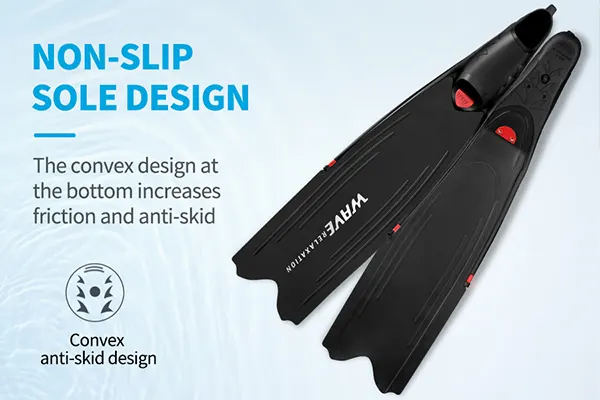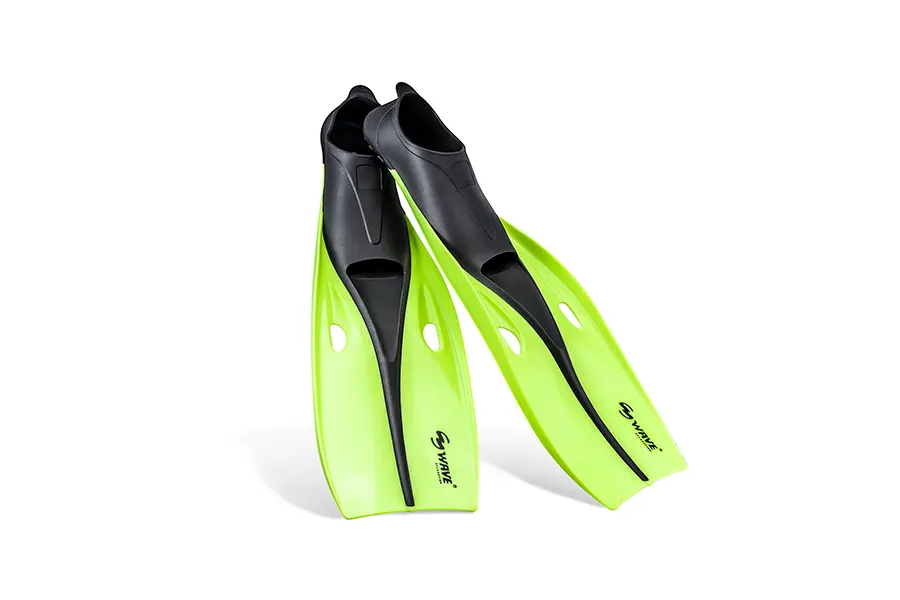
Una marca de resort no quiere una aleta genérica en su lineal. Quiere la misma hoja confiable que sus invitados ya reconocen, pero con su propio logotipo., en los dos o tres colores que combinan con su programa uniforme, con el estilo de correa su flota de alquiler ha demostrado. Ese es un pedido de aletas de snorkel personalizado., y es una de las líneas de productos más incomprendidas en el abastecimiento de deportes acuáticos., porque «costumbre» cubre todo, desde un logotipo tampográfico en unos pocos cientos de piezas hasta un molde completamente nuevo en un orden de magnitud muy diferente.
La diferencia importa comercialmente. Confunda los niveles y pagará de más por herramientas que nunca necesitó, o descubrir en la etapa de producción en masa que el «cambio de logotipo sencillo» Lo que usted trata como decorativo en realidad impulsa el costo unitario y el MOQ. Marcas privadas, cadenas turísticas, y los distribuidores regionales compran en las mismas fábricas de aletas; lo que separa un buen resultado de una lección costosa es saber qué palancas de personalización existen., lo que cuesta cada uno en tiempo y minimos, y donde se encuentra la verdadera ingeniería.
Esta guía analiza las tres palancas que los compradores realmente negocian: la aplicación del logotipo., color de la hoja, y construcción de correa de talón abierto; luego se cubre cuando un nuevo molde gana su sustento, cómo es el calendario de muestreo y producción, y cómo se acumulan los números.
Control de llave
- La personalización vive en una escalera: decoración (logo, embalaje) → combinaciones de colores (Cuchillas compatibles con Pantone) → cambios de componentes (correas, bolsillos para los pies) → nuevas herramientas. Cada peldaño agrega tiempo de entrega y mínimos, y la mayoría de los programas de marca solo necesitan los dos primeros.
- Balanzas de decoración de superficies con recuento de unidades., no herramientas. Los logotipos por tampografía y termotransferencia valen la pena en diferentes volúmenes; El marcado en molde solo tiene sentido una vez que un modelo se compromete a realizar tiradas de producción largas..
- El color es la señal de marca más barata de la categoría.. Con una cantidad mínima de pedido estándar de 300 piezas por color, un programa personalizado de dos colores es un primer pedido realista para una marca boutique; cinco colores es un compromiso a escala de cadena.
- El talón abierto versus el pie completo no es solo una decisión de ajuste: cambia la curva de tu talla, Tu fricción en el probador, y su viabilidad de alquiler. Las correas ajustables colapsan varios tamaños en un solo SKU.
- El desarrollo interno de moldes CNC comprime la ruta de herramientas personalizadas: esperar DFM (Diseño para fabricación) retroalimentación dentro 24-48 horas de presentación de un concepto, prototipos personalizados en aproximadamente 15-30 días incluyendo trabajo de molde, y producción en masa en 30-60 días.
Qué «Costumbre» En realidad significa una aleta para bucear
Pide a tres fábricas un «aleta personalizada» cotiza y obtendrás tres productos diferentes, porque la palabra se extiende a través de cuatro niveles distintos de intervención. Clasificarlos antes de solicitar cotizaciones es lo más importante que puede hacer un comprador.
El nivel uno es la decoración.. Un logo en la hoja., una correa de marca, una etiqueta colgante personalizada o una caja de color. Nada sobre la pieza moldeada cambia.. Su pedido se comporta como un pedido al por mayor: la misma cantidad mínima de pedido, mismo tiempo de entrega, Misma economía por tamaño, con una modesta unidad adicional para el proceso de impresión..
El nivel dos es el color.. la espada, bolsillo para los pies, o la correa está moldeada con el pigmento especificado (generalmente una referencia Pantone) en herramientas existentes. Aquí es donde realmente viven la mayoría de los programas de marca privada.: color de tu marca, su forma probada.
El nivel tres es el intercambio de componentes. Mismo molde de cuchilla, bolsillo para los pies diferente; bolsillo existente, hebilla diferente o correa de resorte. A veces esto se basa en herramientas de stock., a veces necesita una nueva cavidad. El límite entre «hacemos esto rutinariamente» y «este es un proyecto de herramientas» es exactamente donde desea la confirmación por escrito del ingeniero, no el vendedor.
El nivel cuatro son herramientas nuevas — tu propia geometría de hoja, tu propia cara del calzante. Diferenciación real, costo real: presupuesto de molde, un calendario más largo, y un compromiso de amortizar la herramienta en suficientes unidades para que pague.
Antes de comprometerse con cualquier nivel, Vale la pena leer nuestro artículo complementario sobre Cómo elegir un fabricante de aletas de snorkel — la respuesta del proveedor a «¿Puedes hacer mi logo en este modelo??» le dice más sobre la profundidad de su fábrica que cualquier folleto.
Aplicación de logotipo: El método de impresión es una decisión de volumen
Tres métodos dominan la marca de aletas, Y el correcto se decide casi exclusivamente por el tamaño del pedido y la exposición al desgaste..
| Método | como funciona | Mejor para | Vigilancias |
|---|---|---|---|
| Tampografía | Tinta transferida a la superficie de la hoja curada. | uno al por menor- y logotipos de dos colores; Funciona en superficies de hojas curvas. | La resistencia a la abrasión depende del sistema de tinta y del curado; solicite una prueba de frotamiento en una muestra física, no es un render |
| Transferencia de calor / calcomanía | Soporte de película presionado sobre la superficie. | Obra multicolor, marcas fotográficas, carreras cortas | Los bordes pueden levantarse después del agua salada y el ciclo UV; validar en una muestra desgastada |
| Marcado en molde | Película insertada en la cavidad.; logotipo moldeado en la propia pieza | Programas de alto volumen donde el logo nunca debería desaparecer | El costo de herramientas y configuración solo se amortiza cuando se compromete, repitiendo órdenes |
Para flotas de alquiler, el cálculo se voltea: un número de flota estarcido supera a un bonito logotipo, y la marca de la correa importa más que la marca de la hoja porque la correa es la parte que tocan los invitados.. Para venta minorista, el logotipo compite en un gancho de pared con el brazo extendido, lo que aboga por menos, marcas más grandes con un fuerte contraste con el color de la hoja en lugar de detalles finos que desaparecen a la distancia del estante.
Cualquiera que sea el método, enviar ilustraciones vectoriales desde el principio. Las fábricas trabajan de forma rutinaria a partir de archivos vectoriales AI o PDF más referencias Pantone; un JPEG calcado por un estudio te cuesta una semana y una fidelidad que no puedes inspeccionar hasta que lleguen las muestras.
Color de la hoja: La decisión de marca más barata que tomará
El compuesto de silicona y TPR absorbe bien el pigmento., y una hoja compatible con Pantone brinda un reconocimiento instantáneo de una línea de marca privada sin tocar las herramientas. Dos limitaciones deciden su programa de color.
El primero es el mínimo.. Una combinación de colores personalizada estándar tiene aproximadamente 300 piezas por color: lotes compuestos, purga de la máquina de moldeo entre colores, e impresión de cajas de colores en todas las escalas por combinación de colores, Es por eso que la cantidad mínima de pedido se cotiza por color en lugar de por pedido.. Por lo tanto, un programa de lanzamiento de dos colores se trata de 600 unidades de compromiso; un programa de cadena de cinco colores es 1,500 antes de haber vendido un par. Si tu plan de gama depende de muchas pequeñas apuestas de color, negocie a su alrededor: las gotas de color de temporada superan un estante de SKU muertos.
La segunda es la lógica de la visibilidad.. Los amarillos y naranjas de alta visibilidad no son sólo opciones de marca: programas de rescate, operadores de buceo, y las flotas de alquiler los compran porque una aleta brillante es una aleta que se puede encontrar. Las combinaciones de colores translúcidos y oscuros parecen premium en un gancho de venta minorista, pero desaparecen bajo el agua.. Haga coincidir la historia del color con el canal que realmente venderá el par., y extraiga muestras del compuesto: el mismo Pantone puede leer de forma diferente en TPR brillante que en silicona mate.
Tacón abierto, Correas, y la curva de tamaño que realmente estás comprando
La construcción de las patas de las aletas de snorkel se divide en dos familias, y cada uno contrabandea una decisión comercial dentro de un reclamo de comodidad.
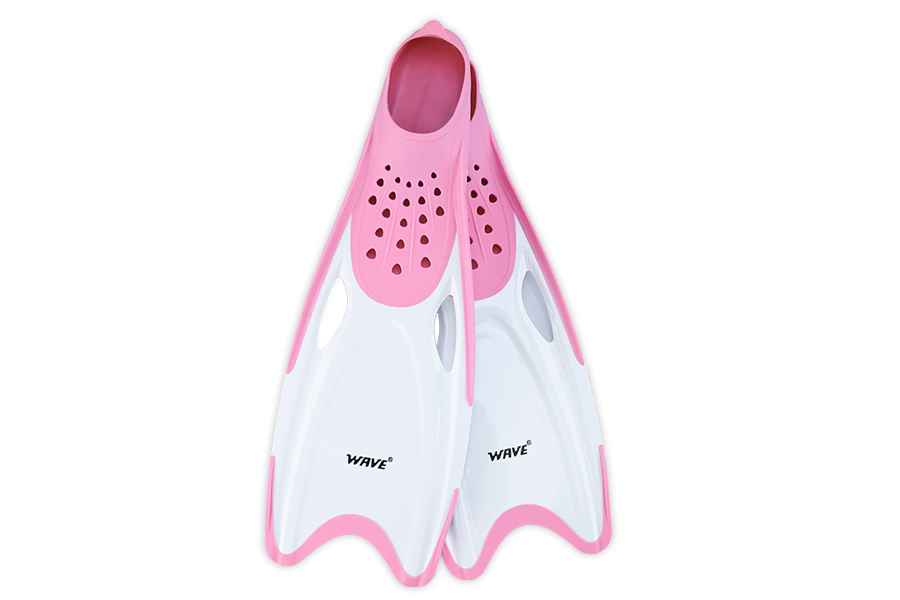
Pie completo: el valor predeterminado minorista
Los bolsillos para todo el pie tienen hormas moldeadas en tamaños discretos, sin botín., ajuste perfecto, Entrada y salida rápida en el borde de la piscina.. Se ven mejor en un anzuelo y se sienten más «finalizado,» es por eso que la mayoría de las líneas minoristas de snorkeling son de pie completo.. El costo es una tirada de tamaño real.: niños, juventud, y los escalones para adultos necesitan cada uno su propia cavidad y su propia posición original., y los retornos impulsados por el ajuste se concentran en las tallas adultas intermedias donde los pies se asientan entre las hormas..
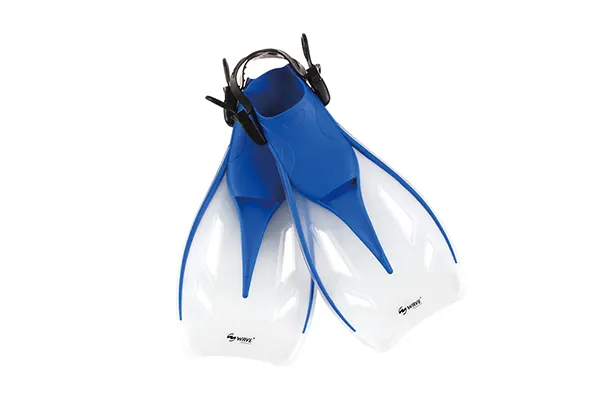
Talón abierto y correas ajustables.: un SKU cubre una gama
Las aletas de talón abierto se sujetan a una correa, tradicionalmente una correa de resorte debajo del talón., cada vez más una hebilla de liberación rápida en el empeine, y acepte un botín delgado o un pie descalzo. El detalle de ingeniería que decide la satisfacción es la mecánica de la correa.: Las correas con resorte son más simples y económicas, pero castigan los empeines grandes y son difíciles de reemplazar.; Las correas con hebilla se ajustan en varios tamaños de pie y se intercambian en segundos., que es exactamente lo que necesita un mostrador de alquiler.
Para tu P&l, La construcción ajustable colapsa varios tamaños en un solo SKU: el mismo stock que sirve para mujeres de EE. UU. 6 cubre un hombre 9 con un cuarto de vuelta de la hebilla. Es por eso que los programas de los resorts y los operadores de buceo se inclinan por el talón abierto incluso cuando los huéspedes hacen snorkel.: menos espacios de tamaño, correas reparables en lugar de aletas agrupadas, y una línea de inventario en lugar de cinco. Nuestra inmersión más profunda en los materiales de bolsillo y hojas está en materiales de aletas de snorkel: goma, TPR, silicona, y compuestos, Dado que la elección del hardware de la correa interactúa con la rigidez del compuesto más de lo que admiten las plataformas de marketing..
Cuando un nuevo molde se gana la vida
Abajo aproximadamente 3,000-5,000 unidades por modelo por año, Las nuevas herramientas rara vez se amortizan frente a un stock bien elegido.. Por encima de eso, una geometría de pala patentada deja de ser un coste y empieza a ser un foso: nadie puede ofrecerle a su cliente la misma aleta.
El flujo de trabajo honesto en una fábrica con desarrollo interno de moldes CNC se ve así: usted envía un concepto con el costo objetivo y el volumen anual; ingeniería devuelve retroalimentación DFM dentro 24-48 horas diciendo lo que la geometría hará y no hará en sus máquinas; Se corta un molde y se introduce aproximadamente un primer prototipo. 15-30 días; firmas una muestra de oro; tierras de producción en masa 30-60 días después de eso, con órdenes repetidas alrededor 30 días. Los prototipos de herramientas existentes (su color y logotipo en una carcasa probada) se mueven considerablemente más rápido, y las muestras en stock normalmente se envían dentro de una semana después de la solicitud.
Dos protecciones importan más que el propio molde. Primero, papel: Los moldes y diseños originales deben cumplir con una estricta NDA., y si una fábrica saluda sus preocupaciones con «todos hacen esta forma,» esa es tu respuesta sobre si tu forma es segura allí. Segundo, términos: Los modelos estándar de marca privada no deberían tener tarifa de molde en pedidos repetidos, si un proveedor le cobra por volver a ejecutar un molde que ya pagó., seguir negociando. La lista de verificación del lado del proveedor para examinar todo esto se encuentra en la guía de selección del fabricante vinculada anteriormente., y el alcance completo de lo que cubren las herramientas personalizadas está en nuestro fabricación personalizada página.
La factura de personalización: Adónde va realmente el dinero
Los compradores habitualmente se centran demasiado en el coste de impresión por unidad y no se centran en los cuatro elementos de línea que realmente mueven el margen de un programa de aletas personalizado.:
- Interacción de herramientas de color. Cada combinación de colores adicional multiplica el MOQ. Confirmar si MOQ se acumula por color, por tamaño, o por SKU de color y tamaño antes de diseñar un lanzamiento de seis colores.
- Grado de hardware de la correa. Los sistemas de hebillas con pasadores de acero inoxidable y correas reemplazables cuestan más por juego, pero convierten los reclamos de garantía de «aleta guardada» a «correa de repuesto» — una decisión económica del alquiler, no es una decisión componente.
- Formato de embalaje. Un cuadro de color con una ventana cambia tu cubo., el número de paletas de exhibición, y su tasa de caída de cajas de comercio electrónico. El embalaje es donde una línea de fin gana o pierde silenciosamente su presupuesto de transporte.
- Iteración de muestra. Una ronda de muestras físicas es barata; cuatro rondas porque nadie probó la impresión ni usó la correa es un mes de calendario y dinero real. Cree una ronda de muestreo con su protocolo de prueba completo en el plan..
Los controles de calidad en un programa personalizado son los mismos que en un programa mayorista; la diferencia es que ahora se imprime un nombre de marca en la falla.. Si su proveedor no puede mostrarle las pruebas de flexión de la hoja, prueba de tracción de correa, y datos de resistencia a los rayos UV como resultado de rutina, esa brecha definirá su tasa de retorno mucho después del lanzamiento.
Preguntas frecuentes
¿Cuál es el MOQ típico para aletas de snorkel personalizadas??
Para un modelo de aleta estándar en un color personalizado, esperar alrededor 300 piezas por color. Los cambios exclusivamente decorativos, como los logotipos tampográficos en combinaciones de colores existentes, a veces pueden ser más bajos, mientras que las nuevas herramientas se rigen por la amortización del molde en lugar de por unidades mínimas. Confirme siempre si las pilas mínimas por color, por tamaño, o por combinación de color y tamaño: esa única respuesta puede duplicar o reducir a la mitad la cantidad de lanzamiento.
¿Cuánto tiempo tarda un programa de aletas personalizado desde la obra de arte hasta el contenedor de envío??
Almacenar muestras de un modelo de barco existente en aproximadamente 2-7 días. Un programa de logotipo y color en herramientas existentes normalmente necesita una ronda de muestra (aproximadamente dos semanas incluyendo su evaluación) más 30-60 días de producción en masa. Un programa de nuevos moldes añade 15-30 Días de creación de prototipos, incluido el desarrollo de moldes antes de la etapa de muestra dorada.. Repetir órdenes comprimir hacia 30 días porque herramientas, compuestos de color, y el embalaje ya están probados..
¿Debería el programa de un resort elegir aletas de talón abierto o de pie completo??
Tacón abierto con correas ajustables, en casi todos los casos. Un SKU abarca la mayor parte de una tabla de tallas, Las correas son reemplazables cuando fallan en lugar de desechar la aleta., y se alojan invitados con botines de neopreno.. Los modelos de pie completo se adaptan a los estantes de las tiendas minoristas y a los programas de piscinas con curvas de tamaño estrechas., pero el tamaño discreto convierte cada crecimiento acelerado y cada pie entre tallas en un retorno.
¿Puedo proteger mi diseño de aleta personalizado para que no se venda a la competencia??
La protección es contractual y práctica al mismo tiempo.. Coloque el molde y el diseño original bajo un acuerdo de confidencialidad por escrito y una cláusula de exclusividad antes de comenzar con el mecanizado., Mantenga su geometría patentada lo suficientemente distinta como para registrarla como patente de diseño cuando sea importante para su mercado., y tratar la propiedad del moho: ¿quién lo posee?, quién puede usarlo, como un término negociado en lugar de una suposición. Las fábricas que dudan en el lenguaje de propiedad de moldes le están diciendo algo que vale la pena escuchar.