中国のブランド向け水泳およびダイビング用品メーカー, 卸売業者, 以来のOEMプロジェクト 1993.

製品ガイド

ドライシュノーケル vs セミドライシュノーケル: ディストリビューターはどちらを優先すべきか?

ドライシュノーケル vs セミドライシュノーケル: ディストリビューターはどちらを優先すべきか?

Two snorkels can look almost identical on a line sheet and behave completely differently in the water. One seals its tube the moment the tip goes under; the other only breaks up spray and lets the rest in. Distributors who treatdry” そして “セミドライ” as two price points of the same product end up with the wrong mix on the shelf: dry tops sitting in a channel that does not value them, or semi-dry units generating flooding complaints from customers who expected a seal.

This comparison is written for regional distributors and e-commerce sellers deciding how to split snorkel inventory between the two designs. It covers what each mechanism actually does, where each one wins and loses in real conditions, what the price gap buys at component level, and the questions that should go to your factory before you commit to a purchase order.

Key Takeaways

  • A dry top contains a float valve that seals the tube on submersion; a semi-dry top is a splash guard that deflects water but never seals.
  • The dry design pays for itself in beginner-heavy channels: レンタル車両, resort shops, boat tours and entry-level e-commerce listings.
  • Semi-dry holds its ground with experienced recreational users and price-sensitive sport retail, where buyers clear a tube without thinking about it.
  • The price gap between the two is mostly the valve assembly, the seal and the cage, so it is a component decision before it is a pricing decision.
  • Most programs do best with both families in the range, split by channel, rather than a single design forced across every customer type.

What Separates a Dry Snorkel From a Semi-Dry Snorkel?

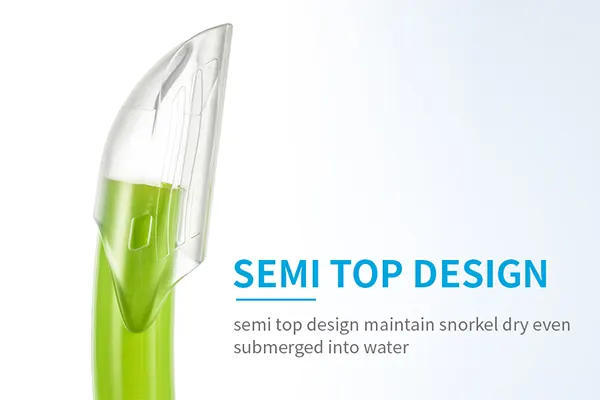
Start with the semi-dry design, because it is the older idea. A semi-dry snorkel keeps an open tube but caps it with a shaped splash guard: a cover with vents that breaks up wave wash and spray so that less water enters while the user swims face-down. When the tip goes under, though, water follows gravity into the tube, and the user clears it with a forceful exhale through the purge valve at the bottom. The semi-dry design reduces flooding frequency; it does not eliminate flooding.

The dry design replaces that compromise with a mechanism. Inside the top cap sits a float, normally a sealed disc, free to travel a few millimetres. At the surface the float rests low and the air path stays open. Under water, buoyancy lifts the float against its seat and closes the tube. Back at the surface, the float drops and the first breath is air, not water. Combined with the purge valve below the mouthpiece, which drains whatever enters past the lips, the dry snorkel turns tube clearing from a user skill into a component function.

Close-up of a green semi-dry snorkel top with a transparent splash cap that limits water entry
A semi-dry top: the splash cap limits water entry but the tube remains open to flooding on submersion.

One sentence to keep in your buyer notes: the splash guard changes how much water gets in, the float valve changes whether water can get in at all. Every downstream difference in channel fit, complaint profile and price follows from that distinction.

Dry vs Semi Dry Snorkel: Where the Difference Actually Shows Up

In calm, flat water with an experienced user, the two designs are hard to tell apart, which is exactly why the wrong comparisons get made in showrooms. The difference appears under four conditions, and those conditions map directly onto customer segments.

The first is chop and wave wash. A swimmer in surface chop takes water over the tube repeatedly; the semi-dry guard catches much of it, the dry valve catches all of it. The second is any head-down moment: reaching for a camera, watching a turtle go past, a duck dive that goes a metre too deep. The semi-dry user resurfaces to a flooded tube and clears it; the dry user resurfaces and breathes. The third is boat-based snorkeling, where entries and exits are clumsy and users spend time floating in exhaust-flecked water; here the dry top also keeps surface scum out of the tube. The fourth is user inexperience, the condition that matters most commercially, because a first-time snorkeler has no clearing technique to fall back on and no tolerance for a mouthful of salt water.

Now invert the picture. Experienced recreational snorkelers and freedive-oriented users often prefer semi-dry or classic tubes. They clear a tube as reflex, they dislike the slight extra bulk and weight of a valve cage, and they duck-dive often enough that a sealed tube becomes a buoyancy nuisance on the way down. Sport retail serving that customer sells semi-dry confidently. Rental and resort operations, training schools and beginner e-commerce listings are the mirror image: their users have one briefing and zero practice, so the valve is the product.

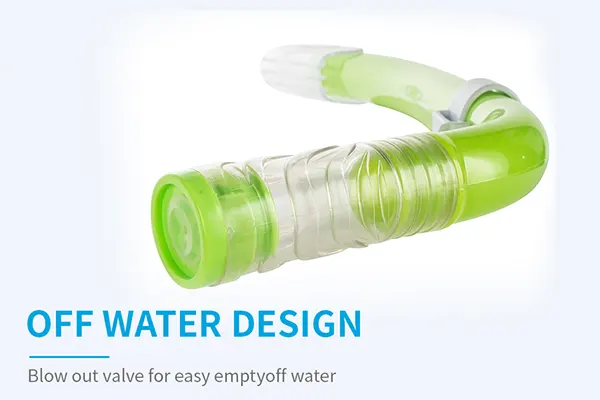
Green semi-dry snorkel showing the bottom purge valve used to blow out residual water
Both families rely on the bottom purge valve; on a semi-dry tube it does far more work, because more water reaches it.

Side-by-Side: The Comparison That Matters for Inventory

寸法 Dry snorkel Semi-dry snorkel
Top mechanism Float valve, seals on submersion Splash guard with vents, no seal
Behaviour when tip submerges Tube stays dry Tube floods, clearing required
Purge valve workload 低い, residual water only 高い, clears every flood
User skill assumed なし Competent clearing technique
Weight and bulk at the top Slightly higher, valve cage より低い, guard only
Component cost band Higher of the two Middle
Strongest channels Rental, resort, boat tours, beginner retail, 電子商取引 Sport retail, experienced recreational, club programs
Dominant complaint if quality slips Valve sticking or weeping Flooding in chop despite the guard
Best positioning on the shelf Comfort and confidence for first-timers Lighter top and sharper price for regulars

Read the last two rows together and the merchandising logic appears. The dry unit is sold on what the customer does not have to learn; the semi-dry unit is sold on what the customer already knows. Those are different value propositions, and they justify different price ladders on the same peg wall.

What the Price Gap Between the Two Actually Buys

Buyers sometimes assume the dry premium is branding. It is not. The premium is a short list of physical components: the float and its seal, the cage that guides it, the seat it closes against, and the tighter molding tolerances those parts demand. A semi-dry top is a single molded cap; a dry top is an assembly. Add the purge valve, which both families need but which carries more duty on a semi-dry tube, and you have the full component story.

That has three commercial consequences. 初め, the gap between the two designs is fairly stable across factories, because it tracks component count rather than brand positioning; a quotation where the dry and semi-dry prices are identical deserves a question about what was removed from the dry top. Second, quality failures concentrate in the same components that create the premium, so the cut sample you request should be a dry top cut open, not a finished tube photographed from the outside. Third, material choice underneath the valve matters as much as the valve itself: a food-grade silicone mouthpiece and a flexible corrugated drop section are what keep a dry snorkel comfortable enough that the valve’s benefit is actually felt by the user. The material comparison in snorkeling set materials: silicone vs TPR vs PVC covers the same compounds from the set perspective.

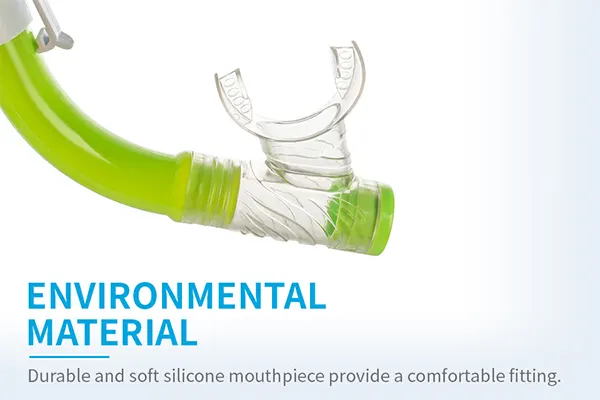
Material detail of the semi-dry snorkel tube and mouthpiece compound
Tube and mouthpiece compounds sit underneath the valve decision and drive comfort, taste and lifespan complaints.

How to Split Your Order Between Dry and Semi-Dry

The honest answer for most distributors is both, split by channel rather than by preference. Map your accounts into three buckets. Bucket one is beginner-exposed: rental operators, resort shops, boat tours, first-purchase e-commerce listings. Those accounts take dry tops, and they take them in the colorways their rental fleet or storefront already uses. Bucket two is experienced recreational: independent dive and sport shops with a regular customer base, club programs. Those accounts take semi-dry, and they respond to a lighter top and a keener price. Bucket three is mixed retail chains, which usually want both families on the peg wall at two price points, because the shelf itself does the education.

Depth beats breadth on a first order. Two or three colorways per family, in the packaging format each channel sells in, will tell you more about sell-through than eight colorways spread thin. Where the snorkel travels inside a mask-snorkel or mask-snorkel-fin set, remember that the set is planned around the mask and fin lines: at Vanguard the working MOQ is 300 pieces per color for masks, goggles and fins, and set colorways are normally matched to those lines. Standalone snorkel orders run against the existing S-61 series tooling, which keeps branded colorways on stock molds in most cases. の snorkeling set category and the wider snorkel range show how the current stock families line up for that kind of planning.

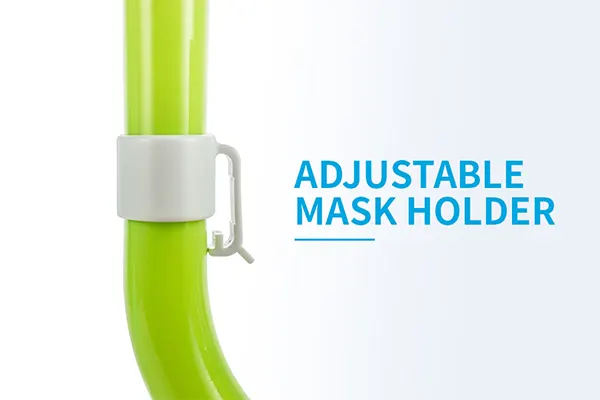
Adjustable mask holder clip mounted on the semi-dry snorkel tube
The mask holder is a small part with an outsized role: a clip that slips turns a good snorkel into a support ticket.

Questions to Put to Your Factory Before You Commit

Ask for the valve seal test method and its sample rate, and ask to see results from an actual lot rather than a specification sheet. Ask for a cut sample of the dry top so your QC can inspect the cage, the seat and the float travel. Ask how the purge valve is checked for backflow, and what tensile and tear data exists for the mouthpiece compound. Ask which certifications travel with the goods for your destination markets, and whether the factory runs raw material inspection, 成形, assembly and lab testing as separate gates or as one blurred operation.

Then ask about sampling and tooling, because that is where timelines are won or lost. A factory with in-house mold development can return DFM (Design for Manufacturing) feedback on your concept within 24 に 48 時間, ship stock samples in 2 に 7 日々, and produce a customized prototype in 15 に 30 days including tooling, with mass production running 30 に 60 days on a first order and around 30 days on repeats. Those are Vanguard’s published ranges, and they are a useful benchmark to hold any supplier against: a quotation that promises faster physical turnaround than tooling and curing allow is telling you something about how it plans to cut corners. If customization is on the table, the OEM versus ODM comparison in snorkeling set customization: OEM vs ODM sets out which path fits which situation, そして the wholesale snorkel gear buyer checklist is the companion document for the commercial terms.

Still deciding how to split dry and semi-dry across your accounts? Send us your channel list and target price points and we will map the matching stock models, colorway depth and packaging format for each, with cut samples of the dry top included so your QC can verify the valve before you order. 見積もりを依頼する.

よくある質問

Which design should a rental or resort operation stock?

Dry, almost without exception. Rental customers receive a short briefing and no practice, so a valve that seals on submersion removes the main cause of first-use complaints and desk refunds. The slightly higher unit cost is small against the cost of a bad review cycle or a fleet of units customers refuse to reuse.

Is a semi-dry snorkel a worse product, or just a different one?

Different, not worse. For users who clear a tube as reflex, the semi-dry top is lighter, simpler and cheaper, and it avoids the buoyancy nuisance a sealed tube creates during repeated duck dives. It becomes a complaint generator only when it is sold into beginner channels that expected a seal.

Why is the dry version more expensive if both are just tubes?

Because a dry top is an assembly rather than a single molded part: フロート, seal, cage and seat, plus the tighter molding tolerances they require. The premium tracks component count, which is why a quotation showing no gap between dry and semi-dry should prompt a question about what was left out of the dry top.

Can one order cover both families with private label branding?

はい, and it is the usual pattern for mixed retail chains that want two price points on the peg wall. Tube printing, mouthpiece color matching and retail box artwork apply to both families, and branding on existing S-61 series tooling normally avoids new mold cost; only a fully custom tube shape or a non-stock compound moves the program into new tooling.

What sample evidence should accompany a dry top quotation?

At minimum: the valve seal test method with its sample rate and a result from a real lot, a cut sample of the dry top showing cage, seat and float travel, purge valve backflow check results, and tensile or tear data for the mouthpiece compound. Photographs of finished tubes prove little; cut parts and test records prove the tolerance work was done.

この記事をシェアする

スイムギアプロジェクトを始める準備ができました?

製品仕様をお送りください, 目標数量, そしてタイムライン. 弊社の輸出チームが 1 営業日以内に価格を返信します。, MOQ, そしてリードタイム.

見積もりを取得する 製品を閲覧する
トップに戻る
素早い見積もりが必要? WhatsApp で輸出チームとチャットする.