Every goggles line card claims anti-fog. Almost none of them explain what is actually being claimed — a chemistry that works, for a while, under conditions that wear it down. For a product manager evaluating supplier lines, “مكافحة الأسنان” is not a feature toggle; it is a coating system with an application process, a degradation curve, and a set of failure modes that show up first in your return rate and second in your review page.
This piece is the technical one: what fog physically is, how an anti-fog coating on a swim goggle lens defeats it, why that defeat is temporary, and what a buyer can specify, test, and package to control how long “temporary” actually lasts.
الوجبات الرئيسية
- Fog is condensation: microscopic water droplets on the lens scatter light. Anti-fog coatings fight it chemically — a hydrophilic (water-loving) layer that spreads water into a continuous transparent sheet instead of discrete light-scattering beads.
- The coating is sacrificial. Its active molecules get partially rinsed away and its surface gets physically abraded, so every coated lens has a finite anti-fog life measured in a season of regular use, not years.
- للمشترين, longevity is a supply-chain variable, not a marketing one: coating cure quality, lens handling before coating, and pack protection all change how long the end customer’s lens lasts.
- A serious anti-fog spec asks for two numbers, ليس واحدا: initial clear time and remaining performance after defined abrasion and rinse cycles — plus the test method behind both. Vague “lifetime anti-fog” claims are a yellow flag.
- Coated lenses and molded-in (مدمج) anti-fog solve different price points; know which one your lineup actually needs before you audit either. Real marketplace feedback on mid-tier goggles concentrates exactly here — fog failure is the complaint that turns into “cloudy underwater.”
What is fog on a goggle lens, physically?
Your skin warms the air layer trapped between the lens and your face. That air holds moisture from your skin, and when it meets the cooler lens — cooled by pool water on the outside — the moisture condenses. The critical detail is the form condensation takes: not a smooth film, but millions of microscopic droplets, each one a tiny lens bending and scattering light in a different direction. Scatter is what your eyes read as white haze.
Make the water lie flat as one continuous sheet, and almost all of that scattering disappears — a smooth water surface refracts light uniformly, and you see through it nearly as well as through air. That is the entire strategy of the anti-fog coating swim goggles rely on: not preventing condensation, but preventing droplets. Keep the distinction in mind, لأن “it never fogs” و “it stays clear longer” are different engineering promises, and only one of them is physically honest.
How does an anti-fog coating actually work?
The working layer is a hydrophilic coating — historically built around surfactant-type molecules, either applied as a thin cured film or, in some systems, incorporated so that active molecules slowly migrate to the lens surface.
The contact-angle mechanism
Glass and polycarbonate surfaces naturally repel water a little: a droplet beads up because the surface energy is low. Hydrophilic coatings raise surface energy sharply. Water “wets” the treated surface — the contact angle collapses from a bead toward zero — and condensation spreads into the transparent sheet described above instead of a field of scattering beads.
Why it is sacrificial
Two things erode that chemistry. أولاً, rinse-out: surfactant molecules are, by nature, mobile, and water — pool water, يعرق, rinsing under a tap — gradually carries some of them away. ثانية, abrasion: wiping the inside of a lens, even gently, physically scours the treated layer. Every brand-facing care instruction that says “rinse, air dry, never touch the inside of the lens” is really saying: this is a consumable surface; do not scrub your warranty claim away. Marketplace review patterns on prescription and mid-tier swim goggles confirm the consequence — the classic “clear in the store, blurry in the water” complaint is, more often than not, a coating that degraded early rather than a lens that was never coated.
How is the coating put on the lens in the first place?
Buyers rarely see this stage, but it is where quality differences are born. A typical polycarbonate goggle lens is injection-molded, then receives coatings as separate operations on separate faces: the outside gets a hard coat for scratch resistance (و, on mirrored models, a reflective REVO-type layer), while the inside surface gets the anti-fog treatment — usually a dip or flow coating of a liquid formulation, followed by curing that locks the active layer onto the substrate.
Three process variables matter commercially, and none of them appear on a hangtag. Cure quality: an under-cured film is gooey, transfers to fingers, and dies in weeks; an over-cured one loses active molecules into the matrix. Cleanliness before coating: dust or mold-release residue under the film creates bare spots that fog first. Handling after coating: every contact between coating and glove, magazine stack, or unprotected lens-in-box abrasion costs clarity somewhere. When you evaluate a supplier’s anti-fog program, asking how the lens is handled between coating and packing gets you closer to the truth than asking for the coating supplier’s name.
What kills an anti-fog coating — and what can a buyer do about each?
| Failure mode | What happens chemically/mechanically | Buyer lever |
|---|---|---|
| Abrasion | Wiping physically scours the hydrophilic film; visible streaking often means destroyed coating | Care card in every box; protectors or lens caps; abrasion-cycle testing before ordering |
| Surfactant rinse-out | Mobile actives leach into water over repeated swims | Specify residual performance after defined rinse cycles, not just initial clarity |
| Oils and contaminants | واقي الشمس, skin oils, and fingerprints blanket the hydrophilic surface | Honest retail messaging; no “touch the inside” sample handling in stores |
| Heat and UV storage | Hot container stowage and sun degrade the film before the customer ever buys | Foam-lined or hard-case packs for premium lines; warehouse and display guidance |
| Process defects | Under-cure, contamination, bare spots — fails in week two, not month two | Batch consistency checks in QC documentation; ask what the coating lot controls look like |
Read the table as a planning tool and one conclusion stands out: the largest longevity lever a buyer controls is packaging and handling, not chemistry. The formulation comes from the lens coater; whether it survives to the customer’s first swim is mostly a decision you make in the packing spec.
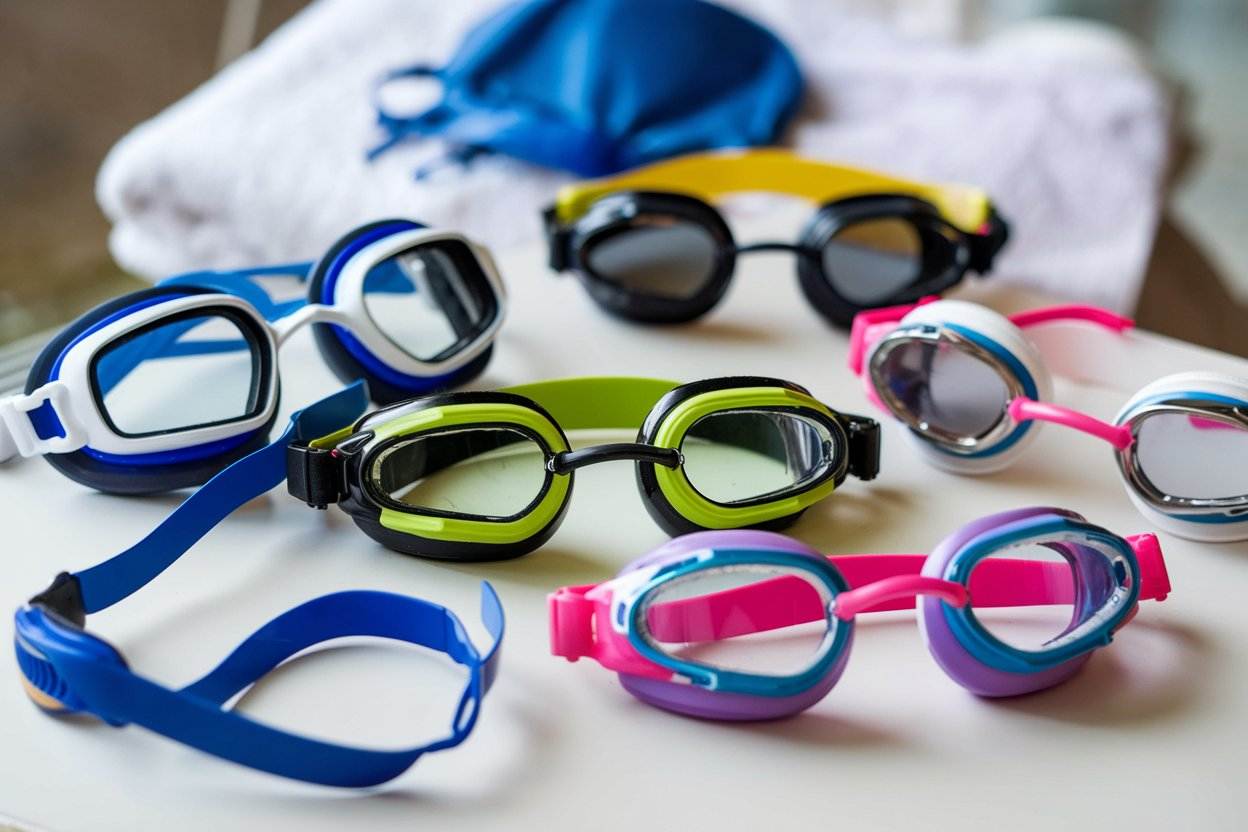
What should “طول العمر” mean in your spec sheet?
This is where most B2B conversations fail: both parties say “مكافحة الأسنان” and mean different tests. A workable specification has three components.
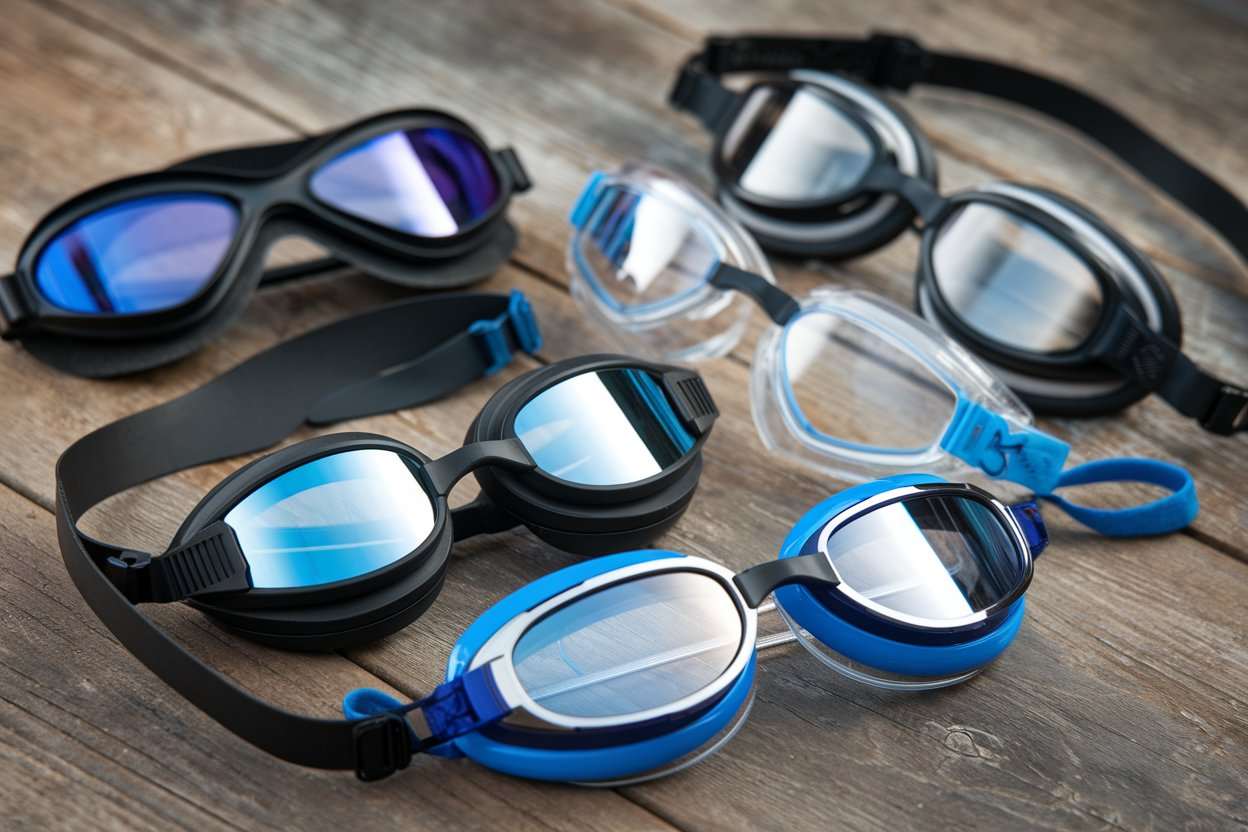
Two performance numbers
Initial fog resistance — how long a fresh lens stays clear under a standard warm-humidity challenge — and retained fog resistance — the same test after a defined number of abrasion and immersion cycles. A lens with brilliant initial clarity that is fully dead after twenty wipe-equivalents is a returns machine dressed as a premium product. على العكس من ذلك, a modest-but-stable coating often plays better on a club shelf. You are allowed to want different answers at different price points; what you cannot do is ask for only one answer.
A named test method
Ask which protocol the numbers come from and whether the lab conditions are reproducible — steam challenge, temperature, رطوبة, timing, and the abrasion rig all move the result. Vanguard’s delivery documentation includes anti-fog duration data in the inspection report alongside seal and tensile results, and anti-fog grade is an accepted engineering input on custom goggle programs; what belongs in your purchase contract is the threshold and the method, stated in writing before production. A supplier who offers a number but cannot describe the test behind it is quoting a hope, not a spec.
اتساق الدفعة
Coating performance varies by lot, cure oven, and handling. The commercial risk is asymmetric: one weak batch poisons a review page that took two seasons to build. Periodic post-production sample checks against the agreed protocol — and a clause about what happens when a batch fails it — cost almost nothing and buy enormous goodwill.
When coated lenses are the wrong answer for your lineup
Coatings win on optical-grade clarity and premium positioning. They lose on value lines where the customer expects to keep a spare pair in the bag and treat both badly. For those tiers, molded-in (مدمج) anti-fog technology — actives built into the lens material itself, trading absolute optical polish for staying power — is usually the honest fit. The full mechanics of that trade-off, including durability comparisons and retail margin consequences, are laid out in our guide to coated vs molded-in anti-fog goggles, and the deeper factory-side story on how lens bonding and seal quality affect fog behavior is in our piece on silicone co-injection anti-fog goggle technology — a leaky skirt fogs the lens from the inside no matter what chemistry it carries.
For the audit side — what documents to demand, how to test samples, and which red flags end a supplier conversation — the anti-fog swim goggles buyer’s guide runs the checklist; the same test-and-documentation discipline applied to dive masks is demonstrated in our dive mask quality control guide. Specifying goggles and building a range? The lineup overview lives at نظارات السباحة.
الأسئلة المتداولة
How long does anti-fog coating on swim goggles last?
Under regular use, a coated lens degrades over weeks to a season rather than years — the hydrophilic layer is gradually rinsed and abraded. The honest buyer question is not whether it expires but how much performance survives a defined number of wear cycles, which is exactly what a two-number spec (initial and retained clarity) captures.
Can suppliers make anti-fog coating last forever?
No formulation survives unlimited abrasion and rinsing, because the mechanism itself is consumable — mobile surfactant molecules spreading water flat get carried away over time. Claims of permanent anti-fog on a coated lens deserve a test protocol request; if the answer is molded-in anti-fog instead, that is a different technology with a different trade-off, not a magic coating.
What testing should I require from a goggles supplier?
Three things: initial fog duration under a named steam or humidity protocol, retained fog duration after a defined abrasion and immersion cycle count, and batch-level consistency checks against the same method. The protocol name and lab conditions belong in the contract, because the same word “مكافحة الأسنان” can describe results that differ by an order of magnitude depending on how it is measured.
Does packaging really affect anti-fog performance?
Measurably, yes — the coated inside surface can be scuffed before a customer ever opens the box. Lens protectors, individual pouches or cases on premium lines, and no-stack packing all preserve the film; hot display conditions and unprotected lens-to-lens contact shorten the life the coating was engineered for. It is the cheapest longevity lever in the entire supply chain.
Is a hydrophilic coating the same as a hydrophobic mirrored lens?
لا, and mixing them up is a classic spec error. The mirror/REVO layer on the outside of the lens is water-repelling and decorative-glare-oriented; anti-fog lives on the inside face and is water-attracting. A lens can carry both — and on outdoor lines it usually should — but they are separate operations with separate durability profiles.