Les masques de plongée sur ordonnance sont l'un des segments spécialisés à la croissance la plus rapide sur le marché des équipements de sports nautiques.. With corrective lenses built into the mask, they open up snorkeling and diving for millions of nearsighted users who would otherwise struggle with blurry underwater vision — or resort to impractical solutions like wearing contact lenses under a standard mask.
For B2B buyers, this category represents a high-margin opportunity: prescription masks command 40–100% price premiums over standard masks, have lower return rates (because the product solves a specific, well-understood problem), and face less price competition from generic manufacturers. This guide covers the two prescription approaches, diopter range considerations, customization options, MOQ structure, and target customer analysis — everything you need to make informed sourcing decisions.
Two Approaches to Prescription Dive Masks
The industry uses two fundamentally different methods to add corrective power to a dive mask. Each has distinct advantages, cost structures, and market positioning.
| Fonctionnalité | Approach A: Built-in Prescription Lenses | Approach B: Interchangeable Lens Insert |
|---|---|---|
| How it works | The mask’s main lenses are manufactured to the prescribed diopter — each mask is made to order for a specific prescription | A secondary lens insert sits behind the mask’s standard flat lenses — the insert carries the prescription |
| Diopter range | Custom: any diopter within manufacturing limits (typically 0 à -8.00, with astigmatism correction available) | Stepped: available in fixed increments (-1.0, -1.5, -2.0, -2.5, -3.0, -4.0, -5.0, -6.0, -7.0, -8.0) |
| Optical quality | Superior — single lens, no internal reflection | Good — but potential for internal reflection between insert and main lens |
| SKU complexity | High — every diopter × every frame color = unique SKU | Low — standard mask SKU + insert SKU (10 diopter options) |
| Inventory model | Make-to-order (longer lead time per order) | Stock mask + stock inserts (assemble to order) |
| Coût unitaire | Plus haut (custom lens grinding per order) | Inférieur (mass-produced inserts + standard mask) |
| Retail price range | $60–$150 | $35–$80 |
| Mieux pour | Optical shops, dive shops with prescription service, premium brands | Retail chains, commerce électronique, rental operators |
Approach A: Built-in Prescription Lenses
Manufacturing Process
Each lens is individually ground and tempered to the prescribed diopter. Le processus:
- Raw tempered glass blank is selected based on the target diopter
- CNC grinding shapes the lens surface to the exact prescription
- Edge cutting shapes the lens to fit the mask frame
- Edge polishing removes sharp edges
- Quality inspection: diopter verification, optical clarity, edge quality
Advantages
- Precise correction: Exact diopter matching (including half-steps and cylinder correction for astigmatism)
- Optimal optical quality: Single optical surface — no secondary reflection or ghosting
- Premium positioning: Justifies higher price point; perceived as custom-made
Limites
- Lead time: Each lens is made to order — 7–15 days per prescription
- SKU management: Every diopter is a separate SKU; inventory planning is complex
- Coût: Custom lens grinding adds $5–$15 per lens pair vs. standard flat lenses
Approach B: Interchangeable Lens Insert
How It Works
A secondary lens frame clips or slides into the interior of a standard dive mask. The insert holds prescription lenses positioned close to the wearer’les yeux (behind the mask’s main flat lenses). The main lenses remain non-prescription — they provide the seal and the view, while the insert provides the correction.
Advantages
- Inventory efficiency: Stock standard masks + 10 insert diopter options. Assemble to order.
- Coût inférieur: Inserts are mass-produced in fixed diopter steps
- Faster fulfillment: Pick mask + pick insert → assemble → ship
- Rental-friendly: The same mask can serve different users by swapping inserts
Limites
- Stepped diopters only: Users must round to the nearest available step (Par exemple, un -2.75 prescription uses a -2.5 ou -3.0 insert)
- Internal reflection: Light can reflect between the insert and the main lens, causing ghosting in bright conditions
- Reduced field of view: The insert is smaller than the main lens, creating a « window within a window » effect
- Fog risk: The insert creates an additional air gap that can trap moisture
Diopter Range: What the Market Needs
Based on global myopia statistics and our order data, here is the demand distribution for prescription dive masks:
| Diopter Range | % of Prescription Mask Buyers | Inventory Recommendation |
|---|---|---|
| -1.0 à -2.0 (mild myopia) | ~25% | Stock heavily — highest volume |
| -2.5 à -4.0 (moderate myopia) | ~40% | Stock heavily — largest segment |
| -4.5 à -6.0 (high myopia) | ~25% | Stock moderately |
| -6.5 à -8.0 (very high myopia) | ~8% | Stock lightly or make-to-order |
| +1.0 à +3.0 (hypermétropie / reading) | ~2% | Make-to-order only |
Key insight: 65% of prescription mask buyers need between -2.5 et -4.0 diopter. If you are stocking for retail, this range should have the deepest inventory. Combined with -1.0 à -2.0, le -1.0 à -4.0 range covers approximately 65% of demand.
Customization Options for B2B Buyers
For Approach A (Built-in Prescription)
- Choose your base mask model (frame design, skirt color, strap type)
- Specify diopter per unit (exact prescription, including cylinder for astigmatism)
- Custom packaging with diopter labeling
- Custom logo on frame and packaging
- MOQ: 300 pcs per mask model (diopters can be mixed within the MOQ)
For Approach B (Interchangeable Insert)
- Choose your base mask model
- Specify insert diopter distribution (Par exemple, 50× -2.0, 100× -3.0, 50× -4.0)
- Custom insert packaging with diopter labeling
- Custom logo on mask frame, insert frame, et emballage
- MOQ: 100 pcs per insert diopter; mask MOQ follows standard terms
Target Customer Analysis
| Customer Segment | Preferred Approach | Buying Behavior | Price Sensitivity |
|---|---|---|---|
| Nearsighted recreational snorkelers | Approach B (insert) | Online purchase; compares options; reads reviews | Medium — willing to pay $40–$60 for a solution |
| Scuba divers with myopia | Approach A (built-in) | Dive shop purchase; trusts instructor recommendation | Low — safety and quality are priorities; $80–$150 acceptable |
| Dive rental operators | Approach B (insert) | Bulk purchase; needs multiple diopters; durability-focused | High — volume buyer; $25–$40 per unit target |
| Optical shops / optometrists | Approach A (built-in) | Custom prescription service; premium positioning | Low — medical-adjacent channel; $100–$150 retail |
| Amazon / vendeurs de commerce électronique | Approach B (insert) | Stock 5–8 diopter SKUs; FBA-friendly packaging | Medium — competitive market; $35–$60 retail |
Quality Requirements Specific to Prescription Masks
Prescription lenses require additional QC checks beyond standard mask testing:
| Test | What It Measures | Pass Criteria |
|---|---|---|
| Diopter verification | Actual diopter matches prescribed value | Within ±0.12 diopters of target |
| Optical center alignment | Optical center of lens aligns with pupil position | Within ±1mm of design position |
| Surface quality | No scratches, bubbles, or inclusions in optical zone | Zero defects in 25mm diameter central zone |
| Edge quality | No chips, cracks, or sharp edges | Smooth polish; passes fingertip test |
| Transmittance | Sufficient light passes through the corrected lens | ≥ 89% for clear lenses |
Pricing Structure
| Product Type | Base Mask Cost | Prescription Add-on | Total Unit Cost | Suggested Retail |
|---|---|---|---|---|
| Approach A: Built-in prescription (standard diopter) | $6–$10 | +$5–$8 per lens pair | $11–$18 | $60–100$ |
| Approach A: Built-in prescription (astigmatism correction) | $6–$10 | +$10–$15 per lens pair | $16–$25 | $80–$150 |
| Approach B: Standard mask + insert | $6–$10 | +$2–$4 per insert | $8–$14 | $35–60$ |
Foire aux questions
Can you produce prescription masks with co-injected frames?
Oui. The co-injection process applies to the frame and skirt — the lens is a separate component regardless of prescription type. Co-injected frames with prescription lenses give you the combined benefit of a superior seal and custom vision correction.
What is the lead time for prescription orders?
Approach B (insert): 15–30 days (stock mask + stock inserts, assembled to order). Approach A (built-in): 30–45 days (custom lens grinding adds 7–15 days to standard production timeline).
How do I handle returns for prescription products?
Approach B products can be returned to stock (the insert can be swapped for a different diopter). Approach A products are custom-made and cannot be resold — factor this into your return policy. We recommend a « fit guarantee » model: if the diopter is wrong, offer a lens replacement at cost rather than a full refund.
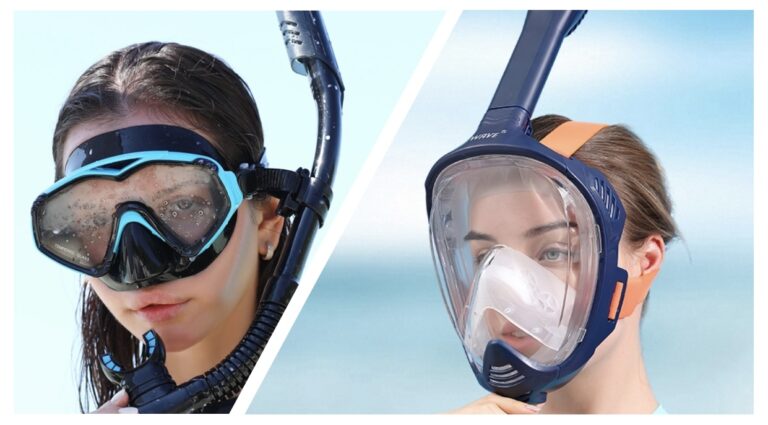
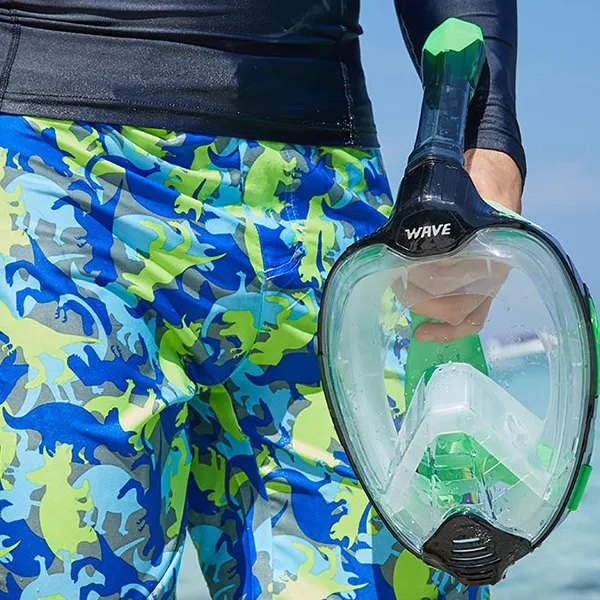
Is there a market for prescription full-face snorkel masks?
Oui, but it is more complex. Full-face masks require the prescription insert to work within a larger air space, and the insert must not interfere with the breathing airflow. We are developing prescription-compatible full-face mask solutions — contact us for the latest availability.