Sur une fiche technique, a good freediving fin and a good spearfishing fin can look almost interchangeable: long blade, ouvert en entier, bootie, high-recovery composite. That overlap is exactly what makes the merchandising decision hard for a dive shop or watersports retailer. Stock them as two categories and you double your SKU count on products that share a mold family; merge them into one « long fin » wall and you lose the trained customers who shop by discipline and resent being sold a recreational blade for a deep hunt.
This guide is for that buying decision: where freediving fins vs spearfishing fins genuinely differ in design and demand, where they overlap enough to share tooling and inventory, and how a retailer should decide between stocking them as one line, two lines, or one line with two merchandising stories.
Points clés à retenir
- Freediving and spearfishing fins share a core architecture — long blade, ouvert en entier, bootie, stiff high-recovery composite — which is why one capable factory can serve both categories from adjacent tooling.
- The real differences are tune and durability, not category labels: spearfishing blades skew stiffer for a powerful dive-down, and spearfishing fins take more rail and foot-pocket abuse from reefs, bateaux, and hiking over a shoulder.
- Pour un détaillant, the demand overlap is higher than the product overlap — many trained divers use one long fin for both disciplines, which means cross-merchandising can lift conversion but mis-merchandising can strand stock.
- The safest structure is a single long-fin platform stocked on shared tooling, presented as two curated builds (plongée en apnée, chasse sous-marine) rather than two independent size/color programs that each carry their own MOQ.
- Split fins and short travel fins are not spearfishing products — do not fold them into the spearfishing story; they belong to the snorkeling and training shelf.
Where do the two categories actually overlap in design?
Both disciplines solved the same physics problem before they became marketing categories: how to move a human body down a rope or a dive line with as few kicks as possible and as much thrust per stroke as possible. The answer, in both cases, is a long blade on an open-heel foot pocket worn over a bootie, tuned to load under a slow, powerful kick and recoil sharply. That shared architecture means the underlying manufacturing — the blade layup, the foot-pocket molding, the strap hardware — is the same competency.
For a retailer sourcing from a factory with in-house mold development and composite capability, this is the key insight: the freediving line and the spearfishing line are frequently cousins on the same production platform. The engineering challenge of balancing large-blade flexibility against thrust efficiency is identical. A supplier who can lay up a carbon freediving blade can build a spearfishing blade; the differences are in tune and trim, not in whether the factory can make it. That manufacturing reality is explored further in the guide d'approvisionnement en palmes d'apnée en carbone.
Where do they genuinely differ?
Once you get past the shared shape, three differences matter to how each category sells and how it holds up.
Blade tune and stiffness
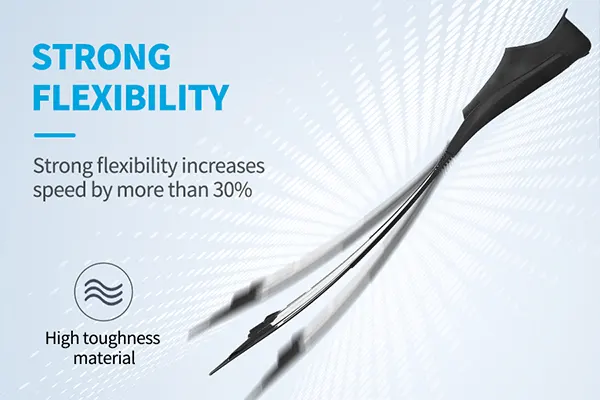
Spearfishing rewards a faster, more powerful dive-down and a hunting style that burns calories fast, so spearfishing blades often run stiffer and more direct — a hard carbon that loads under a strong kick and returns energy immediately. Recreational freediving spans a wider range and, for many buyers, a softer, more forgiving medium stiffness is preferable for long relaxed sessions. When you compare freediving fins vs spearfishing fins on the same supplier shelf, expect the spearfishing build to sit at the stiff end of the freediving stiffness spectrum rather than in a wholly separate class.
Durability and rail protection
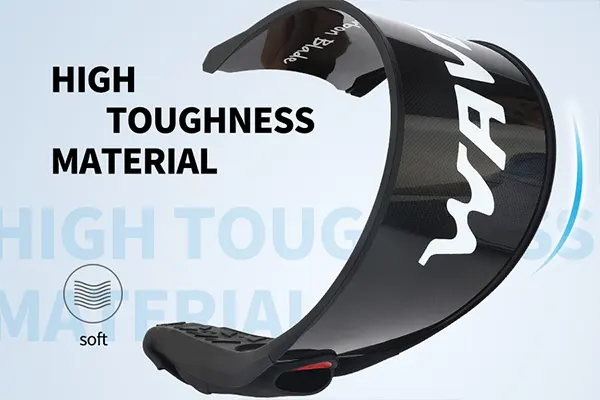
A spearfishing fin gets abused in ways a pool or open-water freediving fin does not: dragged over gunwales, scraped on reefs, loaded sideways when a diver hikes it across the back with a float line and weight belt attached. That pushes spearfishing models toward tougher rails, more abrasion-resistant foot pockets, and hardware rated for a harder life. Freediving fins optimized purely for performance and weight can be lighter and more delicate. This difference is a receiving-inspection and warranty-claims conversation, not a catalog adjectives one.
Aesthetics and accessories
Spearfishing ranges lean toward low-visibility finishes and functional trim; freediving ranges lean toward color and brand-forward styling. Small, but it changes what a shelf looks like and what each customer segment will accept.
How does the demand overlap affect a retailer’s decision?
Here is where the merchandising choice gets genuinely difficult. The product overlap is architectural; the demand overlap is behavioral, and it is large. A meaningful share of trained divers own one pair of long carbon fins and use them for both depth training and spearfishing — they do not police the category label the way a retailer’s planogram does. That has two implications that pull in opposite directions.
| Decision | Upside | Risk |
|---|---|---|
| Stock as two separate lines | Clear category authority, serves discipline shoppers | Doubled SKU count and MOQ on shared tooling; dead stock in the thinner line |
| Merge into one « long fin » wall | Efficient inventory, one size/color program | Alienates trained buyers; sells the wrong stiffness to each discipline |
| Une plateforme, two curated builds | Shared-tooling economics with discipline-specific merchandising | Requires a supplier who can trim tune/accessories per build |
The structure that usually wins for a mid-size dive or watersports retailer is the third option: stock a single long-fin platform on shared tooling, then present two curated builds — a freediving build weighted toward forgiving medium stiffness and a spearfishing build weighted toward stiff blades and durable rails. You get the category authority that converts discipline shoppers without paying twice the MOQ for the privilege. Heel-type decisions inside that platform follow the same logic covered in the closed-heel vs open-heel freediving fins guide — both disciplines here sit firmly on the open-heel side.

What should a retailer deliberately keep out of the overlap?
The overlap is between long-blade, open-heel performance fins — not the whole fin category. Split fins and short travel fins have a different value proposition (low-effort propulsion, packing convenience) and a different buyer (snorkeler, resort guest, lap trainer). Merging them into a spearfishing or freediving story confuses both the shelf and the customer. Keep them on the snorkeling side, where the guide des types de palmes de plongée en apnée et le snorkeling fins category place them correctly. The point is that « long fin » is not a synonym for « performance fin » — the discipline-driven long fin is a specific product, and the crossover logic only applies within that band.
How do you source the overlap without over-committing?
The overlap is a sourcing advantage only if you buy it the right way.
- Buy the platform, trim the builds. Commit depth to the shared mold family, then differentiate the freediving and spearfishing builds through blade tune, rail reinforcement, and accessories rather than through separate tooling and separate MOQs.
- Sample across both intended uses. A blade that reads « stiff spearfishing » on a sheet may feel medium in the water; load samples for both a dive-down test and a durability check before you build the wall.
- Watch per-color economics. Two curated builds can quietly double your per-color commitments if you give each its own color range. A common freediving-fin baseline is around 300 pièces par couleur, so keep the shared sizes and colors overlapping where the customer will accept it.
- Confirm durability spec for the spearfishing build. If you are merchandising a hunting fin, the foot pocket and rail need to survive reef and boat abuse; that is a spec conversation with the factory, agreed before the order and checked at receiving.
A supplier running both disciplines on adjacent tooling, with in-house mold development, is the one who can actually support the two-build model rather than forcing you into two independent programs.
How do price, margin, and turn differ between the two?
The two builds sit at different points on the retailer’s profit curve, and that difference should shape how much shelf and inventory you give each. A spearfishing fin is usually the higher-ticket, lower-volume item: the customer is buying a tool they trust with a hunt, will pay for a stiff carbon blade and reinforced rails, and is less price-sensitive because failure in the water is expensive. That supports a healthy margin per unit but a slower turn, so it is worth stocking deliberately rather than deep.
A freediving fin, especially in the recreational medium-stiffness band, turns faster and carries a broader customer base, but it also competes harder on price because more of the range overlaps with general long fins and with what an informed buyer can find online. The practical read for a retailer: use the freediving build for velocity and to fill the size and color curve, and use the spearfishing build for margin and category credibility. Because both come off the same platform, you are not paying two tooling bills to hold both positions — which is the entire reason the two-build structure beats two independent programs on the numbers. Model it against your actual sell-through before you set depth, and keep the accessory attach-rate (booties, sangles, blades) in the margin math, since it differs between the two customer types.
Foire aux questions
Can a freediving fin be sold as a spearfishing fin and vice versa?
Souvent, dans les limites. Both share the long-blade, talon ouvert, bootie architecture, so a trained diver frequently uses one pair for both. The honest distinction is tune and durability: spearfishing models skew stiffer and more abrasion-resistant. Selling a light, soft recreational freediving fin as a spearfishing fin invites failures on reefs and boats, so match the build to the abuse the customer expects.
Should a dive shop stock freediving and spearfishing fins separately?
For most mid-size shops, a single long-fin platform presented as two curated builds beats two fully separate programs. It keeps the category authority that converts discipline shoppers while avoiding doubled SKU counts and per-color MOQs on tooling that is largely shared anyway. Reserve two independent lines for stores with genuine volume in both disciplines.
Do split fins belong in the spearfishing or freediving range?
Non. Split fins serve snorkeling, entraînement, and low-effort propulsion — a different value proposition and a different buyer than the discipline-driven long fin. Keep them on the snorkeling shelf; folding them into a freediving or spearfishing build confuses both the customer and your sizing program.
What is the main manufacturing difference between the two builds?
Blade tune and durability spec, not the mold family. The foot pocket, blade layup capability, and strap hardware are shared competencies; the spearfishing build runs a stiffer tune, tougher rails, and a more abrasion-resistant pocket. That means a factory with composite and in-house mold development can serve both categories, trimming each build without you funding separate tooling.