If you are building or expanding a swim gear brand, choosing the right goggles is one of the most important sourcing decisions you will make. Swim goggles have a higher defect sensitivity than most watersports products: a 0.3 mm gap in the seal, a coating that degrades after 20 pool sessions, or a lens that fogs during the first lap will generate returns, not repeat orders. This guide walks through the decisions that matter, based on 30 years of manufacturing experience at our Guangzhou factory.
Understanding Your Market
最初の質問はそうではありません “which goggle do you like?” しかし “who is swimming in it?” The goggle that sells well to competitive lap swimmers in Germany has almost nothing in common with the one a resort chain in Bali stocks for guest snorkeling. Before you look at a single spec sheet, map your end users.
Competitive and fitness swimmers
This segment wants low-profile goggles with a narrow field of view, hydrodynamic frames, and a tight seal. Polycarbonate lenses with anti-fog and UV protection are standard. The buyer cares about drag reduction and long-session comfort. Price tolerance is moderate to high, but the quality bar is unforgiving: a competitive swimmer will notice a leaking seal in the first 50 メートル.
Recreational and leisure swimmers
Wider frames, softer silicone gaskets, and lighter weight matter more here. These goggles sell through retail, 電子商取引, and hotel amenity programs. The buyer is price-sensitive but expects durability through at least one full swim season. Clear or lightly tinted lenses dominate; mirrored finishes are a visual upgrade that commands a small premium.
Kids and junior swimmers
Smaller face geometry, hypoallergenic materials, and adjustable straps that a parent can manage. Safety certifications (CE, FDA) are non-negotiable for children’s products in most Western markets. Bright colors and character licensing drive retail sales, but the purchasing decision-maker (the parent) wants assurance that the silicone is free from phthalates and BPA.
Rule of thumb: define your top two end-user segments before requesting samples. A factory that asks “who is this for?” before “how many do you need?” is usually a better partner.
Key Features to Consider
Once you know your market, the specification choices narrow down to a handful of engineering decisions. Each one affects cost, パフォーマンス, and the defect profile of the finished product.
Lens material and optical quality
ポリカーボネート (パソコン) is the industry standard for swim goggle lenses. It is impact-resistant, lightweight, and can be molded into curved shapes that provide a wide field of view. The critical variable is optical clarity. Low-grade PC lenses introduce distortion at the edges, which fatigues the eye during longer sessions. Ask your supplier for a distortion test report or a refractive index measurement. At Vanguard Swimming, we use optical-grade PC that meets ANSI Z80.3 non-prescription lens standards.
Anti-fog coating
Anti-fog performance is where cheap goggles fail fastest. There are two approaches: a spray-on coating (lower cost, degrades in 30 に 50 swims) and a co-molded inner lens treatment (higher cost, lasts 200+ swims). If your brand promise includes durability, specify the co-molded treatment and ask for a fog-resistance cycle test. The standard test protocol is 200 thermal cycles between 5 C and 40 C water with no visible fog formation.
Gasket and seal design
ガスケット (the part that touches the face) is typically medical-grade silicone or thermoplastic rubber (TPR). Silicone is softer, more hypoallergenic, and holds its shape longer, but costs 15 に 25% more per unit. TPR is adequate for entry-level products. The gasket profile matters as much as the material: a dual-flange design creates two sealing points and is more forgiving of face-shape variation than a single-flange design. For a brand selling across multiple markets with different average face geometries, dual-flange is the safer choice.
Frame and strap construction
Frames are usually injection-molded from a flexible PVC or a more rigid polycarbonate. Flexible frames conform better to different face shapes but sacrifice the structural rigidity that competitive swimmers prefer. Strap material is typically silicone or latex; silicone lasts longer and is hypoallergenic. The adjustment mechanism (side clips vs. rear buckle) affects both user experience and tooling cost. Side-clip designs are faster to adjust in the water but require more complex molds.
| 特徴 | Budget tier | ミッドレンジ | プレミアム |
|---|---|---|---|
| Lens material | Standard PC | Optical-grade PC | Optical PC + mirrored coating |
| 歯止め | Spray coating (30-50 swims) | Enhanced spray (80-120 swims) | Co-molded treatment (200+ swims) |
| ガスケット | TPR single-flange | Silicone single-flange | Silicone dual-flange |
| Strap | ラテックス, rear buckle | シリコーン, side clips | シリコーン, dual side-clip + quick-adjust |
| Frame | Flexible PVC | Flexible PVC + PC bridge | Rigid PC, low-profile |
| UV保護 | UV400 (standard) | UV400 | UV400 + polarized option |
OEM vs Private Label: Which Model Fits Your Brand?
There are two main paths to putting swim goggles under your brand name. The right choice depends on your order volume, タイムライン, and how differentiated you need the product to be.
Private label (white label)
You select an existing model from the factory’s catalog and apply your logo, カスタムカラー, and branded packaging. The tooling already exists, so you avoid mold costs (typically USD 3,000 に 8,000 for a goggle frame). Lead times are shorter because the factory is producing a known design. The trade-off is that the same base model may be sold to other brands, so your product is not exclusive.
OEM (original equipment manufacturing)
You work with the factory’s engineering team to design a custom goggle: proprietary frame shape, custom gasket profile, branded strap, and unique colorways. This requires new molds and a longer development cycle (通常 45 に 90 days for mold fabrication and sample approval), but the result is a product that no other brand carries. For brands competing on design differentiation, OEM is the only path.
| 要素 | プライベートブランド | OEM (カスタム) |
|---|---|---|
| Product exclusivity | 低い (shared base model) | 高い (proprietary design) |
| 金型コスト | なし (existing tooling) | 米ドル 3,000 – 8,000 per mold |
| Development time | 7 – 14 日々 (color/logo only) | 45 – 90 日々 (型 + samples) |
| MOQ | 300 個/色 (standard) | 1,000 個/色 (共注射) |
| Logo customization | Print on lens, ストラップ, 梱包 | Embossed in mold + print + strap weave |
| 包装 | Standard box or blister with your artwork | Custom structural packaging design |
| こんな方に最適 | New brands, seasonal launches, hotel amenities | 確立されたブランド, premium lines, long-term programs |
At Vanguard Swimming, we support both models. Many of our clients start with private label to test a market, then move to OEM once they have validated demand and know exactly what their customers want.
MOQ and Lead Time: Planning Your Order
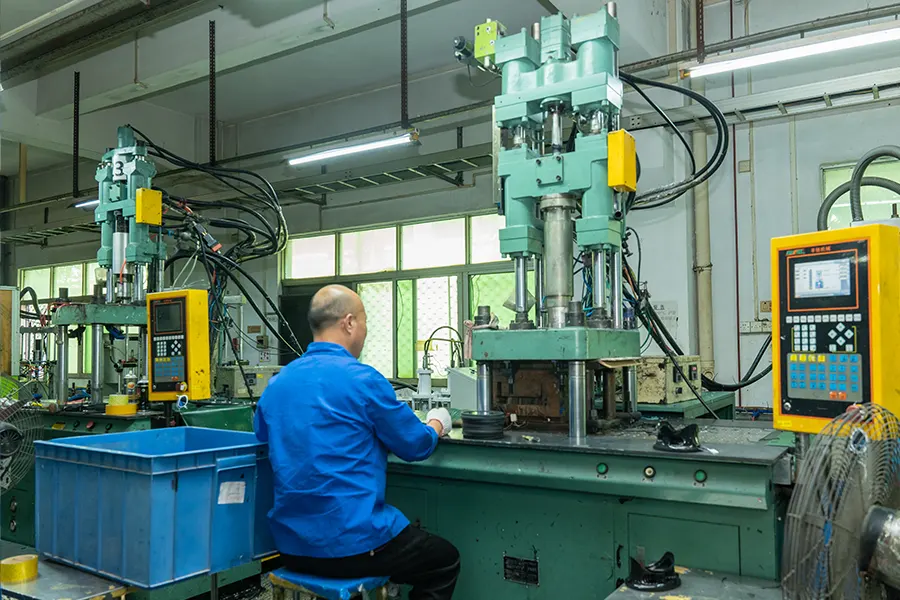
Minimum order quantities and production timelines are the practical constraints that shape your sourcing strategy. Here is what to expect from a factory of our scale (4 生産ライン, 65 射出成形機, ISO 9001:2015 certified).
Vanguard Swimming MOQ and Lead Time Reference
- 水泳用ゴーグル
- 300 色ごとの個数 (プライベートブランド), 1,000 色ごとに (co-injection mold)
- 水着
- 500 色ごとの個数
- スイムキャップ
- 500 色ごとの個数
- ダイビングマスク
- 300 色ごとの個数
- In-stock items
- Ships within 48 時間
- Custom orders
- 30 に 60 日々, depending on complexity and quantity
- New mold
- 45 に 90 日々 (デザイン, tooling, サンプルの承認, 生産)
How to think about MOQ
MOQ exists because production setup has fixed costs: mold installation, color changeover, packaging line configuration, and quality calibration. Below a certain volume, those fixed costs make the per-unit price uneconomical for both sides. A 300-piece MOQ per color for goggles is standard in the Chinese swim gear industry. Factories that quote lower MOQs are often trading companies adding a margin on top of a larger factory order.
Reducing your risk on first orders
If you are launching a new brand or entering a new market, consider these approaches to keep initial risk manageable:
- Start with private label の上 2 に 3 colors to test which sell, then commit to OEM tooling once you have sales data.
- Consolidate colors across SKUs. Ordering 300 black goggles across two frame styles (600 total) is easier to manage than 300 each across six colors.
- Ask about mixed-container pricing. Some factories, including ours, offer better logistics pricing when you combine goggles with caps, マスク, or swimwear in one shipment.
Quality Standards: What to Require from Your Factory
Quality in swim goggles is measurable, not subjective. A factory that cannot provide documentation for the following standards is not ready for export-grade production.
ISO 9001:2015 品質管理
This is the baseline. It means the factory has a documented quality management system, conducts internal audits, tracks non-conformances, and has corrective action procedures. Vanguard Swimming has held ISO 9001 certification continuously, and our system covers design, 生産, and delivery with annual third-party audits.
AQL inspection
Acceptable Quality Level (AQL) is the statistical sampling method used to inspect finished goods before shipment. For swim goggles, the standard is AQL 2.5 for major defects (leaking seal, cracked lens, broken strap) and AQL 4.0 for minor defects (cosmetic scratches, color variation). Ask your factory for their AQL inspection report format and whether they allow third-party inspection (SGS, Bureau Veritas, インターテック) 出荷前に.
Material and safety certifications
| 認証 | Covers | Required for |
|---|---|---|
| CEマーキング | Health, 安全性, environmental standards | 欧州連合 / EEA markets |
| FDA登録 | Materials in contact with skin and eyes | United States market |
| エコテックス規格 100 | Textile components free from harmful substances | 水着, textile straps, 梱包 |
| REACH準拠 | Chemical substance restrictions (SVHC) | EU市場 (phthalates, heavy metals) |
| BPA-free / phthalate-free | Silicone and plastic components | Children’s products, all markets |
| ANSI Z80.3 | Optical clarity for non-prescription lenses | Performance and competitive segments |
Production-line quality checks
Beyond certifications, ask about in-line quality control. At our factory, every goggle passes through the following checks during production:
- Lens clarity test: Each lens is inspected under standardized lighting for distortion, 泡, and coating uniformity.
- Seal integrity test: Assembled goggles are pressurized and submerged to verify zero leakage at the gasket-to-frame junction.
- Strap tensile test: Straps are stretched to 200% elongation and held for 60 seconds to verify recovery without permanent deformation.
- Anti-fog cycle test: Sample units from each batch undergo thermal cycling between 5 C and 40 C water to verify coating durability.
A factory that shares its QC checklist willingly is a factory that runs its production floor with discipline. If you have to ask twice for inspection documentation, treat that as a data point.
Next Steps: From Inquiry to First Shipment
Once you have defined your target market, selected your specification tier, and decided between private label and OEM, the process moves quickly:
- Send your inquiry. Include target models (or describe your end user), quantities per color, ロゴファイル, and your target launch date. Our export team at wavewattersports@gmail.com replies within one business day.
- Receive samples. For private label, we ship existing samples with your color selection within 5 business days. For OEM, we produce custom samples after mold approval, typically within 30 日々.
- Approve and confirm. You approve samples, confirm the proforma invoice, and we schedule production. a 30% deposit is standard; the balance is due before shipment or against copy of B/L.
- Production and QC. We produce your order and run full AQL inspection. You receive an inspection report with photos before we book the shipment.
- Ship and deliver. In-stock items ship within 48 時間. Custom orders take 30 に 60 日々. We handle export documentation, container loading, and can arrange door-to-door delivery if needed.
Whether you are ordering 300 goggles for a hotel amenity program or 50,000 for a national retail chain, the process is the same: clear specs, transparent pricing, documented quality, and on-time delivery. That is what 30 years of factory experience buys you.
ヴァンガードスイミングへのお問い合わせ
- 会社
- 広州ヴァンガードウォータースポーツ製品有限公司, Ltd.
- ワッツアップ
- +86 20 6232 3009
- Response time
- 1営業日以内