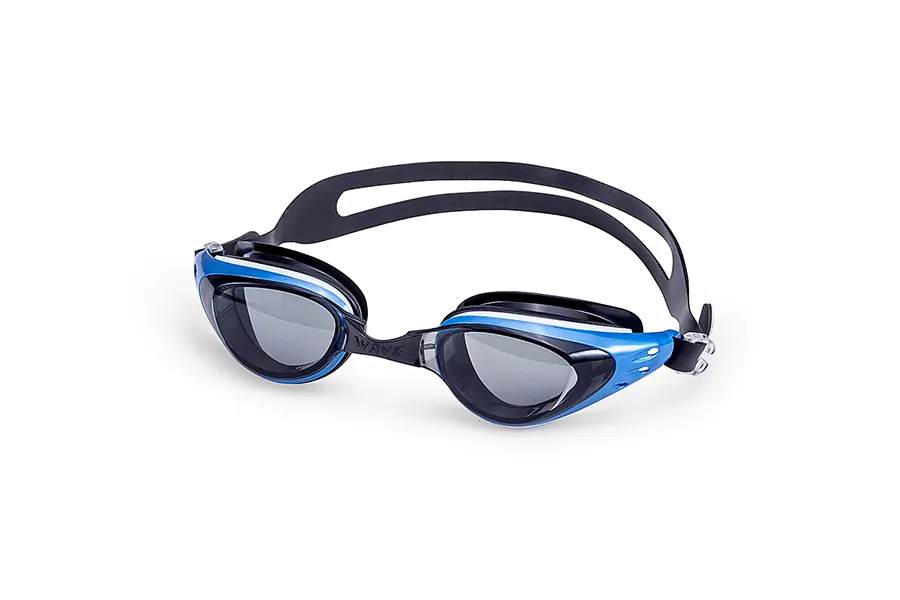
Ask ten pool-side retailers what drives their summer counter sales and at least half will answer the same way: parents who walked in for one pair of goggles and left with a junior kit, a spare, and a swim cap. The youth athlete who outgrew last season’s fit is a repeat customer on a schedule most adult categories never see. So when a specialty swim shop or a sporting goods chain evaluates a youth swim goggles line extension, the real question is rarely whether demand exists. It is whether goggles built for eight-year-old faces should be treated as a scaled-down version of the adult range, or as a genuinely different product with its own fit logic, compliance file, and margin structure.
This article breaks down that decision from the buying side of the counter: how youth and adult goggles actually differ in engineering terms, what safety and materials documentation a junior line needs that an adult line can sometimes skate by without, how the commercial math works out across a season, and what a sensible first assortment looks like before you commit shelf space.
Key Takeaways
- Youth goggles are not resized adult goggles: smaller face geometry drives different nose bridges, gasket footprints, and strap systems, which in turn drive separate mold sets and MOQ planning.
- Fit failures, not lens failures, generate most junior-line returns — a child-sized seal test in the sampling stage is worth more than another coating claim.
- Materials documentation (OEKO-TEX Standard 100, phthalate and silicone safety reports) is a commercial asset in the junior category; parents and school programs ask for it even when regulations do not force the issue.
- Replacement cycles of one season or shorter can make junior goggles a higher-turn, higher-margin shelf than part of the adult range, provided size and color assortment is disciplined.
- MOQ of 300 pieces per color is typical for established factories; new brands should plan first orders around a tight core assortment rather than a wide color story.
What actually changes when a goggle is built for a child’s face?
Adult goggle design optimizes for a wide range of skull geometry because one size has to survive a whole team. Junior faces are narrower, flatter at the brow, and — critically for goggles — have a much shorter distance between the nose bridge and the cheekbone. Scale an adult frame down 20% and you usually get a gasket that seals on the top edge while hovering above the cheek line. That gap is where pool water gets in, and it is the mechanism behind most “these leak” reviews on kid products.
The engineering responses show up in three places a buyer can verify during sampling:
- Nose bridge. Youth models need a narrower, lower-profile bridge; the better junior lines borrow the interchangeable-bridge idea from prescription adult goggles and ship S/M clips so one SKU covers an age band instead of one age.
- Gasket footprint. The sealing surface has to follow a smaller eye socket without pressing on the orbital bone. Soft silicone with a thinner wall profile generally seals better on children than the thick, comfort-first gaskets sold heavily to adult masters swimmers.
- Strap and buckle geometry. A buckle sized for adult hands is fiddly for a seven-year-old, but a strap that relies on the wearer to adjust precisely will be lost within a week. Two-point elastic systems with oversized sliders are the practical middle ground, and they also happen to survive shared-use environments like swim schools.
For a retailer, the operational consequence is simple: a junior line is not something your current adult supplier produces “on the same tooling.” It is a separate set of molds, which is why supplier conversations should start with what junior molds they already own, not with what they claim they can make.
Which safety and compliance differences matter at retail?
Adult goggles live in a light regulatory corner: they are sport accessories, and buyers rarely ask for paperwork. Junior products sit closer to the toy-and-kidswear attention zone, even when they are formally classified as sporting goods. Three practical layers separate a defensible junior line from an impulse import:
Materials documentation
Children put straps in their mouths and wear silicone against skin for hours. OEKO-TEX Standard 100 certification on the soft goods components, phthalate test reports on PVC-free alternatives, and food-grade or medical-grade silicone claims backed by actual test summaries are the documents a school-program or kidswear-adjacent retailer will ask you for. A factory already running OEKO-TEX certified lines for swimwear has a real head start here — at a manufacturer like Vanguard, OEKO-TEX Standard 100 sits in the same certification file as ISO 9001:2015 and BSCI, which is exactly the bundle a junior program buyer wants to see on paper.
Small-parts and packaging judgment
Goggles themselves are not a choking hazard, but clip-on bridge guards, spare nose pieces, and hard cases with small latches are. Retail-appropriate junior packaging usually means the product itself is one piece, and any small accessories are either omitted from the junior SKU or clearly age-labeled. If your supplier’s “kids” pack is an adult pack with a smaller window cut into it, that is a design lazy enough to cause problems at the big-box receiving dock.
Claim discipline
UV protection and anti-fog are the two claims junior goggles are marketed on, and both are testable. Ask for the specific standard or test method behind any UV number, and treat lifetime anti-fog language as a red flag — every anti-fog mechanism in the category, coating or molded, degrades with use. For a deeper look at what anti-fog actually is, see how anti-fog technology works and how long it lasts. Retailers who enforce honest claim language on their junior shelf avoid the returns spike that comes from parents believing marketing the product never earned.
How does the commercial math differ from the adult line?
The junior category trades a lower unit price for a better velocity profile. Here is the comparison most buyers end up running:
| Dimension | Adult Goggles | Youth Goggles |
|---|---|---|
| Replacement driver | Wear-out, coating failure, preference change | Outgrown fit, loss, seasonal program start |
| Typical cycle per user | 1–3 years | One season or shorter |
| Price sensitivity | Clustered around performance tiers | Parent decides; “good enough + kid likes the color” closes most sales |
| Assortment pressure | Fit dominates; low color count works | Size band + color both matter; color drives kid approval |
| Return reason profile | Comfort, leakage on specific face shapes | Almost entirely fit and strap adjustment |
| Upsell pairing | Caps, ear plugs, training gear | Full junior kit: cap, snorkel set, lesson-appropriate fins |
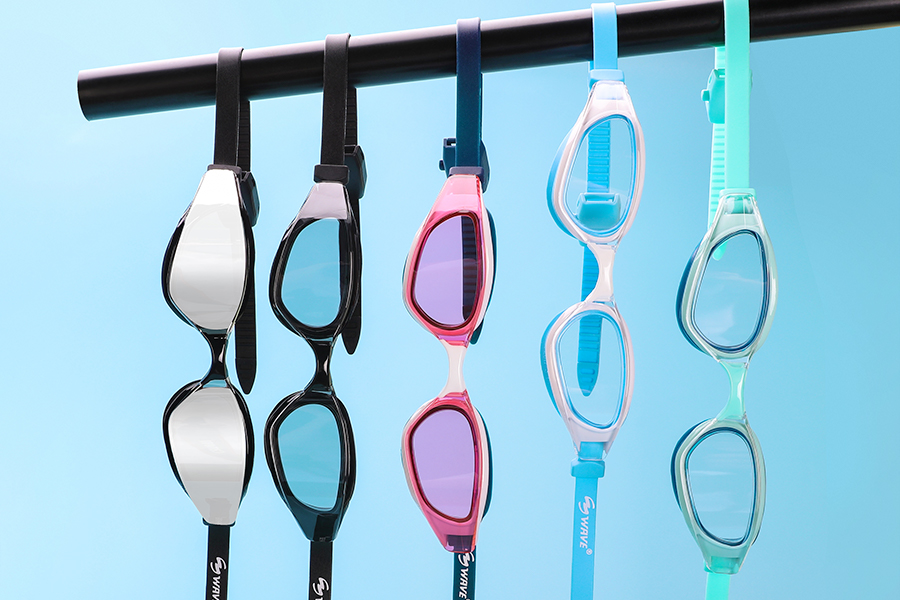
The margin story depends on your channel. Swim schools and camp programs buy in bulk at the start of a term and reorder mid-session when pairs get mixed up or ruined — that is a wholesale motion, and it rewards retailers who stock beyond the minimum size band. Consumer-facing sales skew toward bright colorways and character-neutral designs; a junior line that only comes in “pro black” will move slowly regardless of how good the seal is. For chain buyers, the pattern that works is a tight performance core for the club team crowd plus a high-turn colorful tier for learn-to-swim families.
One caution against over-rotation: youth is a seasonal and size-out category. A depth chart that assumes adult-style multi-year sell-through will leave you holding size 3-6 stock in a store where the customers are now 6-12. Order in shallower waves and reorder aggressively — factories with 48-hour dispatch on stock items make that feasible even mid-season.
What does a low-risk first assortment look like?
Before committing open-to-buy dollars, model the assortment as two age bands rather than one “kids” bucket:
Preschool to early primary (roughly 3–6 years)
Soft seal, wide strap, big slider, one piece. This band is dominated by swim-school use; durability against drops and shared storage matters more than optical performance. Expect the highest loss rate and the most color-driven purchase decisions.
School-age (roughly 6–12 years)
The serious band. Kids in this group are often in squad training, and their parents will pay for a goggle that survives pool chemistry. Low-profile junior racing shapes, mirrored options, and an anti-fog treatment that is honestly rated all fit here. This is also where the interchangeable nose bridge starts paying for itself, because one SKU can span the band.
A sensible opening buy is one deeply-tested junior fit model carried in four to six colorways across two size bands, rather than three models in two colors each. Once the sell-through data from a first season arrives, you can justify expanding toward competitive junior lines or club team programs — competition goggle wholesale programs are the natural next shelf over, and they let you move upmarket without re-learning the fit problem from scratch. If you serve competitive age groups, the children’s goggle size guide is worth pinning behind your counter as a fitting reference for staff.
Retailers who want to go beyond buying somebody else’s junior line — private label, own-brand kids program kits — should talk to a factory with in-house mold development before assuming the tooling cost is out of reach. The custom manufacturing services page covers how a private-label program typically starts, and established factories with existing junior molds can bring a branded line to a much lower MOQ than a fully custom tool.
Frequently Asked Questions
Can I sell the same goggle model as both youth and adult?
Only if the fit genuinely spans both face sizes, which usually requires an adjustable bridge and a compact gasket. Most “unisex” goggles that retail well to adults under-seal on children under roughly ten. Evaluate by fitting the sample on actual child faces, not by reading the size chart.
What MOQ should a first youth goggles order expect?
For established factories with existing junior molds, 300 pieces per color is a common baseline for goggles. New brands usually cannot justify a wide color story at that depth, so concentrate the first order on the two or three colorways that your store demographic turns fastest and reorder rather than over-buy.
Do junior goggles need certifications adult goggles don’t?
Formal classification is often the same, but commercial expectations differ. School programs, kidswear chains, and larger retailers routinely request OEKO-TEX Standard 100 or equivalent materials test documentation for children’s products. Carrying that file makes your junior line easier to sell into channels the adult line cannot enter.
How should I handle the size 3-6 versus 6-12 split on the shelf?
Merchandise them as separate facings if your space allows it, because the purchase decision differs: the younger band is parent-driven and loss-prone, the older band is kid-influenced and increasingly performance-aware. One model in two size bands with shared colorways keeps inventory simple while still speaking to both shoppers.