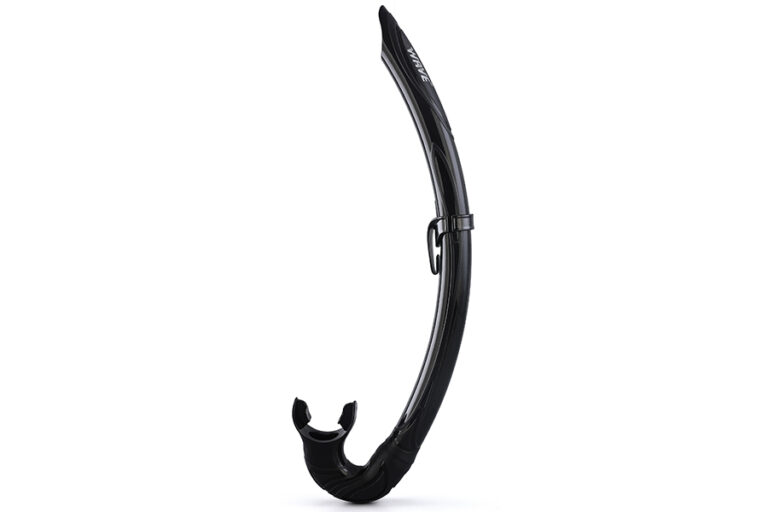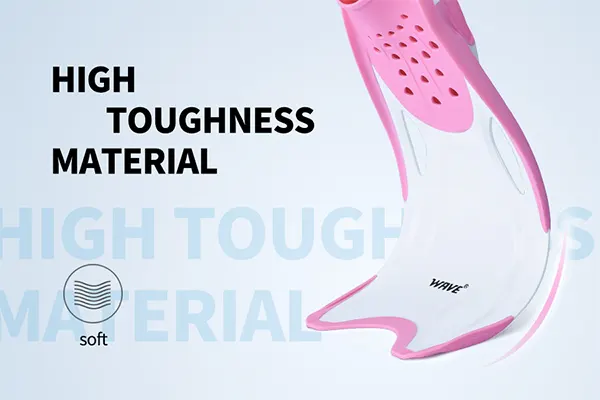
Zwei Schnorchelflossen können sich eine Formzeichnung teilen, eine Farbgebung, und einen Einzelhandelspreis – und am Ende völlig unterschiedliche Retourenquoten. Der Spalt ist normalerweise das Klingenmaterial. Ein Kunststoff, der lautet: „hohe Zähigkeit“ Auf einem Datenblatt kann ein weiches TPR aus einer Fabrik und ein steifes sein, Kalt-sprödes Recycling-Compound im nächsten, und keiner der Anbieter lügt in seinem eigenen Katalog.
Für einen Produktentwickler, der eine Flossenlinie spezifiziert, Bei der Materialentscheidung kommt es auf die Haltbarkeitstechnik an, Anschaffungskosten, und Markenpositionierung kollidieren. Gummi, TPR, Silikon, und Verbundwerkstoffe bringen jeweils eine unterschiedliche Kombination von Elastizität mit sich, Gewicht, Witterungsbeständigkeit, und Preis – und jedes scheitert auf seine eigene vorhersehbare Weise. Wenn Sie den Fehlermodus kennen, können Sie eine Eingangsprüfungsspezifikation schreiben, die fehlerhafte Chargen erkennt, bevor sie einen Kunden erreichen.
Dieser Vergleich geht durch die vier Materialfamilien, die für Schnorchelflossenblätter und Fußtaschen verwendet werden, wie sie sich über eine Nutzungssaison hinweg verhalten, was sie mit Ihrer Kostenstruktur und Ihren Werkzeugoptionen tun, und wie man die Ansprüche eines Lieferanten anhand von Mustern und Tests anstelle von Vertrauen überprüft. Alle für eine bestimmte Fabrik genannten Zahlen beziehen sich auf die dokumentierten Fähigkeiten von Vanguard; Die Materialwissenschaft selbst ist allgemeines Branchenwissen, an das Sie jeden Lieferanten halten sollten.
Key Takeaways
- Die Materialien der Flossenblätter sind in vier verwendbare Familien unterteilt: Naturkautschuk/Synthetikkautschuk, TPR, Silikon, und Verbundwerkstoffe (glasfaserverstärktes Nylon bis Kohlefaser) – jeweils mit einem unterschiedlichen Elastizitäts-Kosten-Profil.
- Elastizität ist keine einzelne Zahl: Klingen-Snap-Back, Versteifung bei kaltem Wetter, Alterung durch UV/Chlor, und Reißfestigkeit sind entscheidend, und billige Verbindungen scheitern bei den letzten drei, nicht der erste.
- TPR ist das Volumen-Arbeitstier für Schnorchelflossen; Gummi hat bei Trainings- und Komfortmodellen einen hohen Stellenwert; Verbundwerkstoffe leben fast ausschließlich im Freitauch- und Leistungsbereich.
- Die Stärken von Silikon (Weichheit, Verwitterung, Hautsicherheit) machte es zum Kern unserer Co-Injektionsarbeit an Masken und Schutzbrillen; Als Flossenblatt ist es aufgrund des Gewichts und der Kosten eine Nische, keine Qualität.
- Akzeptieren Sie niemals eine Materialreklamation ohne einen Mustertestplan: Ablesung des Härtemessers, Freeze-and-Flex, Alterung durch UV/Chlor, und ein Zugtest an Riemenankern und Klingenspitzen trennt Marketingblätter von echten Spezifikationen.
Was bewirkt „Klingenmaterial“ Entscheide dich tatsächlich?
Ein Flossenblatt ist eine Feder. Jeder Tritt lädt es, und das Material entscheidet gleich über vier Dinge: wie viel Energie es speichert und zurückgibt (Effizienz), wie schnell es seine Form wiedererlangt (Zurückschnappen), wie es unter der Sonne altert, Salz, Chlor, und Hitze (Haltbarkeit), und was es pro Kilogramm kostet, zu formen (Wirtschaft).
Fußtaschen und Riemen stellen eine fünfte Einschränkung dar – Hautkontakt und Reißfestigkeit an dünnen Stellen – weshalb es sich bei vielen Flossen tatsächlich um Produkte aus zwei Materialien handelt: eine steifere Klinge, die mit einer weicheren Tasche verbunden oder angelenkt ist. Wenn Sie Lieferantenangebote vergleichen, Bestätigen Sie, welches Material wo verwendet wird. „TPR-Flosse“ kann eine TPR-Klinge mit einer weicheren TPR-Tasche mit einem anderen Härtegrad bedeuten, oder ein All-One-Compound-Budget-Build, der in der zweiten Staffel an der Schnittstelle zwischen Klinge und Tasche knacken wird.
Die fünf Eigenschaften, die es wert sind, für jedes Kandidatenmaterial festgelegt zu werden:
- Elastische Erholung — Kommt die Klinge nach einer starken Biegung wieder flach zurück?, Oder muss es nach einer heißen Containerfahrt dauerhaft aushärten??
- Temperaturverhalten — Kaltwasser- und Kaltklima-Einzelhandel testen beide die Sprödigkeit; Einige Verbindungen versteifen sich dramatisch unter 10 °C.
- Verwitterung — UV-Strahlung und Chlor sind die wahren Killer für die Regalattraktivität auf Märkten, auf denen Kunden ihre Ausrüstung im Freien aufbewahren.
- Reiß- und Abriebfestigkeit — dünne Gesichtszüge (Klingenspitzen, Gurtanker, Fersennähte) Scheitern hier zuerst.
- Formbarkeit und Werkzeugkosten — Wie das Material fließt, entscheidet über die Komplexität des Hohlraums, Zykluszeit, und Ausschussrate, was sich letztendlich in Ihrem Stückpreis niederschlägt.
Gummiklingen: Der Maßstab für Komfort und Effizienz
Naturkautschuk und Mischkautschuk weisen von allen vier Familien das beste Verhältnis von Elastizität zu Härte auf. Eine Gummiklinge biegt sich weit, gibt Energie sauber zurück, und bleibt über einen weiten Temperaturbereich konstant – weshalb Gummi in Schnorchelflossen mit bequemer Position und in Freitauchflossen mit langen Flossen überproportional häufig vorkommt, wo ein sanfter progressiver Flex das gesamte Produkt ausmacht.
Die Kompromisse sind Gewicht und Preis. Gummimischungen sind dichter als Kunststoffe auf Nylonbasis, Daher liegt eine Flosse mit Gummiklinge gut in der Hand – gut für die wahrgenommene Qualität in einem Einzelhandelsgeschäft, eine Frachtkostenüberlegung für E-Commerce-Verkäufer. Auch die Formulierung ist enorm wichtig: ein weiches, Eine gefüllte Mischung aus einem seriösen Mischer verhält sich überhaupt nicht wie eine harte Mischung, mit Krümeln gefülltes, Und durch eine visuelle Inspektion erfahren Sie nicht, was im Container angekommen ist. Die Durometerwerte pro Charge sollten Teil Ihrer eingehenden Spezifikation sein.
Achten Sie auf zwei Alterungsmodi: UV-Oberflächenprüfung (Feine Risse entlang der Klingenkanten nach einer Saison auf einem Outdoor-Rack) und dauerhafte Verformung durch Hitze (Ein Container, der in einem Sommerhafen steht, kann die Form einer schlecht formulierten Klinge bestimmen). Beides ist in einem Beispielprogramm günstig zu prüfen – eine Woche in einem heißen Auto und ein Frost-Biege-Test kostet Sie nichts im Vergleich zu einer Saison voller Rücksendungen.
TPR-Klingen: Das Volumen-Arbeitstier, Mit Vorbehalten
Thermoplastischer Gummi (TPR) ist die Standardeinstellung für Mitte- und Einstiegspreis-Schnorchelflossen, weil sie sich wie ein Kunststoff einspritzen und sich wie ein Gummi biegen lassen – schnelle Zykluszeiten, kein Härtungsschritt, einfache Farbanpassung, und wesentlich kostengünstiger als Silikon oder hochwertige Naturkautschukmischungen. Am meisten „kompakte Reiseflosse“ Und „leichte Schnorchelflosse“ Bei den auf dem Markt erhältlichen SKUs handelt es sich um Verbindungen der TPR- oder TPE-Familie.
Wo TPR seinen Ruf verdient: Das Zurückschnappen bei kurzen Klingen ist wirklich gut, und eine gut gestaltete TPR-Flosse im Bereich von 25–35 cm bietet einen sauberen Tritt für den gelegentlichen Gebrauch. Wo es Käufer beißt: Billige TPR-Verbindungen versteifen sich in kaltem Wasser merklich, Machen Sie eine dauerhafte Fixierung unter anhaltender Hitze, und nach langer UV-Einwirkung an Flexibilität verlieren – der Klassiker „im ersten Jahr gut, im zweiten Jahr brettartig“ Mustermarktbewertungen bestrafen.
Die praktische Beschaffungsfrage ist es nicht „TPR oder Gummi“ Aber „welches TPR und welcher Härtegrad bei welcher Temperatur.“ Fragen Sie den Lieferanten nach der Shore-Härte des Compounds bei 23 °C und seinem Verhalten bei 5 °C, und bestätigen Sie, dass die Tasche eine weichere Qualität als die Klinge verwendet, wenn in der Spezifikation Folgendes angegeben ist „Dual-Durometer-Gefühl.“ Unser Artikel zum Thema Silikon versus TPR versus PVC bei Schnorchelsets deckt die gleiche Materialfamilie von der Masken- und Schnorchelseite des Sets ab; Die Flossenblattlogik ist parallel, aber die Spannungspunkte sind unterschiedlich.
Silikon: Bestes Material, Enge Anwendung
Silikon ist am witterungsbeständigsten, hautfreundlichstes Elastomer in diesem Vergleich. Es bleibt vom Einfrieren bis zum Kochen flexibel, hält UV-Strahlung und Chlor stand, die TPR in einer Saison ruinieren würden, und ist hypoallergen – genau aus diesem Grund dominiert Silikon die Teile, die ein Gesicht berühren: Maskenröcke, Brillendichtungen, Schnorchelmundstücke. Die charakteristische Prozesstechnologie von Vanguard, Silikon-Co-Injektion, existiert, weil die mechanische Verbindung von Silikonrändern mit Polycarbonat-Gläsern und -Rahmen der Zuverlässigkeitsdurchbruch war, den unsere Masken- und Schutzbrillenprogramme brauchten.
Als Flossenblatt, Silikon ist eher aus guten kommerziellen Gründen als aus Gründen der schlechten Leistung selten. Es ist teuer pro Teil, langsamer schimmeln, und – bei Flossendicken – schwer und schlaff, es sei denn, die Geometrie wird darum herum neu gestaltet, was bei den meisten existierenden Flossenformen nicht der Fall ist. In weichen Fersenriemen wird ehrlicherweise Silikon verwendet, Tascheneinlagen, und Premium-Komfortzubehör statt wie die Klinge. Wenn ein Lieferant a „100% Silikonklinge“ Reiseflosse zum TPR-Preis, Fordern Sie das Materialzertifikat an; Die Wirtschaft schließt fast nie.
Verbundklingen: Wo Performance Pricing lebt
„Zusammengesetzt“ Unter Flossen versteht man einen strukturierten Kunststoff – typischerweise Nylon oder Polypropylen mit Glasfaseranteil, bis hin zu Kohlefaser am Leistungsende – lang geformt, steif, energierückführende Klingen. Dies ist die materielle Heimat der Freitauchflossen: Die Freitauchlinie von Vanguard reicht von hochelastischen technischen Kunststoffen bis hin zu hochwertigen Carbonfaser-Layups, und die Großhandelskostenleiter zwischen diesen beiden Enden ist steil, als unser Vergleich der Materialien der Flossenblätter beim Freitauchen bricht zusammen.
Verbundwerkstoffe erreichen Schnorchelkataloge hauptsächlich an zwei Stellen. Erste, steife kurze Flossenblätter für stärkere Schwimmer, die sich über weiche Reiseflossen beschweren „kein Wasser drücken“ – Eine Klinge aus glasfaserverstärktem Nylon löst dieses Problem zu einem vernünftigen Preis. Zweite, Hybrid-Builds: eine Verbundklinge, die an einer TPR- oder Gummi-Fußtasche befestigt ist, sorgt für einen festen Tritt und eine bequeme Passform. Bei beiden Ansätzen kommen Teile und Montageschritte hinzu, Daher steigen die Stückkosten durch die Komplexität der Konstruktion, kein Rohharzpreis.
Der Fehlermodus, gegen den spezifiziert werden soll, ist wieder anders: Verbundwerkstoffe altern nicht wie Elastomere – sie reißen bei Spannungskonzentrationen. Klingenwurzeln, Scharnierstifte, und Schraubdome für Wechselmessersysteme sind die Prüfziele. Fordern Sie Daten zur Zyklenermüdung zur genauen Scharnierkonstruktion an, Kein generisches Datenblatt für das Harz.
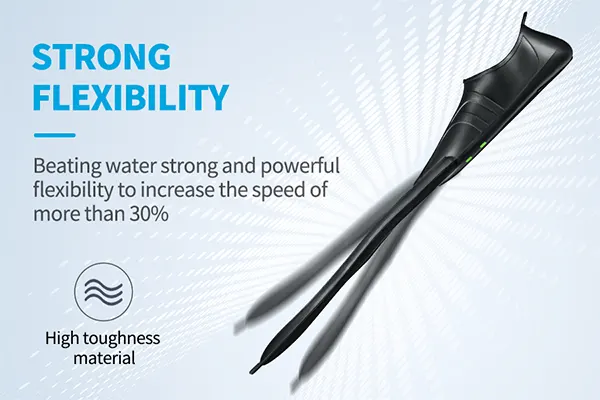
Wie die vier Familien auf Papier und in Behältern verglichen werden
| Eigentum | Gummi | TPR | Silikon | Zusammengesetzt (GF-Nylon / Kohlenstoff) |
|---|---|---|---|---|
| Elastischer Snapback | Exzellent | Gut (klassenabhängig) | Mäßig, gedämpft | Hoch, Steifband |
| Kaltwasserverhalten | Stabil | Versteift sich bei billigen Sorten | Stabil | Stabil, aber stellenweise spröde |
| UV / Alterung durch Chlor | Gut (Formulierungsabhängig) | Schwachpunkt | Klassenbester | Gut; Oberflächenkreide möglich |
| Relative Materialkosten | Mittelhoch | Tief–Mittel | Hoch | Mitte (Kohlenstoff: sehr hoch) |
| Typische Flossenrolle | Komfort-/Trainingsklingen, Premium-Modelle | Mainstream-Schnorchelblätter und -taschen | Riemen, Liner, Teile, die mit der Haut in Berührung kommen | Freitauch- und Performance-Blätter |
| Dominanter Fehlermodus | UV-Prüfung, Hitzefixierung | Kaltversteifung, permanentes Set, Verbindungsrisse | Riss an dünnen Gesichtszügen | Risse an Scharnieren und Wurzeln |
So überprüfen Sie die Materialansprüche eines Lieferanten, bevor Sie eine Verpflichtung eingehen
Falsche Materialspezifikationen sind der am wenigsten sichtbare und teuerste Beschaffungsfehler in dieser Kategorie, weil es jede Schönheitsprüfung besteht und Monate später im Feld versagt. Eine funktionsfähige Verifizierungssequenz kostet wenig:
- Beginnen Sie mit der Probe, nicht das Datenblatt. Lagerbestände werden innerhalb von 2–7 Tagen von einer Linie mit vorhandenen Werkzeugen versandt; spüre die Erholung, biege es kräftig, Lassen Sie es über Nacht gebogen, und überprüfen Sie die Verbindung, an der die Klinge auf die Tasche trifft.
- Messen, nicht bewundern. Eine Durometer-Anzeige auf der Klinge und der Tasche verrät Ihnen, ob Sie eine Dual-Durometer-Konstruktion oder eine Verbundkonstruktion haben. Nach einem Einfrierzyklus erneut lesen.
- Alternde Abkürzungen schlagen Vertrauen. Ein UV-Fenster oder ein einwöchiges Einweichen in Chlor beschleunigt das, was eine Saison offenbart; Billige Verbindung zeigt Aufhellung, Versteifung, oder Oberflächenprüfungen durchführen.
- Ziehen Sie die Fehlerstellen heraus. Riemenanker und geteilte Klingenspitzen werden einem Zug- oder Zyklustest unterzogen – dieselben Kontrollpunkte, die eine Inspektion durch Dritte pro Charge wiederholen kann, sobald Sie in der Produktion sind.
- Überprüfen Sie das System hinter der Probe. Die Eingangskontrolle des Rohmaterials und die Rückverfolgbarkeit der Charge sind wichtiger als jede einzelne Goldprobe; Die Qualitätsdokumentation des Lieferanten sollte beides belegen. Unser Leitfaden zur Auswahl eines Schnorchelflossenherstellers deckt die prüfungsseitigen Fragen ab, und die Qualitäts- und Zertifizierungsseite listet auf, was wir auf Anfrage dokumentieren können – ISO 9001:2015, BSCI-Social-Compliance, CE- und FDA-Registrierungen, und OEKO-TEX-Standard 100 für Materialien mit Hautkontakt.
Wenn eine neue Materialpaarung für Ihr Design von zentraler Bedeutung ist – beispielsweise ein Zwei-Schuss-Aufbau mit weicher Tasche und harter Klinge –, behandeln Sie es als Werkzeugprojekt, keine Farbveränderung: DFM (Design für die Fertigung) Durch die Rückmeldung innerhalb von 24 bis 48 Stunden erfahren Sie, ob die Hohlraum- und Anschnittkonstruktion die Grenze halten kann, und kundenspezifische Prototypen haben eine Laufzeit von 15 bis 30 Tagen, einschließlich Formarbeiten.
Häufig gestellte Fragen
Ist ein TPR-Flossenblatt immer von schlechterer Qualität als Gummi??
Nein – ein gut konstruiertes TPR übertrifft einen schlecht formulierten Gummi in Bezug auf Rückfederung und Konsistenz, und es passt sich engeren Toleranzen an. Der Qualitätsunterschied, den Käufer tatsächlich feststellen, besteht zwischen Premium-Compounds beider Familien und billigen gefüllten Compounds, die bei Kaltverfestigung und UV-Alterung versagen, unabhängig davon, wie sie genannt werden. Spezifizieren Sie anhand gemessener Eigenschaften (Härte, Erholung, Alterungsverhalten) und nicht nach Materialnamen.
Warum verwenden nicht mehr Schnorchelflossen Silikonblätter, wenn das länger hält??
Denn bei Flossendicken ist Silikon schwer, langsam zu formen, und teuer, und seine gedämpfte Elastizität fühlt sich für stärkere Schwimmer langsam an. Seine Stärken: Witterungsbeständigkeit, Weichheit, Hautschutz – zahlt sich in dünnen Hautkontaktteilen wie Riemen aus, Tascheneinlagen, und die mitinjizierten Röcke und Dichtungen von Masken und Schutzbrillen. Silikon in einem Flossenkatalog ist normalerweise eine Eigenschaftsaussage dieser Kleinteile, nicht die Klinge.
Welches Material macht die langlebigste Flosse für Miet- und Resortflotten aus??
Mietflotten scheitern häufiger an Hardware und dünnen Abschnitten als an der breiten Klinge, Daher ist die langlebige Kombination normalerweise eine mittelsteife TPR- oder Nylonklinge mit einem verstärkten Riemenanker und einer rostfreien Feder, oder eine Vollfußflosse mit Gummiblatt, bei der es keine Schnalle zu verlieren gibt. Was auch immer die Familie ist, Spezifizieren Sie den Zugtest an den Gurtankern und eine Chargenhärteprüfung – die Lebensdauer der Flotte richtet sich mehr nach diesen beiden Zahlen als nach der Marke der Mischung.
Wie verändern Rotorblätter aus Verbundwerkstoff die Kostenstruktur einer Flossenlinie??
Glasgefülltes Nylon erhöht die Kosten für Harz und Werkzeugverschleiß bei einem ansonsten standardmäßigen Einspritzverfahren, Daher ist der Anstieg moderat. Kohlefaser ist ein völlig anderes Geschäft – Laminieren oder Spezialformen, längere Zyklen, und Qualitätskontrolle der Faserausrichtung – weshalb Carbonblätter zu Premiumpreisen und einer konzentrierten Nachfrage führen. Eine gängige Katalogstrategie ist ein Nylon „Carbon-Look“ Leistungsstufe unterhalb der echten Kohlenstoffstufe, Das funktioniert, solange in der Auflistung angegeben ist, um welche Klinge es sich handelt.
Welche Zertifizierungen sollte ich für Flossenblattmaterialien benötigen??
Für den Marktzugang, Die CE-Dokumentation für die EU- und FDA-Registrierung, sofern für die Produktklassifizierung relevant, gilt für die fertigen Waren; Die REACH-Konformität untermauert die Chemikalienakzeptanz in der EU. Für hautberührende Komponenten, OEKO-TEX-Standard 100 Eine Materialzertifizierung ist praktisch erforderlich. Dahinter steckt alles, eine ISO 9001:2015 Qualitätssystem mit Rohstoffeingangskontrolle macht jedes Zertifikat Charge für Charge aussagekräftig.