Wenn Sie drei Flossenkataloge von drei verschiedenen chinesischen Fabriken öffnen, erhalten Sie drei verschiedene Taxonomien für dieselben Produkte. Ein Anbieter nennt alles a „Schnorchelflosse,“ ein anderer teilt die Zeile in „reisen,“ „Tauchen,“ Und „Professional,“ und ein dritter verkauft eine Form in vier Farben und nennt sie eine Kollektion. Ein Produktkatalogmanager wurde gebeten, ein Flossensegment aufzubauen, das tatsächlich unterschiedliche Benutzerbedürfnisse abdeckt, Diese Inkonsistenz ist das eigentliche Problem – nicht die Flossen selbst.
Darunter die Marketingnamen, Schnorchelflossen lassen sich in vier Designfamilien mit wirklich unterschiedlichen Werkzeugen einteilen, Fit-Systeme, und Regalrollen: Kompaktflossen mit kurzem Blatt, geteilte Flossen, flache Trainingsflossen, und Flossen mit verstellbarem Riemen. Jeder beantwortet eine andere Kundenbeschwerde. Jedes weist ein anderes Renditeprofil auf. Jeder braucht einen anderen Platz in Ihrer Größenkurve und Preisliste.
In diesem Leitfaden werden die vier Typen so erläutert, wie ein Katalogmanager sie sehen muss – was das Design bewirkt, welches Käuferproblem es löst, was es für Werkzeug und Lager kostet, und wo es neben dem Rest des Sortiments steht. Wir besprechen auch, wie Sie sie auf Ihrer Kategorieseite segmentieren, damit das Sortiment für Käufer, die genau wissen, was sie wollen, klar lesbar ist, und an die viel größere Gruppe, die dies nicht tut.
Key Takeaways
- Schnorchelflossen sind in vier lagerfähige Designfamilien unterteilt: Kurzblattkompakt, geteilte Klinge, unauffälliges Training, und verstellbarer Riemen – jeweils mit unterschiedlichen Werkzeugen, passende Logik, und Kanal.
- Die Klingengeometrie sorgt für das Kickgefühl, aber das Fit-System (Vollfußtasche im Vergleich zu verstellbarem Riemen) treibt die Größe der Kurventiefe an, die Sie zum Tragen und Tragen benötigen, daher, Ihr Betriebskapital.
- Geteilte Klingen und kurze Klingen beantworten unterschiedliche Einwände: Knöchelbelastung und -ermüdung im Vergleich zu Gepäckraum und Kosten. Behandeln Sie sie in Ihrem Katalog nicht als eine SKU-Familie.
- Trainingsflossen sind ein Poolkanal für wiederholte Käufe mit bescheidenen Gewinnspannen und sehr niedrigen Rücklaufquoten – eine nützliche Lagerstabilität, kein Heldenprodukt.
- Dank der verstellbaren Riemenflossen kann eine Größe mehrere Fußgrößen abdecken, Das ist der Grund, warum Resort- und Mietprogramme sie überproportional bestellen – und warum Gurt-Hardware ihr Fehlerpunkt ist.
Was unterscheidet die vier Flossendesigns in unterschiedliche SKUs??
Zwei Produkte gehören zu unterschiedlichen SKU-Familien, wenn ein Käufer aus einem angegebenen Grund eines ablehnen und das andere akzeptieren würde. Durch diesen Test, Die vier Schnorchelflossen-Designs sind wirklich unterschiedlich.
Eine kompakte Flosse mit kurzem Blatt überzeugt durch ihre Tragbarkeit: es passt in eine Handgepäcktasche, wiegt wenig, und der Versand kostet am wenigsten. Eine Flosse mit geteiltem Blatt verkauft sich durch Anstrengung: Die gegabelte Klinge bewegt Wasser mit weniger Knöchelrotation, Was für Schnorchler mit steifen Gelenken oder schwacher Knöchelkraft wichtig ist. Eine Trainingsflosse wird im Pool-Utility verkauft: kleine Oberfläche, schneller Umsatz, Wird eher für Kickboard-Übungen als für Freiwasserübungen verwendet. Eine Flosse mit verstellbarem Riemen überzeugt durch passgenaue Abdeckung: Eine SKU bedient eine Reihe von Fußgrößen, über einem Bootie, wenn nötig, Dadurch wird das Problem der gemeinsamen Ausrüstung für Resorts und Familien gelöst.
Jedes dieser Wertversprechen beruht auf einem anderen physikalischen Merkmal – der Klingenlänge, Klingengeometrie, Fußtaschenkonstruktion, oder Riemen-Hardware – und jede Feature-Entscheidung verändert die Form, die Teileliste, und die QC-Kontrollpunkte. Aus diesem Grund können sie nicht in einer Zeile zusammengefasst werden, ohne dass Ihr Katalog mehrdeutig wird.
| Designfamilie | Typische Klinge | Fit-System | Käuferproblem gelöst | Stärkster Kanal |
|---|---|---|---|---|
| Kompakt mit kurzer Klinge | 20–30 cm, steif bis mittel | Vollfußtasche, barfuß | Kofferraum; Reisegewicht; Eintrittspreis | E-Commerce, Resort-Shops, Reiseeinzelhandel |
| Geteilte Klinge | 30–45 cm, gegabelt mit zentralem Kanal | Vollfußtasche | Knöchelbelastung, Krämpfe, geringe Knöchelkraft | Spezialisierter Tauch-/Schnorchel-Einzelhandel, ältere Märkte |
| Ausbildung | 15–25 cm, dünn und flexibel | Vollfuß, weiche Tasche | Kick-Übungen, Knöchelflexibilität, Turnbeutel | Schwimmschulen, Fitness-Einzelhandel, Teamprogramme |
| Verstellbarer Riemen | 25–40 cm, mittlere Steifigkeit | Ganz öffnen + Riemenschnalle | Geteilte Ausrüstung; Stiefel; wachsende Füße; Größenunsicherheit | Resort-Vermietung, Familienpakete, Online-Geschenkkäufe |
Wenn Sie zunächst die zugrunde liegende Kategoriedefinition erfahren möchten – was formal als Schnorchelflosse im Vergleich zu Tauch- oder Freitauchausrüstung gilt – lesen Sie unseren Artikel weiter Was Schnorchelflossen als B2B-Produktkategorie sind deckt Klingenlängengrenzen ab, Foot-Pocket-Konventionen, und die Preisspannen, die die Kategorie von ihren Nachbarn unterscheiden.
Kompaktflossen mit kurzem Blatt: Die Volumen-SKU, mit der jeder Katalog beginnt
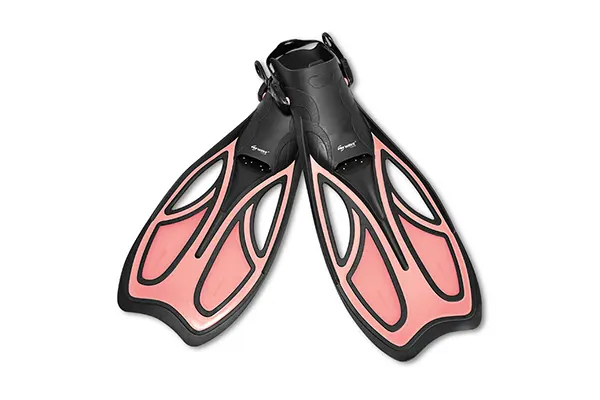
Die kompakte Flosse ist der Standardeinstiegspunkt für den Schnorcheleinzelhandel. Klingen laufen unruhig 20 Zu 30 Zentimeter, Das ganze Paar bleibt leicht genug, um es in eine Strandtasche zu stecken, und die Produktfotos passen gut zu einer Reiseerzählung. Für Online-Verkäufer, Auch bei der Fracht gewinnt die kurze Klinge: Ein Paar passt in einen kleinen Polybeutel und eine Schachtel, Das Volumengewicht bleibt gering, und die Ränder überleben den Versand.
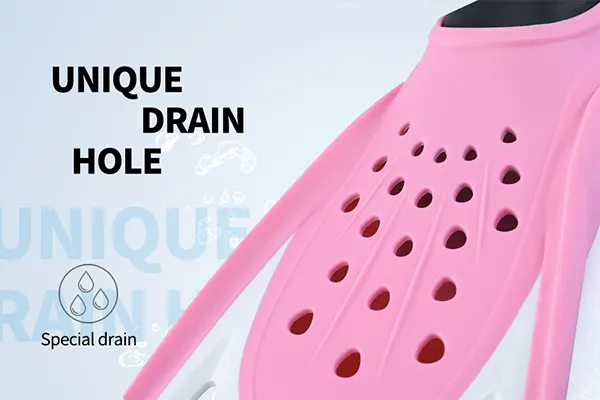
Designdetails machen hier mehr Arbeit als der Marketingtext. Entwässerungsmerkmale – Kanäle und Löcher, durch die Wasser und Sand aus der Fußtasche austreten können – machen den Unterschied zwischen einer kompakten Flosse, die sich nach dem ersten Schnorchelstopp angenehm anfühlt, und einer Flosse, die den ganzen Nachmittag Sand gegen die Sohle reibt. Die Steifigkeit erfordert eine sorgfältige Mitteleinstellung: Zu weiche und kräftigere Schwimmer beschweren sich über fehlenden Schub; zu steif und die Knöchel des Gelegenheitsbenutzers ermüden innerhalb von zehn Minuten.
Aus strumpftechnischer Sicht, Bei der kompakten Flosse muss Ihre Größenkurve ehrlich sein. Vollfußtaschen gibt es in diskreten Größen, In der Regel werden die EU-Größenbereiche von Kindern bis hin zu Erwachsenengrößen zugeordnet. Ein reiseorientiertes Sortiment, das den kleinen Teil auslässt, verliert den Familienmarkt, Dies ist der größte Einzelkaufanlass für diese SKU. Unser Schnorchelflossen-Produktlinie Seite zeigt, wie kompakte Modelle mit Entwässerungsrinnenkonstruktion für Großhandelsprogramme spezifiziert werden.
Geteilte Flossen: Komfort verkaufen, Nicht Geschwindigkeit
Die geteilten Klingen gabeln sich in der Mitte, so dass das Wasser beim Abstoß durch einen zentralen Kanal fließt. Der physikalische Effekt ist real: Die Klinge erfordert weniger Knöchelbeugung bei gleicher Beinbewegung, und viele Schnorchler berichten von einer spürbar geringeren Waden- und Knöchelbelastung bei langen Sitzungen. Marketingabteilungen gehen manchmal noch weiter und behaupten, dass die Schubkraft mit einer steifen langen Klinge vergleichbar sei – gehen Sie mit dieser Behauptung mit Vorsicht um, und legen Sie es niemals in Ihre eigene Kopie ein, ohne die Dokumentation des Herstellers zu testen.
Der wirtschaftliche Grund für die Besatzaufteilung ist eher demografischer als hydrodynamischer Natur. Schnorcheltouren auf den Urlaubsmärkten sind schon älter als Schwimmen im Pool, Und der über 45-jährige Kunde, der nach zehn Minuten einen steifen Knöchel verspürt, ist ein natürlicher Käufer einer bequem positionierten Flosse. Fachhändler verteidigen einen höheren Preispunkt für Splits, da die Diskussion über die Passform schwieriger ist und die Empfehlung mehr bedeutet. Für Amazon-Verkäufer, Split-Modelle differenzieren einen Katalog, der ansonsten direkt mit hundert identischen Kompaktflossen konkurriert.
Tooling-Hinweise für Produktentwickler: Eine geteilte Klinge weist ein weiteres Hohlraummerkmal und eine komplexere Form auf als eine massive kurze Klinge, und die Gabelspitzen sind Belastungspunkte. Fragen Sie jeden potenziellen Hersteller nach Daten zu Ermüdungszyklustests speziell für die Blattspitzen – hier versagen billige Teilstücke und es häufen sich die Rücksendungen. Die hauseigene CNC-Formenentwicklung von Vanguard deckt diese Geometrievarianten ab, und DFM (Design für die Fertigung) Feedback zu neuen Rotorblattkonzepten kommt innerhalb von 24–48 Stunden, Dadurch bleibt das Machbarkeitsgespräch frühzeitig konkret.
Trainingsflossen: Die unsexy Wiederholungskauf-Ecke
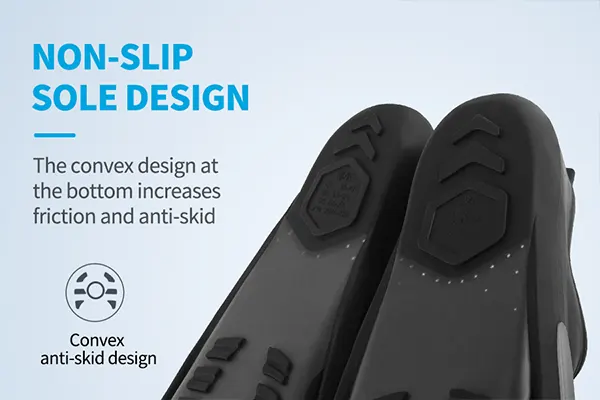
Trainingsflossen sind kurz, weich, Flossen mit dünner Klinge, die für Pool-Kick-Drills verwendet werden, Schwimmschulunterricht, und Knöchelkonditionierungsarbeit. Neben einer Reiseflosse auf einem Datenblatt sehen sie leistungsschwach aus, und genau darum geht es: hohe Kickrate, geringer Widerstand, minimale Belastung für junge oder sich entwickelnde Knöchel.
Warum sich ein Katalogmanager darum kümmert: Dies ist die einzige Schnorchelflosse mit integriertem Nachbestellungszyklus. Schwimmschulen brechen sie, Pools verlieren sie, Die Kadergrößen ändern sich in jeder Amtszeit. Die Stückpreise sind bescheiden, Die Kaufhäufigkeit ist jedoch in der Flossenfamilie am höchsten, und die Rücklaufquote ist am niedrigsten, weil die Erwartungen am Verkaufsort richtig gesetzt werden – niemand kauft eine Trainingsflosse in der Erwartung, im offenen Wasser voranzukommen.
Zwei Konstruktionspunkte sind hier wichtiger als die Klingenlänge. Erste, Die Tasche sollte weich genug sein, um sie nass anzuziehen, barfuß ohne Risse an der Ferse – prüfen Sie die Formschräge bei Ihrem Hersteller, Denn ein steifer Absatz ist der Beschwerdefaktor Nummer eins. Zweite, Farbcodierung nach Härte verkauft sich gut an Programme: Schwimmschulen standardisieren sichtbare Farb-/Härtemesserpaarungen, sodass Trainer pro Übung die richtige Flosse aushändigen können, ohne die Etiketten lesen zu müssen.
Positionierungshilfe: Halten Sie Trainingsflossen auf den Kategorieseiten optisch von Reiseflossen getrennt. Ihre Größen, Preispunkte, und Anwendungsfälle überschneiden sich weniger, als ihre Silhouette vermuten lässt. Wenn Ihre Merchandising-Logik sie derzeit in einen Topf wirft „kurze Flossen“ Regenschirm, Vergleichen Sie, wie sich die Segmente einzeln verhalten, bevor sie zusammengeführt werden – unsere Aufschlüsselung von Schnorchelflossen versus Tauchflossen bringt das gleiche Argument vor, warum benachbarte Kategorien ihren Lebensunterhalt verdienen, wenn sie richtig aufgeteilt werden.
Flossen mit verstellbarem Riemen: Eine SKU deckt viele Füße ab
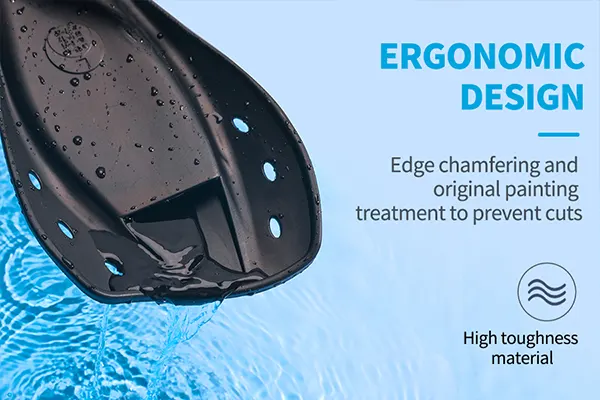
Flossen mit offener Ferse und Riemensystem lösen ein Passformproblem, das die komplette Fußtasche nicht lösen kann: Sie passen in verschiedene Fußgrößen, Sie arbeiten über einem Neopren-Schuh in kaltem Wasser, und ein Kauf kann Geschwistern unterschiedlichen Alters oder einem Resortgast mit unbekannter Schuhgröße dienen. Für Vermietungs- und Resortbetreiber, Diese Abdeckung ist der einzige Grund, warum das Format existiert. Für Einzelhandelseltern, Dies ist der Grund, warum ein verstellbares Paar mehr als eine Saison eines heranwachsenden Kindes überlebt.
Die wirtschaftlichen Rahmenbedingungen sind attraktiv und das Risiko ist an einem Ort konzentriert: die Riemen-Hardware. Schnallen knacken, Schnellverstellmechanismen verklemmen sich durch Sand, und Gurte reißen an ihren Verankerungspunkten. In verifizierten Testdaten für diese Art von Schnorchelflossen, Riemenbruch ist selbst bei gut bewerteten Produkten das häufigste negative Thema – eine Produktlinie, die im Durchschnitt bei etwa liegt 4.3 Stars auf großen Marktplätzen verlieren immer noch Kunden an der Schnalle. Wenn Sie verstellbare Geräte auf Lager haben, Schreiben Sie Ihren Eingangskontrollplan rund um die Riemenbaugruppe: radeln Sie die Schnallen, Führen Sie einen Zugtest an den Ankern durch, und überprüfen Sie die rostfreie Feder (falls verwendet) für Korrosion nach einem Salzwasserbad.
Spec-in für ein Großhandelsprogramm: Standard-MOQ für Flossen läuft ungefähr 300 Stück pro Farbe mit vorhandener Werkzeugausstattung, und neue Schnallen- oder Riemendesigns sind genau die Art von Änderung, die ein Werkzeuggespräch auslöst – Prototypen mit neuer Hardware dauern einschließlich Formarbeiten 15–30 Tage, im Vergleich zu 2–7 Tagen für Stammproben. Fragen Sie nach den Bandausfalldaten, bevor Sie sich für einen Mechanismus entscheiden, den noch niemand in der Praxis getestet hat.
So ordnen Sie die vier Typen in einem Katalog an
Sobald die Familien definiert sind, Bei der Merchandising-Entscheidung kommt es auf die Mischung an, nicht die Etiketten. Drei Arbeitsregeln, die für die meisten westlichen Einzelhandelsprogramme gelten:
- Führen Sie mit dem Reise-Anwendungsfall, Segmentieren nach Passform. Käufer suchen „Schnorchelflossen“ beabsichtigen überwiegend einen Urlaubskauf. Die Filteroptionen sollten mit „Vollfuß“ oder „einstellbar“ beginnen, dann der Klingenstil – dieser spiegelt wider, wie die vier Typen tatsächlich ausgewählt werden.
- Geben Sie Splits ihr eigenes Regal, kein Abzeichen. Die Komfortpositionierung benötigt einen eigenen Erklärungsblock; Risse darin vergraben „kurze Flossen“ Verschwendung ist der einzige Designunterschied, für den Kunden bezahlen müssen.
- Halten Sie die Trainingsflossen von der Heldenreihe fern. Sie gehören neben Becken, Kickboards, und Schwimmschulpakete, wo ihre Wiederholungsrate für die Korbgröße gilt, anstatt Reisende zu verwirren, die Flossenlängen vergleichen.
Für eine Tiefenplanung: Bei einem Sortiment erster Ordnung werden in der Regel etwa die Hälfte der Einheiten in Kompaktpackungen aufgeteilt, ein Viertel bis einstellbar, und teilt die Balance zwischen Splits und Training je nach Kanal auf. Vergleichen Sie diesen Plan mit Ihren Lagerwirtschaftsdaten, bevor Sie ihn platzieren – die langflügelige Freitauchseite der Flossenfamilie hat eine völlig andere Größenkurve und Speicherlogik, und die Verwechslung der Planungsannahmen zwischen den beiden Hälften der Kategorie ist ein klassischer Kauffehler in der ersten Staffel.
Häufig gestellte Fragen
Drücken geteilte Schnorchelflossen wirklich weniger Wasser als feste Flossen??
Unter kontrollierten Bedingungen, Eine gut gestaltete geteilte Klinge tauscht einen geringen Spitzenschub gegen eine große Reduzierung der Knöchelkraft aus, weil die Gabel Wasser durch die Klinge fließen lässt, anstatt den gesamten Fuß zum Drehen zu zwingen. In der Praxis können die meisten Gelegenheitsschnorchler den Schubverlust nicht spüren, wohl aber die Zugentlastung nach zwanzig Minuten. Für Katalogzwecke, Positionieren Sie Splits hinsichtlich des Komforts und überprüfen Sie alle Effizienzansprüche anhand von Testdaten der tatsächlichen Form, die Sie kaufen möchten.
Kann eine Form sowohl das Trainings- als auch das Reise-Kurzflossensegment bedienen??
Physisch kann eine kurze flexible Klinge an beide Zielgruppen verkauft werden, aber die Härte und die Taschengeometrie weichen normalerweise voneinander ab: Trainingsflossen wollen weich, einfach anzubringende Taschen für den häufigen Barfuß-Poolgebrauch, während Reiseflossen einen festen Sitz für lange Oberflächenschwimmen erfordern. Wenn Sie sie als eine SKU betreiben, werden auf der Vorderseite Werkzeugkosten eingespart und auf der Rückseite Erträge generiert. Die meisten Programme kommen zu dem Schluss, dass die beiden Segmente getrennte Hohlräume rechtfertigen, sobald das jährliche Volumen einige tausend Paare übersteigt.
Was ist die übliche Mindestbestellmenge und Probenahmezeit für das Hinzufügen eines neuen Flossentyps??
Mit vorhandenem Werkzeug, Schnorchel-Flossen-Programme beginnen normalerweise um 300 Stück pro Farbe, und Lagerproben werden innerhalb von 2–7 Tagen versendet. Ein wirklich neuer Typ – eine frische Klingengeometrie, Schnallensystem, oder Größenbereich – bewegt sich in benutzerdefiniertes Gebiet: Erwarten Sie eine DFM-Überprüfung innerhalb von 24 bis 48 Stunden nach dem Absenden Ihres Konzepts, Prototypen in 15–30 Tagen inklusive Formarbeiten, und Massenproduktion 30–60 Tage nach der Golden-Sample-Genehmigung.
Welcher Flossentyp hat die niedrigste Retourenquote im westlichen E-Commerce??
In der Praxis, Weiche Trainingsflossen kommen am wenigsten zurück, weil die Erwartungen mit dem Produkt übereinstimmen und die Größentoleranz verzeiht. Bei kompakten Vollfußflossen kommt es vor allem aufgrund von Größenfehlern zu Problemen, was eine klare Größentabelle und SKUs in zwei Größen reduzieren. Flossen mit verstellbarem Riemen kehren wegen der Größe am wenigsten zurück, am meisten aber wegen Hardwarefehlern, Verlagerung des Retourenproblems von Ihrer Angebotskopie auf Ihren Eingangskontrollplan. Geteilte Flossen sitzen zwischen Kompakt- und Verstellflossen, Mit Trost-Entscheidung kehrt die dominierende Ursache zurück.
Sollte ein Resort oder ein Verleihprogramm Vollfußflossen oder verstellbare Flossen anbieten??
Fast immer einstellbar. Eine Riemenflosse in zwei Schalengrößen deckt den Gästebereich ab, für den fünf oder sechs Vollfußgrößen erforderlich wären, Die Lagerrotation ist einfacher, und die Bootie-Kompatibilität verlängert die Saison auch in kühleren Gewässern. Der Kompromiss ist die Haltbarkeit der Hardware, Spezifizieren Sie also die Schnalle und den Riemen genauso sorgfältig wie die Klinge – die Flossen, die die dritte Staffel überleben, sind diejenigen, deren Riemenanker den Zugtest bei der eingehenden Qualitätskontrolle bestanden haben.