Die Materialauswahl eines Schnorchelsets bestimmt drei Dinge, die sich direkt auf Ihr Geschäft auswirken: Ihre Stückkosten, Ihre Rücklaufquote, und Ihr Markenruf. Verwende die Materialien falsch, Und kein noch so großes Marketing wird Sie vor Kundenbeschwerden über Undichtigkeiten bewahren, Hautreizungen, oder rissige Flossen nach dreimaligem Gebrauch.
In diesem Leitfaden werden die drei Materialebenen – Silikon – aufgeschlüsselt, TPR, und PVC – Komponente für Komponente. Wir decken die Leistungsunterschiede ab, die Kostenauswirkungen, und die spezifischen Anwendungen, bei denen jedes Material sinnvoll ist. Als Hersteller mit Flüssigsilikon-Co-Injektionsfähigkeiten und 50+ Patente für Material- und Designinnovationen, Wir haben ein direktes Interesse daran, Ihnen zu helfen, zu verstehen, warum die Materialauswahl wichtig ist.
Die drei Materialebenen im Überblick
| Eigentum | Flüssiger Silikonkautschuk (LSR) | TPR (Thermoplastischer Gummi) | PVC (Polyvinylchlorid) |
|---|---|---|---|
| Härte (Shore A) | 20–60 (große Auswahl) | 40–80 | 50–90 |
| Flexibilität | Hervorragend – bleibt flexibel von -40 °C bis 200 °C | Gut – flexibel bei Zimmertemperatur, versteift sich bei Kälte | Begrenzt – wird unter 0 °C steif |
| Hautsicherheit | Hypoallergen, Von der FDA für Hautkontakt zugelassen | Im Allgemeinen sicher, kann Weichmacher enthalten | Kann Reizungen verursachen; Bedenken hinsichtlich Phthalaten |
| UV-Beständigkeit | Ausgezeichnet – keine Verschlechterung durch Sonnenlicht | Mäßig – allmähliche Verhärtung über 1–2 Jahre | Schlecht – vergilbt und wird spröde |
| Salzwasserbeständigkeit | Exzellent | Gut | Mäßig – Auslaugen des Weichmachers mit der Zeit |
| Formbarkeit | Erfordert LSR-Injektions- oder Co-Injektionsausrüstung | Standard-Spritzguss | Standard-Spritzguss |
| Relative Kosten | $$$ | $$ | $ |
| Typische Anwendung | Premium-Masken, mitinjizierte Röcke | Röcke der Mittelklasse, Flossenfußtaschen | Budgetmasken, Einsteigerflossen |
Komponente-für-Komponente-Materialanalyse
Maskenrock (das Gesichtsabdichtungselement)
Der Maskenrand ist die materialempfindlichste Komponente. Es drückt über längere Zeiträume direkt gegen das Gesicht des Tauchers. Eine schlechte Materialauswahl verursacht hier das #1 Kundenbeschwerde: undicht.
Silikon: Der Goldstandard der Branche. Flüssiger Silikonkautschuk bildet eine weiche, hypoallergene Versiegelung, die sich den Gesichtskonturen anpasst. Es bleibt in kaltem Wasser flexibel, widersteht UV-Zersetzung, und löst keine Weichmacher aus. Premium-Masken verwenden ausschließlich LSR-Röcke.
TPR: Eine akzeptable Mittelklasse-Alternative. TPR-Röcke bieten angemessene Flexibilität und sind kostengünstiger in der Herstellung. Jedoch, TPR versteift sich in kaltem Wasser (unter 15°C), was die Dichtungsqualität bei kühleren Bedingungen verringert. Über 12–18 Monate haltbar, TPR kann Weichmacher verlieren und härter werden.
PVC: Die Budgetoption. PVC-Röcke sind im Vergleich zu Silikon und TPR steif, Dadurch entstehen unangenehme Druckstellen und eine schlechte Abdichtung unregelmäßiger Gesichtsstrukturen. PVC ist außerdem das Material, das am ehesten Hautreizungen hervorruft. Wir empfehlen PVC-Röcke nur für Produkte mit dem niedrigsten Preisniveau, bei denen der Endverbraucher den Preis über den Komfort stellt.
Schnorchelkörper und Beißventil
Beißventil aus Silikon: Standard in allen Qualitätsstufen. Silikon ist das einzige Material, das für längeren Mundkontakt geeignet ist – es ist geschmacksneutral, geruchlos, und hypoallergen. Selbst preisgünstige Schnorchel verwenden Beißventile aus Silikon.
Schnorchelkörper: Für den Tubenkörper wird üblicherweise PVC verwendet – es sorgt für ausreichende Steifigkeit und ist kostengünstig. Premium-Schnorchelkörper verwenden Vollsilikonkörper oder PE (Polyethylen) mit Silikonüberzug für ein besseres Gefühl. TPR wird selten für Schnorchelkörper verwendet.
Flossenblatt
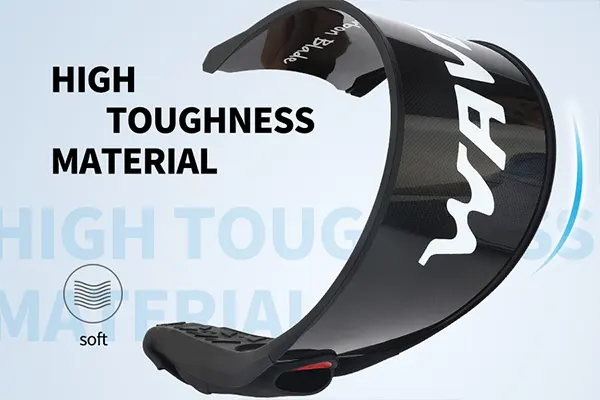
Polypropylen (PP): Das Standardmaterial für Flossenblätter. PP bietet eine gute Balance an Flexibilität, Haltbarkeit, und Kosten. Die meisten im Handel erhältlichen Schnorchelsets werden mit PP-Blättern geliefert.
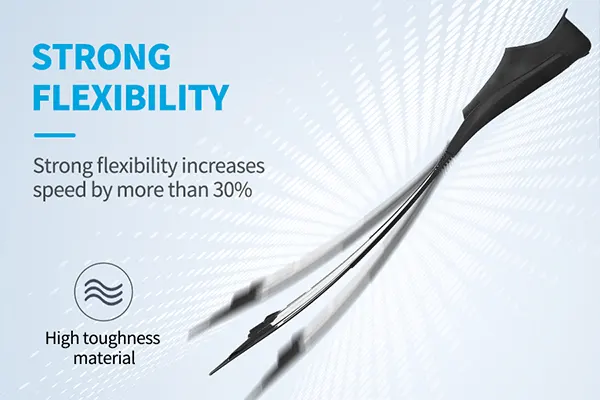
PP + TPR-Kombination: Ein Mittelklasse-Upgrade. TPR-Überzüge auf einer PP-Klinge sorgen für mehr Flexibilität an der Spitze und einen effizienteren Kickzyklus. Die Konstruktion aus zwei Materialien kostet mehr, liefert aber eine deutlich bessere Leistung.
Glasfaserverstärkt: Die Premium-Option. Glasfaserblätter liefern maximalen Schub pro Tritt und werden von erfahrenen Schnorchlern und Freitauchern bevorzugt. Höhere Produktionskosten, Für leistungsorientierte Produktlinien rechtfertigt der höhere Verkaufspreis dies jedoch.
Flossenfußtasche
PP: Starr und günstig. Akzeptabel für Leihflossen mit vollem Fuß, bei denen keine Einstellbarkeit erforderlich ist. Unbequem für Modelle mit offenem Absatz.
TPR: Der Standard für Mittelklasse-Fußtaschen. Flexibel genug für Komfort, starr genug für eine effiziente Energieübertragung. Funktioniert sowohl für Vollfußmodelle als auch für Designs mit verstellbaren Riemen.
Silikon mit mehreren Dichten: Hochwertige Fußtaschen, die weiches Innenfutter mit starrer Außenstruktur kombinieren. Bester Komfort, beste Leistung, höchste Kosten.
Maskenlinse
Temperiertes Glas: Der Industriestandard für Qualitätssets. Gehärtetes Glas ist kratzfest, sorgt für optische Klarheit, und erfüllt Sicherheitsstandards (ANSI Z87.1, IN 168). Es ist das einzige Linsenmaterial, das wir für den mittleren und höheren Bereich empfehlen.
Polycarbonat (PC): Leichter als Glas, aber leichter zerkratzt. Akzeptabel für Einsteiger- oder Kindersets, bei denen die Schlagfestigkeit Vorrang vor der optischen Klarheit hat. PC-Objektive müssen eine Hartbeschichtung aufweisen, um brauchbar zu sein.
Vorteile der Silikon-Co-Injektion
Bei der herkömmlichen Maskenherstellung wird der Silikonmantel mithilfe von Klebstoff mit dem Kunststoffrahmen verbunden. Diese Klebeverbindung ist die schwächste Stelle: es kann sich mit der Zeit verschlechtern, zu Undichtigkeiten führen, und unter Temperaturbelastung delaminieren.
Silikon-Co-Injektion eliminiert den Klebstoff vollständig. In diesem Prozess, Flüssiger Silikonkautschuk wird direkt in die Form eingespritzt, die den Polycarbonatrahmen enthält. Das Silikon verschmilzt während des Aushärtungszyklus auf molekularer Ebene mit dem Rahmen und schafft so eine Bindung, die stärker ist als jedes Material allein.
Die Ergebnisse:
| Metrisch | Geklebte Montage | Co-Injektion |
|---|---|---|
| Bindungsstärke | Mäßig – hängt von der Klebstoffqualität ab | Überlegen – Fusion auf molekularer Ebene |
| Antibeschlagleistung | Gut (Abhängig von der Beschichtung) | Hervorragend – kein Ausgasen von Klebstoff in der Nähe der Linse |
| Produktlebensdauer | 1–3 Jahre (Klebstoffabbau) | 5+ Jahre (Die Bindung nimmt nicht ab) |
| Rücklaufquote (geschätzt) | 3–8 % (Leckbeschwerden) | <1% (Leckbeschwerden) |
| Herstellungskosten | Untere (Standardmontage) | Höher (erfordert Co-Injektionsgeräte) |
Die Co-Injektion erfordert spezielle Ausrüstung – nicht jede Fabrik verfügt über diese. Hersteller mit dieser Fähigkeit haben einen klaren Qualitätsvorteil, insbesondere für Marken, die auf das mittlere bis Premium-Segment abzielen.
Entscheidungsmatrix zur Materialauswahl
Verwenden Sie diese Matrix, um die Materialauswahl an Ihre Produktpositionierung anzupassen:
| Produktebene | Maskenrock | Schnorchelkörper | Flossenblatt | Flossenfußtasche | Linse |
|---|---|---|---|---|---|
| Budget (Einzelhandel <$20) | PVC | PVC + Silikonbiss | PP | PP | Polycarbonat |
| Mittelklasse ($20–45 $) | TPR | PE + Silikonbiss | PP + TPR-Kombination | TPR | Temperiertes Glas |
| Prämie ($45+) | Flüssiges Silikon (co-injiziert) | Vollsilikon | Glasfaser | Silikon mit mehreren Dichten | Temperiertes Glas + Anti-Tooth |
So überprüfen Sie Materialansprüche
Lieferanten können Ansprüche geltend machen „Silikon“ wenn das Produkt TPR- oder PVC-Mischungen verwendet. Hier erfahren Sie, wie Sie dies überprüfen:
- Brenntest: Echtes Silikon brennt weiß (nicht gelb), produziert weiße Asche, und hat keinen beißenden Geruch. PVC brennt mit grüner Flamme und beißendem Geruch.
- Dehnungstest: Silikon dehnt sich 500%+ und kehrt in die ursprüngliche Form zurück. TPR dehnt sich um 200–400 %. PVC dehnt sich minimal aus, bevor es reißt.
- FDA-Zertifikat: Fragen Sie nach der FDA-Registrierungsnummer des Materiallieferanten. Überprüfen Sie es anhand der FDA-Datenbank. Ein seriöser Silikonlieferant wird dies ohne zu zögern bereitstellen.
- Materialanalyse durch Dritte: SGS oder Intertek können FTIR-Spektroskopie durchführen, um die genaue Polymerzusammensetzung zu identifizieren. Kosten: ~100–200 US-Dollar pro Probe.
Häufig gestellte Fragen
Handelt es sich um lebensmittelechtes Silikon, das auch in Tauchmasken verwendet wird??
Nicht ganz. Lebensmittelechtes Silikon entspricht der FDA 21 CFR 177.2600 für Lebensmittelkontakt. Silikon in Maskenqualität erfüllt ähnliche Biokompatibilitätsstandards, ist jedoch für unterschiedliche Härten formuliert (typischerweise 30–50 Shore A für Röcke). Der entscheidende Punkt: ob ein Lieferant FDA-konformes Silikon für Ihre Maske liefern kann, Das gleiche Material ist bei Hautkontakt unbedenklich.
Wie lange hält ein Silikonrock im Vergleich zu PVC??
Normalerweise hält ein Silikonrock 5+ Jahre bei normalem Gebrauch. Eine PVC-Schürze kann 1–2 Jahre halten, bevor sie steif wird oder Mikrorisse bildet. Für Einzelhandelsprodukte mit einer Haltbarkeitsdauer von 12–18 Monaten vor dem Verkauf, Der PVC-Abbau im Regal ist ein echtes Problem.
Funktioniert die Co-Injektion auch mit TPR-Röcken??
Bei der Co-Injektion handelt es sich speziell um einen Silikon-Kunststoff-Verbindungsprozess. TPR-Verbindungen sind unterschiedlich und nutzen typischerweise eine mechanische Verriegelung (Der Rahmen weist Hinterschneidungen auf, die vom TPR umflossen werden) statt molekularer Fusion. Die Haftfestigkeit ist geringer als bei der Silikon-Co-Injektion.