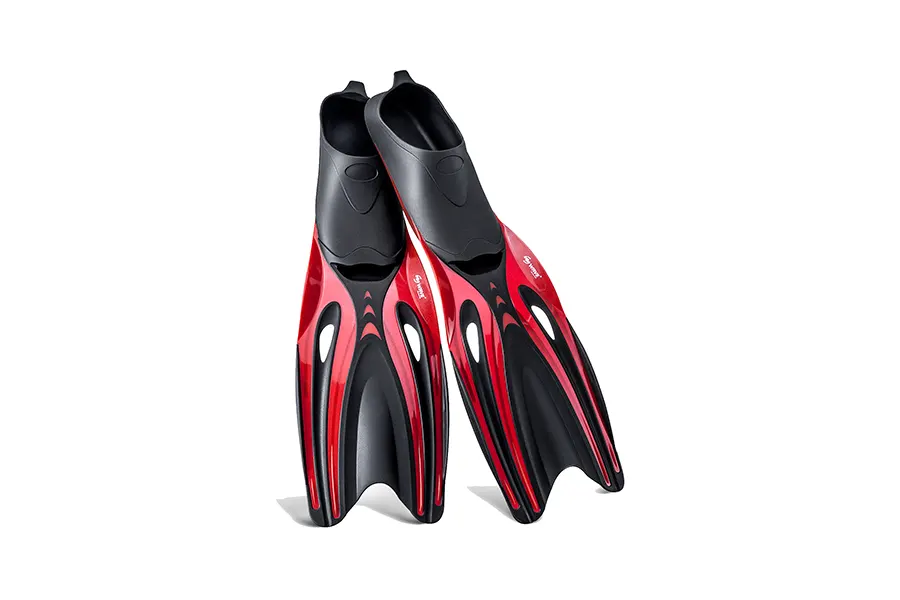
Le client quitte le complexe à onze heures., s'arrête à la boutique de cadeaux à dix heures, et achète la seule pièce d'équipement de plongée en apnée qui tiendra réellement dans le bagage à main. Cette transaction - imprévue, à prix impulsif, décidé en quelques secondes au comptoir - c'est l'analyse de rentabilisation complète pour les palmes de plongée en apnée adaptées aux voyages. Pour les acheteurs au détail du complexe, boutiques d'excitation à terre de croisière, souvenirs d'aéroport, et tour-opérateurs, l'aileron compact n'est pas une version édulcorée d'un vrai aileron. C'est un produit différent avec un travail différent: transformer un souvenir en marchandise qui survit à une valise, un cycle de location, et une ou deux saisons sans devenir une réclamation au titre de la garantie.
La plupart des acheteurs s'approvisionnent mal dans cette catégorie. Ils tirent la plus petite lame du fournisseur’le catalogue, commander une taille unique, j'espère que l'emballage photographie bien, et apprenez la vérité dans le grand livre des retours - ou ne l'apprenez jamais, parce que les produits des boutiques de cadeaux génèrent rarement des retours formels, juste des échecs de réapprovisionnement silencieux. Les usines qui construisent ces programmes traitent bien les palmes de voyage comme des objets de vente au détail.: dimensionné autour de l'intérieur des valises, flotté grâce aux décisions de flottabilité, dimensionné autour d'une famille de pieds, et à un prix adapté à la marge de marge offerte par le commerce de détail du complexe..
Ce guide explique ce que signifie réellement voyager dans les spécifications, comment les palmes compactes devraient être placées dans un assortiment de resorts, et comment structurer les commandes autour d'une catégorie qui se vend au cours d'une saison et vit dans un sac.
Points clés à retenir
- « Adapté aux voyages » est un ensemble de spécifications mesurables, pas un adjectif marketing: lame raccourcie, faible poids, flottabilité sans évier, géométrie à vidange rapide, et un système de pliage ou de sangle qui survit à la compression dans les bagages.
- Les palmes compactes se vendent grâce à l'économie impulsive : le prix d'une boutique de cadeaux a besoin d'un coût au débarquement qui survit aux marges de vente au détail des centres de villégiature., qui pousse les programmes vers des constructions en TPR et composés légers plutôt que des constructions en silicone de qualité supérieure.
- La courbe de taille du travel retail est volontairement compressée: des bretelles réglables ou des poches de taille unique échangent une précision d'ajustement pour une simplicité d'inventaire, parce qu'un magasin de villégiature ne peut pas contenir cinq tailles d'un article vendu dans une fenêtre de six semaines.
- Les plaintes des acheteurs dans la catégorie des ailerons de voyage se concentrent sur les défaillances de la sangle et la fissuration de la lame après une exposition aux UV - deux éléments testables qui distinguent un programme défendable d'un programme de mise en décharge..
- La structure des commandes suit le calendrier des voyages: arrivées de pré-saison, recharges en saison à partir du stock avec expédition rapide, et une décision de mi-saison sur l'opportunité de réorganiser ou de réduire.
Quoi « Adapté aux voyages » Moyens dans les spécifications réelles
Supprimer l'adjectif, et l'approvisionnement en palmes de plongée en apnée pour les voyages signifie juger quatre décisions techniques, chacun d'entre eux qu'un acheteur peut vérifier sur une fiche technique ou un échantillon.
Longueur de la lame et empreinte pliée
L'évidence: une palme de plongée ou de snorkeling complète est 45-60 cm de long et ruine une valise remplie. Lames compactes coupées vers 30-38 cm, et les meilleures conceptions de voyage vont plus loin avec une charnière ou une géométrie flexible qui permet à la lame de se replier contre le chausson.. Lors de l'évaluation d'un fournisseur’s « voyage » réclamer, demander la dimension emballée, pas la longueur du produit - une aileron qui se range dans sa propre pochette en filet à 32 × 20 cm répond à une question qu'un invité se pose réellement.
Poids, et l'arithmétique des grammes des bagages
Les voyageurs fréquents comptent les grammes. Une lame composée légère et une fine poche TPR peuvent rapporter à une paire près de la moitié du poids d'une palme complète en silicone et caoutchouc.. Cela compte au moment de la décision dans la boutique de cadeaux... « est-ce que cela va détruire ma franchise de bagages? » est une vraie objection, et l'emballage qui indique le poids de la paire y répond en rayon.
Construction sans évier
L'une des fonctionnalités les plus sous-financées dans cette catégorie: pales flottantes qui flottent. Sur une plage, une nageoire qui s'enfonce dans une vague est une nageoire qui disparaît. Les composés anti-évier et la géométrie des pales à air emprisonné maintiennent l'équipement à la surface et sur le plongeur., et c'est un sujet de discussion de pointe qui ne coûte rien en termes d'économie unitaire lorsque le composé fait déjà le travail..
Drainage et sable
Les palmes de voyage vivent dans les pires environnements auxquels sont confrontés les équipements de sports nautiques: grincer, soleil, sel, et personne’s rinçage à l'eau douce. La géométrie de drainage des canaux et des vortex dans la lame et le chausson évacue le sable au lieu de le retenir, qui protège à la fois l'ajustement et la durée de vie en flexion du composé. C'est la différence entre une palme qui semble neuve au troisième jour et une palme qui grince..
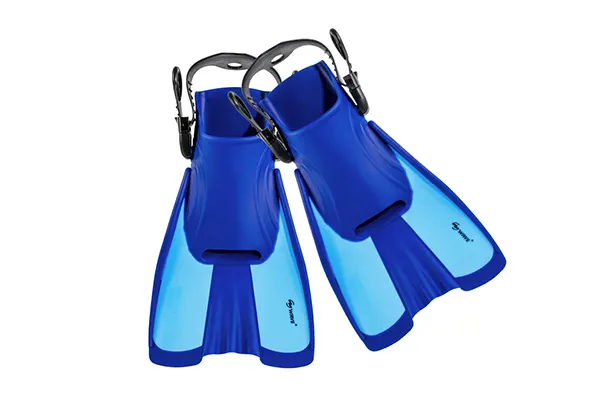
| Spécification | Aileron de voyage compact | Palme récréative complète | Chèque de l'acheteur |
|---|---|---|---|
| Longueur de la lame | ~30-38 cm, options de pliage | 45-60 cm | Demandez les dimensions emballées |
| Poids par paire | Cible composée légère | Construction entièrement en silicone/TPR | Peser l'échantillon; imprimez-le sur l'emballage |
| Flottabilité | Norme de construction sans évier | Varie selon le composé | Testez en flotteur une paire d'échantillons dans de l'eau douce |
| Dimensionnement | Courbe compressée, réglable ou S/M/L | Exécution de taille discrète complète | Cartographier la courbe vers votre magasin’la fréquentation, pas le catalogue |
| Canal typique | Boutiques de la station, vente au détail de croisière, souvenir | Vente au détail de plongée, articles de sport | Évaluez le niveau d’impulsion avant de choisir le modèle |
Compact ne signifie pas une propulsion bon marché, mais cela signifie des acheteurs différents
Une lame courte déplace moins d'eau; c'est la physique, pas un défaut. Ce qui compte commercialement, c'est que l'aileron de voyage’L'acheteur ne le compare pas à une palme de plongée. Un client qui achète au comptoir d'un complexe hôtelier choisit entre ceci et rien - ou ceci et la paire à 45 € au magasin de plongée sur la promenade qui nécessite de l'espace dans le coffre d'une voiture.. L'aileron compact gagne cette comparaison en étant adéquat dans l'eau et parfait dans la valise.
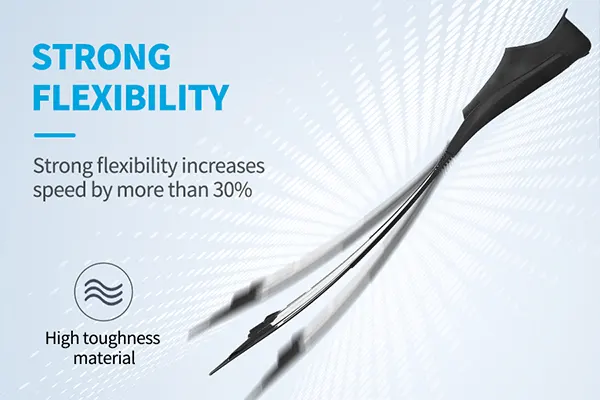
Ce recadrage change les décisions relatives aux produits qui comptent. Le motif flexible bat la zone de la lame: un composé souple qui frappe facilement avec une lame courte convient parfaitement à un plongeur en vacances, tandis que le raide, une lame puissante qui prospère lors d'une plongée en bateau les combat. La flexibilité que vous testeriez sur une ligne de performance est au cœur du confort d'une ligne de voyage – et c'est exactement ce que révèle une vérification de la courbure et de la charnière sur un échantillon physique.. Si vous n'avez pas encore décidé où se situe votre assortiment entre les lames compactes et complètes, notre répartition de Types de palmes de plongée en apnée – lame courte, diviser, entraînement, et plus cartographie l'ensemble du champ avant de consacrer de l'espace sur les étagères.

Les mathématiques du commerce de détail du complexe: Prix impulsif, Courbe de taille compressée, Saison morte
Les palmes de voyage sont achetées comme souvenirs et louées comme équipement, et les deux emplois imposent une structure commerciale dure à la commande.
La tarification impulsive fait reculer le plafond des coûts
Un article de boutique de cadeaux au-dessus d'un certain prix cesse d'être spontané. Travailler dans l'autre sens: prends ton prix étagère, diviser la pile de marge du complexe et le fret, et le reste correspond à votre objectif de coût au débarquement – qui repose presque toujours sur une construction en TPR ou à composés mélangés plutôt que sur du silicone de qualité supérieure.. C'est un échange judicieux lorsque les spécifications sont honnêtes: les mêmes décisions composées sont couvertes canal par canal dans notre guide des matériaux des palmes de plongée en apnée.
La courbe de taille est une décision d'inventaire
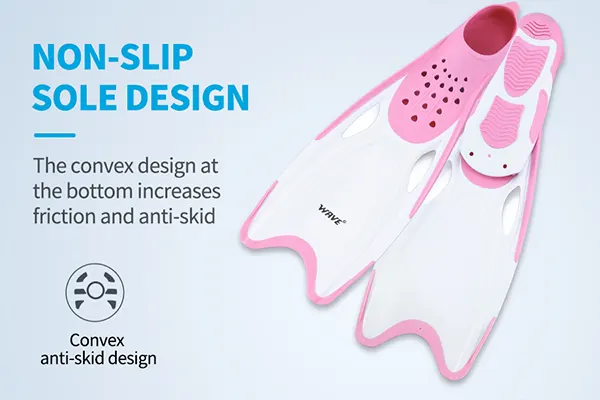
Un magasin vendant des palmes sur une saison de six semaines ne peut pas justifier cinq tailles adultes par coloris.. Des constructions à sangles réglables ou à portée étroite existent pour ce problème précis – un SKU absorbant la plupart des pieds adultes, un SKU pour enfants en haut. Le coût d'ajustement de cette compression est réel mais gérable si vous publiez une plage en centimètres sur l'emballage., parce que le client qui connaît la taille des ailerons est celui qui l'achète. Les mécanismes de répartition des tailles de voyage sont abordés dans notre guide des tailles des palmes de snorkeling.
La saison se termine, que vous ayez vendu ou non
La vente au détail du complexe est la météo et les horaires des vols avec une caisse. Commandez votre première livraison contre la fréquentation de manière prudente, alors utilise la catégorie’La véritable superpuissance de S : des recharges en saison provenant d'une usine’le programme de stock, expédié en quelques jours, au même niveau que votre commande d'ouverture. Un fournisseur qui ne peut pas réapprovisionner pendant votre saison vous vend un pari, pas un programme; notre guide de vente en gros sur MOQ, chargement du conteneur, et niveaux de prix marche les chiffres.
L'emballage est le vendeur
Sur une étagère de villégiature, la boîte fait la vente: l'aileron est généralement scellé à l'intérieur, et l'invité décide de l'œuvre d'art en quatre secondes. Trois éléments gagnent leur coût d'impression. Une légende au format compact répond à la question de la valise. Une scène d’utilisation – famille, récif, eau claire - répond à la « allons-nous réellement l'utiliser » question. Et une simple bande de spécifications (poids, comportement flottant, gamme de tailles) anticipe la contre-question qui coûte une vente. Les pochettes de voyage en filet qui permettent à l'invité de visualiser le bagage à main surpassent les boîtes fermées où l'acheteur cible emballe léger.; les cartes blister gagnent lorsque la même palme est suspendue dans un ensemble pratique aux côtés du masque et du tuba. Confirmez que le format d'emballage change votre cube par palette avant de verrouiller l'œuvre d'art : les accessoires de vente au détail sur le mur arrière du complexe contiennent une quantité surprenante de stock., ou c'est embarrassant peu.
Structure des commandes sur une saison de voyage
Les acheteurs qui traitent cette catégorie comme une ligne de magasin de plongée mal chronométrent le calendrier. Un rythme réalisable ressemble à ceci: spécifications et échantillons pendant la saison intermédiaire, avec un protocole de test complet sur échantillons physiques — float, fléchir, tirette de sangle, dimension emballée. Passez la commande d'ouverture suffisamment tôt pour que la production et le fret arrivent avant votre première semaine de pointe.. Suivez les ventes chaque semaine, pas mensuellement. Engagez la commande complémentaire pendant qu'il reste encore la saison pour vendre - le réapprovisionnement à partir des programmes de stock se déroule en jours, mais seulement si la décision intervient avant que la demande ne disparaisse. Tout ce qui ne se vend pas d'ici la fin de la saison est une décision de démarque, pas une décision de stockage; l'année prochaine’l'invité ne veut pas l'année dernière’coloris, et les coûts d'entrepôt pour les ailerons volumineux emballés au détail sont discrètement punitifs..
Là où la même usine prend en charge les deux – ouverture de commandes sur des coloris personnalisés et recharges en saison à partir du stock – l'ensemble du programme simplifie. C'est l'argument opérationnel en faveur de l'approvisionnement en ligne de voyage auprès d'un fabricant de gamme complète plutôt que d'un catalogue commercial.; le programme de stock prêt à expédier existe justement pour ce moment de mi-saison.
Foire aux questions
Les palmes de plongée en apnée de voyage fonctionnent-elles réellement, ou sont-ils un souvenir?
Les deux, en fonction de la construction. Une palme compacte bien conçue avec une lame courte et souple est véritablement efficace pour la plongée en surface - la discipline dans laquelle la plupart des clients du complexe s'adonnent réellement.. Ce qu'une palme de voyage ne fait pas, c'est la propulsion de plongée ou la lutte contre le courant., parce que la surface de la lame est physiquement plus petite. L'erreur de marchandisage est de le vendre contre une palme de plongée’description de poste, qui fabrique la déception; je le vends pour le tuba des vacances et il fonctionne.
Quelles tailles un magasin de villégiature doit-il commander pour les palmes de voyage?
Comprimé, exprès. La plupart des programmes de villégiature proposent un SKU pour adultes réglable ou à large gamme, plus un SKU pour enfants par coloris., parfois une répartition intermédiaire S/M/L pour les emplacements à fort trafic. Les séries complètes de taille discrète appartiennent au commerce de détail de plongée, pas de vente au détail impulsive : chaque taille supplémentaire multiplie le risque de stock mort sur un article avec une fenêtre de vente de six semaines. Imprimez la longueur de pied prise en charge en centimètres sur l'emballage afin que le client puisse choisir lui-même sans faire appel à un installateur..
Ce qui échoue en premier sur un voyage à petit budget?
Sangles et pieds de pale. Les fines bretelles élastiques se dégradent sous les UV et s'enclenchent au point d'attache; les composés à budget rigide se fissurent à l'endroit où la lame rencontre la poche après une saison de soleil et de sable. Les deux échecs peuvent être testés avant de vous engager: une vérification de la traction de la sangle, une vérification répétée de la flexion sur le pied de pale, et vérifier si le composé est classé pour l'exposition aux UV. Dans les commentaires des acheteurs sur cette catégorie, la défaillance de la sangle est la plainte qui apparaît en premier et le plus souvent.
Puis-je réapprovisionner mes palmes de voyage en mi-saison?
Oui, si vous vous approvisionnez auprès d'une usine détenant des programmes de stock plutôt que d'une production sur commande uniquement. Les palmes prêtes à l'emploi dans les coloris standard peuvent être expédiées dans les jours suivant la commande, c'est ce qui rend un achat d'ouverture conservateur sûr - le risque passe de « est-ce que j'ai deviné que j'avais bien demandé » à « ai-je effectué la recharge avant la fin de la saison. » Acceptez les conditions de réapprovisionnement, y compris si les réapprovisionnements maintiennent le prix de l'ordre d'ouverture, avant votre premier conteneur, pas quand un directeur de station vous poursuit en juillet.