...

中国のブランド向け水泳およびダイビング用品メーカー, 卸売業者, 以来のOEMプロジェクト 1993.

製品ガイド

What Are Junior Swim Goggles? Age Grading and Safety Standards Primer

What Are Junior Swim Goggles? Age Grading and Safety Standards Primer

For a distributor or retail buyer, the junior goggle shelf looks deceptively simple: smaller versions of adult goggles, sold in bright colors. In practice it is one of the trickiest categories in swim retail, because the “customer” buys three times (the parent pays, the child wears it, the coach rejects it if it leaks), and the fit range that a single adult frame covers takes three or four junior SKUs to serve properly.

This primer defines the category the way a factory defines it: what makes a goggle a junior goggle, how age grading actually works, which safety and compliance standards matter for kid-facing swim gear, and what evidence a first-time category buyer should demand before placing an order.

重要なポイント

  • “ジュニア” is a size and sealing specification, not a color scheme: smaller lens footprint, softer silicone skirt, narrower bridge, and an adjustable strap sized for a child’s head circumference.
  • A credible age ladder runs three grades: preschool (だいたい 3 に 6 年), ジュニア (だいたい 6 に 12), and teen transition (12 up), each requiring different tooling rather than one frame shrunk twice.
  • Compliance for kids’ goggles centers on skin-contact material safety (エコテックス規格 100), market access documentation (CE, FDA), and audited process control (ISO 9001:2015, BSCI).
  • Batch evidence that predicts shelf performance: seal/leak test results, headband pull-strength data, and anti-fog duration figures, not marketing adjectives.
  • Returns in this category are overwhelmingly fit-driven, which makes interchangeable nose bridges and clear size labeling a margin protection, not a nice-to-have.

What Makes a Goggle a “ジュニア” Goggle?

On a production line, a junior goggle differs from an adult model in four measurable ways, and none of them is the graphic on the strap.

Frame footprint. The lens opening and skirt are scaled to a child’s orbital bone: a smaller sealed area that cannot bridge an adult eye socket without pressing on it, and conversely must not sit so small that it seals on the eyebrow.

Skirt durometer. Children’s skin is more sensitive and their faces have less structural definition for a seal to grip, so junior skirts run in softer liquid silicone rubber compounds. Hard adult skirts on a seven-year-old produce the leak-and-red-mark complaints that define a bad review cycle.

Nose bridge. This is the single biggest fit variable in a growing face. Adult brands handle it with a handful of fixed sizes; well-run junior lines use interchangeable bridge clips in small, 中くらい, and large, which lets one frame cover a whole age band and lets your store stock one SKU instead of four.

Strap geometry. Junior straps are shorter, split at the back for stability against a child’s head shape, and use buckles sized for small fingers, since a goggle a kid cannot refit alone gets abandoned mid-session.

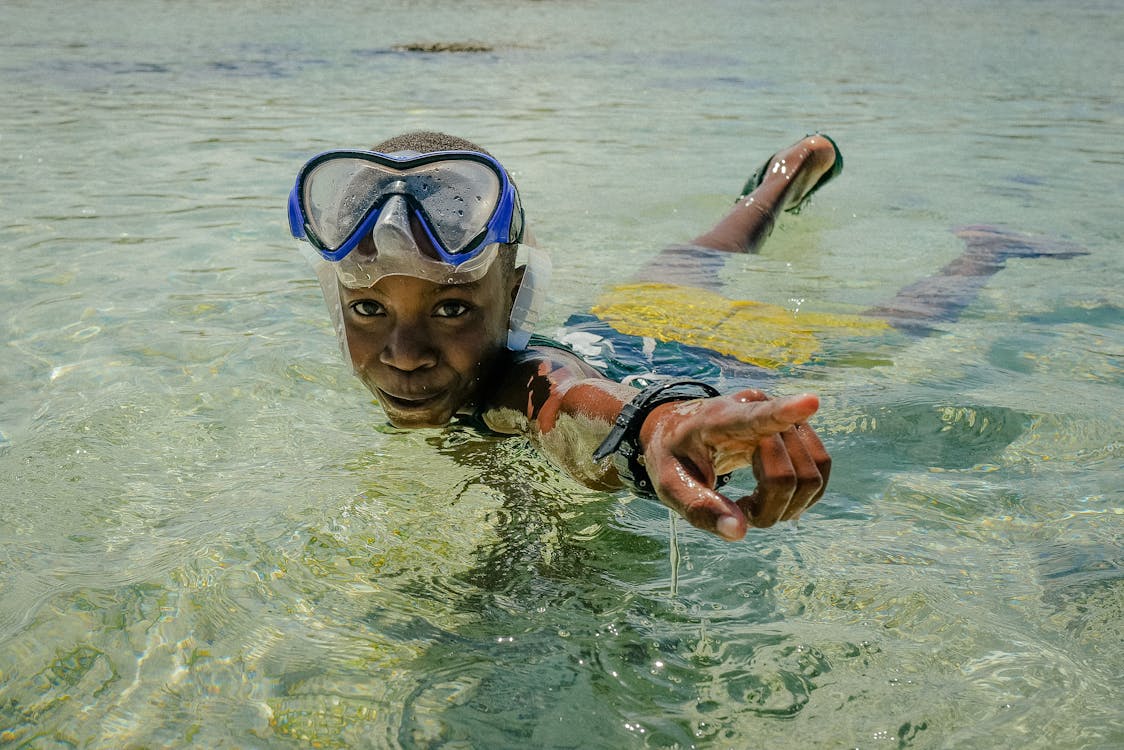
Overview of types of swimming goggles designed for kids and junior swimmers
Junior goggles are defined by frame scale, スカートの柔らかさ, bridge range, and strap geometry, not by colorways.

If you want the wider taxonomy these models sit inside, our breakdown of the six main goggle types maps junior products against racing, トレーニング, and recreational families.

How Does Age Grading Actually Work?

Factories and brands grade junior swim gear in bands, because facial growth is uneven and one “kids size” hides two different buyers. The working ladder looks like this:

Grade Typical age Fit drivers What buyers stock
Preschool だいたい 3 に 6 年 Very small frame, softest skirt, goggle often worn for short sessions Shallow, frequent-restock SKUs; durability less critical than comfort
ジュニア だいたい 6 に 12 年 The growth band: same child may need bridge size changes between seasons Interchangeable-bridge frames carry the range; anti-fog quality starts mattering (lessons intensify)
Teen transition だいたい 12 years up Adult face dimensions, junior usage intensity: club training begins Entry racing models; see our competition goggle wholesale guide for the tier above

The commercial consequence of the middle band is the one first-time buyers miss: a six-to-twelve-year-old is not a fixed size. That is exactly why the interchangeable nose bridge (small, 中くらい, large) is the workhorse feature of a serious junior line, and why assortment plans built on “one kids size” generate returns at both ends of the age range.

Why Do Junior Frames Need Different Construction, Not Just Smaller Molding?

Scaling down an adult tool does not produce a good junior goggle; it produces a leaky one. The seal mechanics change with the face.

A child’s cheekbone provides less of a ledge for a firm skirt to grip, so the sealing work shifts to material softness and even wall thickness. That is where co-injection molding earns its place in kids’ 生産: the liquid silicone skirt is bonded to the polycarbonate lens in one molding step, with no adhesive seam to peel where a soft skirt flexes repeatedly. Our co-injection process is patented, and in junior lines it addresses the number-one failure parents report, the skirt separating or weeping at the lens join after a few weeks of warm-water handling.

Hypoallergenic-grade silicone matters more in this tier than anywhere else on the shelf, because children with sensitivities are the buyers whose parents will not repurchase from a store that burned them once. UV-treated and wide-vision lens options round out the junior spec sheet: young swimmers in learn-to-swim programs respond badly to the tunnel vision of racing profiles, and outdoor swim schools ask for tinted options seasonally.

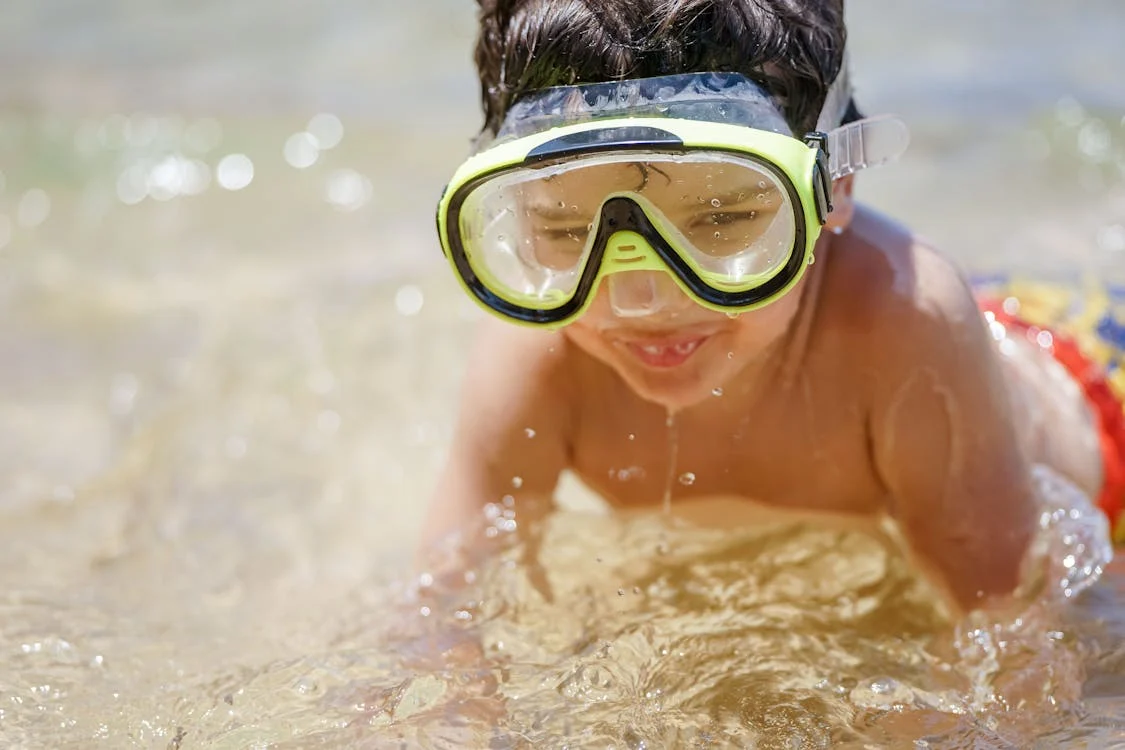
Guide image showing how to choose properly fitted swimming goggles for kids
Fit logic drives the SKU plan: soft skirt, correct bridge, and a strap a child can operate independently.

For the parent-facing fit conversation your store staff will repeat, our article on choosing swimming goggles for kids is a useful training reference for retail teams.

Which Safety and Compliance Standards Apply to Junior Goggles?

Here is the honest primer: there is no single global “children’s goggle certificate.” Compliance is a stack of separate documents, and a buyer new to the category should be able to name each layer before asking a supplier for proof.

Layer one: market access

For distribution in the European Union, chain importers and distributors expect a CE documentation package for goggles, and it belongs to the certificate set we maintain for the category. For the US market, large retail accounts ask suppliers for FDA documentation during vendor onboarding. A supplier who says “we have certificates” without naming which document for which market has not passed the first interview question.

Layer two: material contact safety

The skirt and strap sit against a child’s skin for hours, 濡れた, warm, occasionally chewed. エコテックス規格 100 testing on the silicone components is the meaningful assurance here, and it is the test we hold on our own production. Polycarbonate lens material is inert and widely accepted; what you want documented is the skin-contact side.

Layer three: process and social audit

ISO 9001:2015 tells you the factory’s quality system is documented and audited; BSCI covers the social-compliance side that European chains increasingly require before signing kids’ apparel and accessory programs. For junior categories specifically, these audits are what retailers lean on during supplier onboarding, so a factory’s ability to hand over current audit summaries is a commercial asset for you, not paperwork.

One boundary worth stating plainly for new buyers: certification covers the product as tested, and claims like “anti-fog for 100 時間” または “unbreakable” are marketing language, not standard categories. Verify performance claims against batch test data instead, which is the next section.

What Batch-Level Tests Predict Shelf Performance?

A compliance file gets the product through the door; batch testing keeps it out of the returns bin. Three test families carry almost all of the predictive weight for junior goggles, and a competent factory’s inspection report covers all three.

  • Seal and leak testing. Every molded skirt shape should ship with leak-test results on the batch. Junior faces vary enormously, so the practical check is whether the factory tests across the bridge-size combinations, not just the flagship configuration.
  • Headband and buckle pull strength. Children handle straps roughly and swim schools handle goggles roughly in shared storage. Tensile results on the strap and clip joints are the number to compare between suppliers; failures here show up in reviews as “broke after two weeks.”
  • 防曇持続時間. A measured figure for how long the treatment survives chlorine exposure cycles, not a claim of “long-lasting.” The difference between coated and molded-in anti-fog is covered in our anti-fog technology explainer, and it matters doubly in junior lines where a fogged goggle ends the lesson.
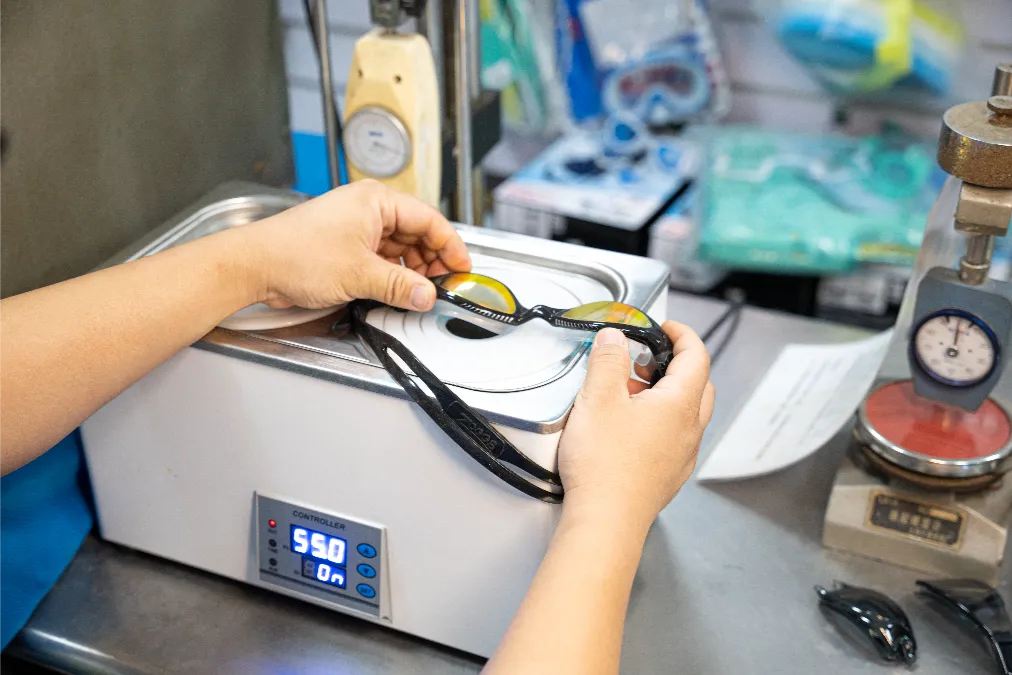
Performance testing station evaluating goggles for seal, strap strength and anti-fog duration
In-house performance lab testing is where batch-level seal, pull-strength and anti-fog evidence is generated.

Ask for these reports on the sample order, for the batch the samples came from. Factories that test every batch will send them unprompted; the ones that test “type samples” once a year will send a PDF with a date older than your company.

How Should a First Junior Assortment Be Built?

With the category defined and verified, the practical question is what a sensible opening order looks like for a swim retail shelf or an online junior department.

Three principles serve most starting points. 初め, buy down the fit axis before the color axis: two well-chosen frame sizes with full bridge range will outsell one “universal kids” frame in six colors. 2番, let the age ladder mirror your sales channel: swim schools consume preschool and junior grades in volume, clubs push the teen transition tier toward racing specs, and general retail sits in the middle. 三番目, keep the compliance stack visible at the point of sale, because the parent buyer of kids’ gear reads the box: a clear certification story on packaging converts in a way adult categories rarely need.

For where junior racing products overlap with the competition tier, the youth picks in our competitive junior goggle roundup show how the transition tier actually sells. And when you are ready to source the range, 私たちの goggle product pages list what runs on stock tooling versus what needs a development conversation.

Stocking a junior goggle program for the first time? Tell us your channel (swim school, club, or general retail) and target age spread. We will map a three-grade assortment with bridge coverage, compliance documents for your market, and batch test reports. Start the conversation via the contact form.

よくある質問

What age range do junior swim goggles cover?

As a category, だいたい 3 に 12, with a transition tier from about 12 into adult-small frames. Inside that span the growth difference is large enough that serious lines split into preschool and junior grades and cover the middle with interchangeable nose bridges rather than extra frame tooling.

Are kids’ goggles subject to different safety rules than adult goggles?

The regulatory classification is usually the same product family, but buyers of children’s goods apply stricter expectations: skin-contact material certificates such as OEKO-TEX Standard 100, current social audits for the factory, and small-parts judgment on clip and strap hardware for the youngest grades. Chain onboarding packages for kids’ categories tend to ask for all three.

Do junior goggles need prescription options?

Not for most junior retail, but myopia rates in several markets are pushing swim schools to ask, and a small prescription range (-1.5 and up in common steps) has become a differentiator for school-facing programs. It is a custom-tooling conversation rather than a stock item, so plan lead time accordingly.

What causes the highest return rate in this category?

フィット, almost entirely: leaks from a single “kids size” フレーム, and fog complaints from coated lenses sold into daily lesson use. Both trace back to assortment shortcuts at ordering time, which is why bridge coverage and molded-in or durable anti-fog options are worth the specification step-up in junior grades.

How many junior SKUs should a first order include?

Enough to cover three grades with two colors each is a workable minimum: it lets you place product with swim schools, クラブ, and general retail without betting on one channel. On stock tooling, per-color quantities are what drive order size, so a six-SKU opening plan is usually a discussion about colors, not about minimums.

この記事をシェアする

スイムギアプロジェクトを始める準備ができました?

製品仕様をお送りください, 目標数量, そしてタイムライン. 弊社の輸出チームが 1 営業日以内に価格を返信します。, MOQ, そしてリードタイム.

見積もりを取得する 製品を閲覧する
トップに戻る
素早い見積もりが必要? WhatsApp で輸出チームとチャットする.