Walk into any sourcing fair in Guangdong and you will see the same scene at half of the watersports booths: a rack of fins, a laminated spec sheet, and a sales rep who uses the words “シュノーケリング,” “ダイビング,” そして “フリーダイビング” almost interchangeably. For a first-time distributor or a retail buyer adding a water sports line, that ambiguity is expensive. Order the wrong blade length and the fins sit on the shelf. Order the wrong foot pocket style and returns spike in the first season.
Snorkeling fins are their own product category with their own design logic, price band, certification path, and buyer profile. They are not short scuba fins, not entry-level freediving fins, and not the same thing as swim training fins used in a pool program. Getting the definition right is the first step before you compare suppliers, negotiate an MOQ (最低注文数量), or open a private label program.
This guide gives B2B buyers — importers, 地方卸売業者, chain retail buyers, and cross-border e-commerce sellers — a working definition of snorkeling fins, the four sub-types most programs carry, the specifications that actually move retail price and return rate, the certifications required for the EU and the US, and how MOQ, ツーリング, and lead time shape a first season.
重要なポイント
- Snorkeling fins are short-blade, low-propulsion fins built for surface swimming and shallow water — not for open-heel scuba use and not for the long kick cycle of freediving.
- Retail programs typically stock four sub-types: compact, lightweight, 調整可能な, and full-foot pocket. Each maps to a distinct channel and price point.
- The specs that matter to a buyer are blade length, blade and foot pocket material, strap system, drainage design, size range, weight per pair, and packaging format — not the marketing adjectives.
- Import compliance for the EU and the US is covered by CE, FDA, エコテックス規格 100, REACH, and CPSIA; a factory holding ISO 9001:2015 and BSCI simplifies the audit trail.
- Standard MOQ for snorkeling fins from a Chinese factory runs around 300 カラーごとの個数, 在庫サンプル付きで 2 ~ 7 日以内, カスタム プロトタイプは 15 ~ 30 日で作成可能, 30 ~ 60 日で量産可能.
What Exactly Counts as a Snorkeling Fin?
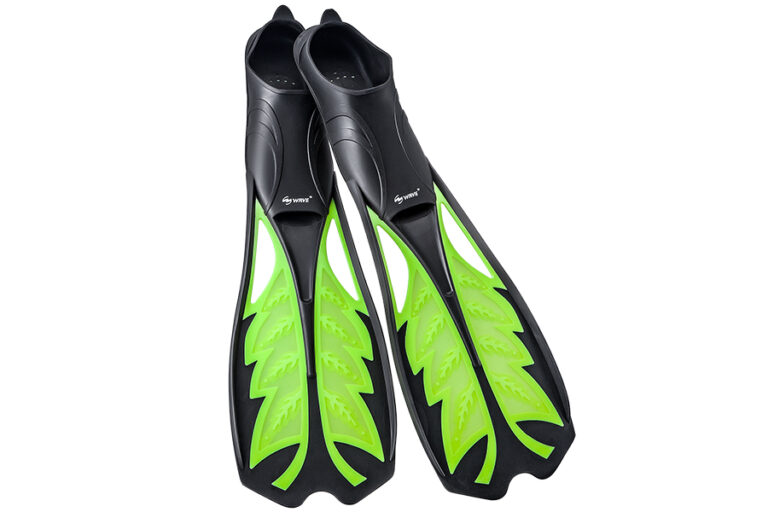
A snorkeling fin is a swim propulsion device designed for surface and near-surface use, typically with a blade length between 20 そして 35 centimeters, a soft foot pocket that can be worn barefoot, and a total pair weight under 1.2 kilograms. The design goal is a short, quick kick cycle that keeps a swimmer moving across the surface with minimum fatigue — the opposite of the long, slow kick a freediver uses to descend, and the opposite of the stiff open-heel blade a scuba diver uses to push through current with a full tank on their back.
Three boundaries define the category:
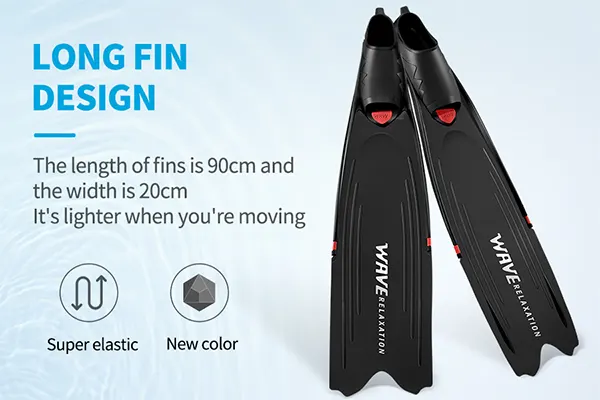
- Blade length. Snorkeling blades are short. Freediving blades run 60 に 80 centimeters; scuba blades are usually 55 に 70 centimeters and much stiffer. Anything under roughly 40 centimeters sits in the snorkeling or swim-training family.
- フットポケット. Snorkeling fins are almost always full-foot (barefoot wear). Scuba fins are typically open-heel with a spring strap, meant to fit over a neoprene boot. A few hybrid models exist, but the barefoot full-foot pocket is the strongest visual signal that a fin belongs on the snorkeling side of a store.
- Use case. Snorkeling fins are sold for reef tours, resort programs, family beach trips, and casual pool use. They are not rated for depth, not designed to handle a diver’s weighted belt, and not built for the sustained thrust a technical diving program requires.
The category confusion is common enough that we cover it in a dedicated comparison — the differences between freediving fins, スキューバフィン, そしてシュノーケリングのフィン breaks down blade geometry, kick cycle, and retail positioning side by side. For a first-time buyer, the practical takeaway is this: if a supplier cannot tell you blade length in centimeters, foot pocket type, and target use case in one sentence, they are selling fins as a commodity and you will struggle to defend a retail price.
Which Sub-Types Should a Distributor Stock?
Most snorkeling fins programs are built from four sub-types. Each has its own retail price band, target buyer, and shelf role. A new distributor rarely needs all four in season one, but should understand the mix before placing a first order.
| Sub-Type | 刃の長さ | Best Channel | Retail Price Band (米ドル) | Buyer Priority |
|---|---|---|---|---|
| Compact / Travel | 20–25 cm, short and wide | Dive shops at resorts, hotel gift shops, airline travel retail | $12 – $25 | Fits in a carry-on; sells as an impulse add-on |
| 軽量 / Entry | 25–30 cm, thin blade | Sporting goods chains, mass retail, 電子商取引 | $15 – $30 | Low fatigue for casual swimmers; family packs |
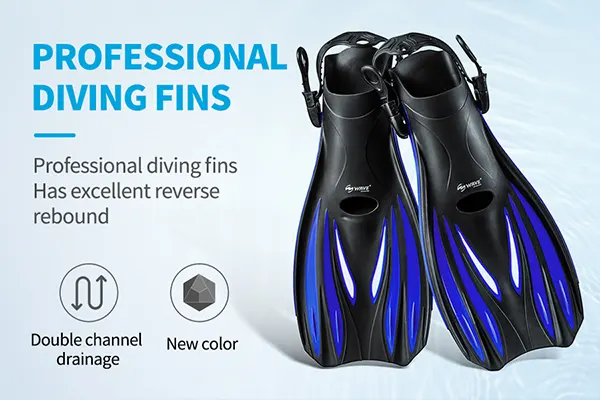
| Adjustable / Open-Heel | 28–35 cm, strap with buckle | ダイビングショップ, ツアーオペレーター, レンタル車両 | $22 – $45 | One size fits many; durable strap for rental turnover |
| Full-Foot Pocket | 30–40cm, longer blade | Specialty snorkel retail, premium e-commerce | $28 – $55 | Barefoot comfort with more thrust for longer swims |
A first-season program for a general sporting goods retailer usually opens with two sub-types: a lightweight entry fin at $18 に $25 小売り, and an adjustable fin at $28 に $38. That combination covers both the family beach buyer and the more committed snorkel tourist. Resort-focused distributors lean heavier into compact and adjustable. Specialty snorkel e-commerce sellers often start with full-foot pocket models because the higher price point supports the shipping cost.
What Specifications Do B2B Buyers Actually Compare?
Marketing copy will tell you a fin is “ergonomic” または “high-performance.” Neither word survives contact with a return report. The specifications below are the ones a serious buyer compares across suppliers, because each of them shows up in cost, in shelf performance, or in warranty exposure.
刃の材質. The three common choices are polypropylene (PP), thermoplastic rubber (TPR), and natural rubber. PP is light, cheap, and stiff — good for entry-level fins but prone to stress whitening. TPR is more flexible and takes color well; it is the mid-market standard. Natural rubber is heavier, more durable, and the material of choice for premium full-foot designs. 私たちの snorkeling set materials guide covers silicone, TPR, and PVC in depth for masks and snorkels; the same material logic applies to fins.
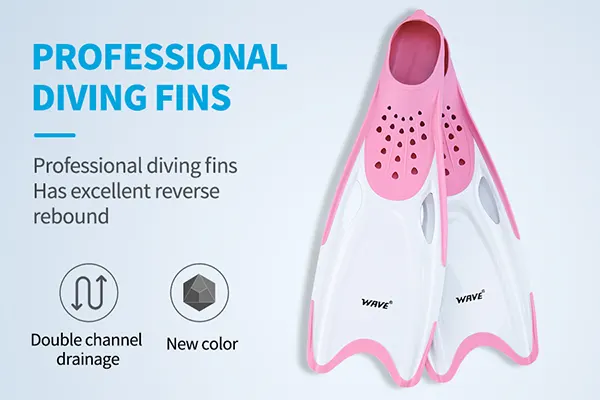
フットポケットの素材. A soft silicone or TPR foot pocket is what separates a $12 fin from a $30 フィン. Hard plastic pockets cause blisters within twenty minutes and drive returns. Look for a pocket with a molded heel contour and a drain channel at the toe.
ストラップシステム. Adjustable fins use either a plastic side-release buckle (cheapest, most failure-prone), a rust-proof metal buckle (mid-tier), or a spring strap (プレミアム, no pinch, longest service life). Rental fleets and tour operators should insist on spring straps — the failure rate on plastic buckles under daily use is high enough to affect a retailer’s margin.
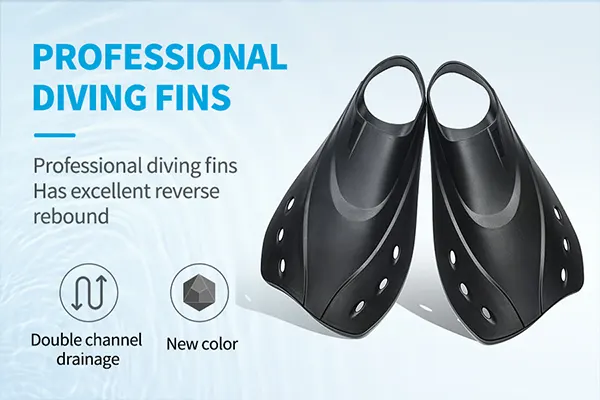
Drainage and channel design. Water that pools on the blade adds drag and slows the kick. Modern snorkeling fins use molded drainage holes near the foot pocket, or longitudinal channels on the blade underside. Both designs are cheap to tool and produce a measurable difference in swim feel.
Size range and grading. A well-graded size run is S/M/L/XL, or EU 35-38 / 39-42 / 43-46 for a three-size program. Ask a supplier for the exact foot length in centimeters for each size — a size L that fits a EU 43 foot and a size L that fits a EU 45 foot are two different products, and mixing them across vendors is how a retailer ends up with a size-related return spike.
Weight per pair. Compact fins run 500 に 700 grams; lightweight fins 700 に 900 grams; full-foot designs 900 grams to 1.3 kilograms. Weight affects shipping cost, shelf feel, and the customer’s first impression when they pick up the fin.
Packaging format. Mesh bag, ブリスターカード, hang tag, printed color box, or full private label carton. Packaging choice is a retail-channel decision — dive shops want a mesh bag with a hang tag, chains want a printed color box with a barcode panel, and cross-border sellers want a compact box that fits an e-commerce fulfillment profile. 私たちの snorkeling set packaging guide covers the channel-by-channel trade-offs.
What Certifications Do Snorkeling Fins Need for Import?
Snorkeling fins are recreational swim equipment, not personal protective equipment rated for life support. That lowers the certification burden compared to a dive mask or a buoyancy compensator, but it does not remove it. Two market blocks drive most of the requirements.
欧州連合. CE marking applies where the fin is sold as recreational swim equipment. REACH restricts substances of very high concern in the plasticizers and pigments used in TPR and PVC components. If the fin is marketed to children under 14, で 71 (toy safety) can be invoked by a customs inspector even though the product is a swim aid, so a supplier who can produce a chemical test report covering both adult and junior versions is worth paying a small premium for.
米国. FDA registration is not required for the fin itself, but FDA compliance applies to any silicone component that contacts skin for extended periods. CPSIA (Consumer Product Safety Improvement Act) governs lead and phthalate content in children’s products. California Proposition 65 requires a warning label if any listed chemical is present above the safe harbor level.
Cross-market. エコテックス規格 100 is a voluntary certification but is increasingly requested by European retail chains because it consolidates several restricted-substance tests into one report. BSCI (ビジネスにおける社会的コンプライアンスへの取り組み) covers the factory audit side; most EU chains require it. ISO 9001:2015 is the baseline quality management system certification.
Vanguard holds ISO 9001:2015, BSCI, CE, FDA, およびエコテックス規格 100. For a first-time buyer, ask for the certificate number, the issuing body, and the expiry date on every document — a photocopy without a traceable issuer is not compliance. 私たちの snorkeling set export certifications guide walks through each document in more detail.
How Do MOQ, Tooling, and Lead Time Shape a Fins Program?
The commercial side of a snorkeling fins program is where most first-time buyers get surprised. Understanding the four numbers below before you send an RFQ (Request for Quotation) saves weeks of back-and-forth.
MOQ. The standard MOQ for snorkeling fins from a Chinese factory is 300 pieces per color per size run. That is the same MOQ structure Vanguard applies to masks, ゴーグル, そしてヒレ. A three-color, four-size first order therefore totals 3,600 個. Some suppliers will drop to 200 pcs per color for stock-color programs; anything below that usually signals the factory is running your order through a trading company rather than producing it.
Tooling. If you are using the factory’s existing mold, there is no tooling cost. If you need a custom blade shape, a proprietary foot pocket, or a private label logo molded into the blade, tooling runs from USD 3,000 to USD 12,000 複雑さに応じて, and takes 25 に 45 日々. Vanguard runs 社内CNC金型開発, which shortens the mold iteration cycle compared to factories that outsource tooling.
リードタイム. The standard schedule for a snorkeling fins program:
- 在庫サンプル: 2 に 7 日々. Any supplier who cannot send a physical sample within a week is not carrying stock.
- カスタムプロトタイプ: 15 に 30 日々, including mold modification where needed.
- 量産, 最初の注文: 30 に 60 days from deposit and approved sample.
- リピート注文: その周り 30 日々, because the mold and material spec are already locked.
- Stock dispatch: 48 hours for ready-to-ship SKUs, which matters for cross-border e-commerce sellers testing a new listing.
DFM feedback. When you send a custom design, a serious factory returns DFM (製造のための設計) feedback within 24 に 48 hours — flagging blade thickness that will not fill, a foot pocket geometry that will not release from the mold, or a strap anchor point that will fail a pull test. A supplier who quotes without DFM feedback is quoting blind.
For a deeper dive on the wholesale side of fin sourcing, including how to score suppliers on quality control and how to structure a first order, 見る how to choose diving fins for wholesale orders.
Where Does Vanguard Fit in a Snorkeling Fins Sourcing Strategy?
Vanguard Swimming is a Guangzhou-based manufacturer of swimming, シュノーケリング, and diving equipment with three decades of export experience and a 100 percent in-house factory running four production lines and 65 射出成形機. The category is not fins alone — the same facility produces swim goggles, シリコンスイムキャップ, ダイビングマスク, シュノーケル, full-face snorkel masks, and freediving fins, which matters for a distributor who wants to consolidate a full water sports program under one supplier relationship.
Three capabilities are relevant to a snorkeling fins buyer specifically:
- Patented silicone co-injection technology. The same co-injection process used on our dive masks and goggles applies to fin foot pockets where silicone is over-molded onto a rigid blade core. The result is a foot pocket that will not delaminate from the blade, which is the most common failure mode on cheaper fins.
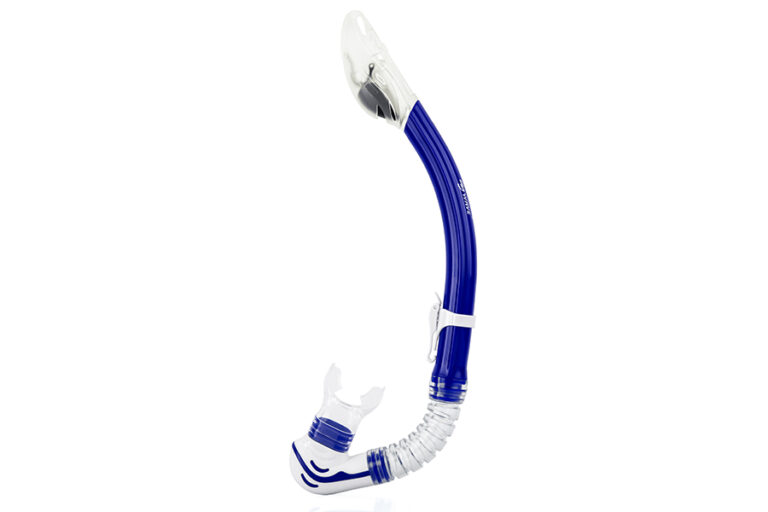
- MSF set capability. Because we also produce masks and snorkels, snorkeling fins can be shipped as part of an MSF (マスク + スノーケル + フィン) set under one PO, one carton spec, and one barcode. Retailers who run a full snorkeling set program save on inbound logistics and get consistent packaging across the SKU.
- OEM track record. Vanguard has served international brands including SPEEDO on long-term OEM programs. The same IP protection, NDA workflow, and factory security protocols apply to a first-time private label buyer as to a Fortune 500 account.
You can browse the current snorkeling fins catalog for stock sub-types and colorways, or reach out through the contact form for a DFM review of a custom blade design.
よくある質問
What is the difference between snorkeling fins and swim training fins?
Snorkeling fins are built for surface propulsion in open water, with a blade length of 20 に 35 centimeters and a soft foot pocket sized for barefoot wear. Swim training fins are shorter, stiffer, and designed for a pool kick cycle — they build ankle flexibility and leg strength for competitive swimmers and are not sold for open-water use. A distributor building a general water sports line will stock snorkeling fins; a distributor serving swim clubs and aquatics programs will stock training fins.
What MOQ should a new distributor expect when ordering snorkeling fins from China?
The industry-standard MOQ for snorkeling fins from a Chinese factory is 300 pieces per color per size run. A three-color, four-size first order therefore totals 3,600 個. Factories that produce masks, ゴーグル, and fins in-house — like Vanguard — can consolidate an MSF set under a single MOQ structure, which lowers the effective per-SKU commitment for a distributor building a full snorkeling program.
Can snorkeling fins be sold as part of a private label MSF set?
はい. An MSF set combines a dive mask, a snorkel, and a pair of fins under one private label carton, one barcode, and one PO. Because Vanguard produces all three components in the same facility, the set can be color-matched across mask skirt, シュノーケルチューブ, and fin blade — which is difficult when the three items come from different suppliers. Private label MSF sets are common in resort retail, chain sporting goods, and cross-border e-commerce.
Which certifications do I need to import snorkeling fins into the EU and the US?
EUにとって, expect to provide CE marking documentation, a REACH statement covering restricted substances in TPR and PVC components, and a BSCI factory audit report if you are selling into a chain. For the US, CPSIA applies to any fin marketed to children, and California Proposition 65 requires a warning label if listed chemicals are present. エコテックス規格 100 is voluntary but is increasingly requested by European retail chains as a consolidated chemical-safety report.
How long does it take to launch a custom snorkeling fins program from scratch?
Plan for 90 に 120 days from kickoff to first shipment. Week 1 covers design review and DFM feedback (24–48 hours from a serious factory). Weeks 2 に 5 cover mold modification and prototype production. Weeks 5 に 6 cover sample approval, color confirmation, and packaging design sign-off. Weeks 6 に 14 cover mass production and pre-shipment inspection. Repeat orders compress to about 30 days because the mold and material spec are already locked.