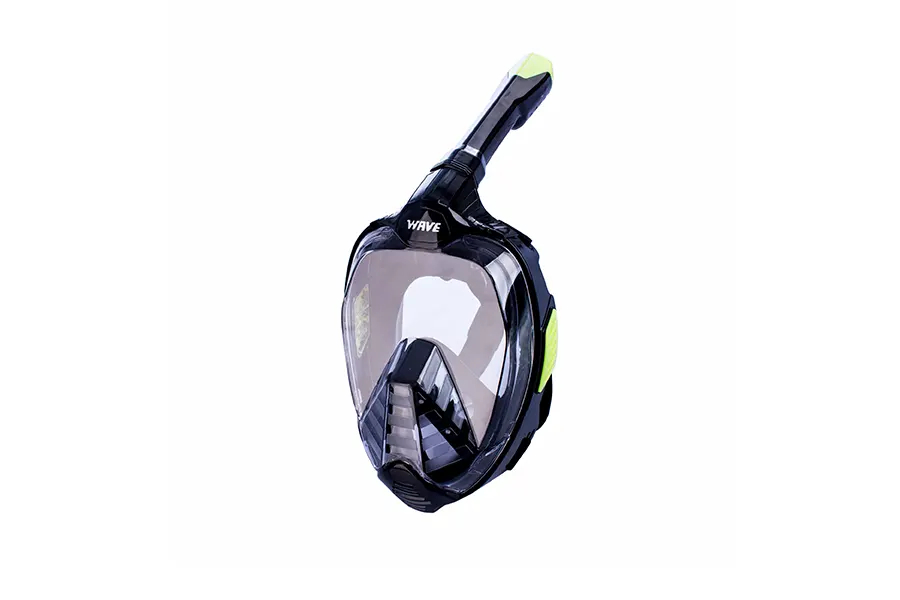
O primeiro catálogo de máscaras de um distribuidor geralmente começa com uma foto do produto e um preço. Acaba, duas temporadas depois, com uma categoria que se comporta como quatro empresas diferentes: uma máscara sem moldura de baixo volume que os mergulhadores livres recompram conforme as especificações, uma máscara de viagem de painel único que vende na prateleira, um clássico de lente dupla que escolas e instrutores movem em massa, e uma máscara de snorkel facial que supera todas as vendas no verão e gera mais ingressos de suporte do que o resto da linha combinada.
Compreender os tipos de máscaras de mergulho – não como uma taxonomia do consumidor, mas como um mapa de merchandising e engenharia – é a forma como os importadores param de adivinhar quais SKUs pertencem ao seu programa. Este guia percorre as quatro construções principais, quanto cada um custa em ferramentas e devoluções, e como combiná-los em um catálogo que cubra casos de uso reais de compradores, em vez de casos imaginários.
Principais conclusões
- O tipo de máscara é decidido por dois fatos estruturais: se o nariz está fechado e beliscável, e se a lente é um painel ou dois. Todo o resto - volume, campo de visão, equalização, opções de prescrição - segue dessas escolhas.
- Máscaras de snorkel faciais são um produto de superfície com problema de volume: eles não podem igualar, que os limita no mergulho com snorkel e gera um perfil de retorno distinto que deve ser gerenciado com linguagem de embalagem, não espero.
- As máscaras sem moldura vencem no ajuste e na visualização, mas concentram todos os riscos de engenharia na ligação da lente à saia – a capacidade do fornecedor é mais importante aqui do que em qualquer outro tipo.
- Máscaras de lente dupla são a plataforma de treinamento e prescrição: lentes mais curtas significam menor custo de vidro por unidade e um caminho natural para inserções ópticas.
- Um catálogo equilibrado é construído em torno de casos de uso, não faixas de preço: um herói de superfície, um polivalente tradicional, um SKU de desempenho de baixo volume, e uma história clara de equalização em todos os produtos não integrais.
O que separa um “máscara de mergulho” de um “máscara de snorkel”?
A linha que importa comercialmente não é a linguagem de marketing – é a física. Qualquer máscara usada abaixo da superfície deve permitir que o mergulhador equalize a pressão no espaço aéreo, o que significa que o nariz deve estar dentro da saia e poder ser pinçado através dela. Cada design de máscara de mergulho tradicional, desde a lente dupla mais barata até a máscara de mergulho livre sem moldura mais refinada, satisfaz esse requisito.
Os designs de rosto inteiro envolvem todo o rosto em um grande volume de ar e deliberadamente não permitem apertar o nariz. Eles trabalham na superfície e somente na superfície. Na prateleira, essa distinção decide quais certificações e declarações de uso sua embalagem pode conter - um tópico que nosso guia de conformidade de exportação trata com mais detalhes - e em retorno, decide se os clientes entendem o que compraram. A comparação do lado do comprador das duas famílias, incluindo as reclamações de flutuabilidade e descida que surgem nas avaliações, está coberto de máscara de snorkel facial completa vs máscara de mergulho tradicional.
Como as quatro principais construções de máscara se comparam?
| Tipo | Estrutura | Equalizar? | Melhor canal | Perfil de risco de retorno |
|---|---|---|---|---|
| Sem moldura | Lente única colada diretamente na saia de silicone, sem estrutura rígida | Sim | Lojas de mergulho, Frente, varejo superior | Falha na linha de ligação se o processo do fornecedor for fraco |
| Moldura de lente única | Uma lente grande angular em uma armação rígida ou semirrígida | Sim | Varejo geral, conjuntos de viagem | Tensão da fivela da moldura sobre a borda do vidro |
| Lente dupla | Duas lentes, oculares separadas, bolso nasal que pode ser apertado | Sim | Treinamento, escolas, programas de prescrição | Mais baixo; construção perdoadora, vãos de lente mais curtos |
| Cara cheia | Rosto inteiro fechado, canal de ar integrado, sem acesso ao bolso do nariz | Não – apenas para uso superficial | Varejo de praia, recorrer, volume de comércio eletrônico | Incompatibilidade de expectativas (descida, flutuabilidade, uso do regulador) |
Máscaras sem moldura: a linha de desempenho e o teste do fornecedor
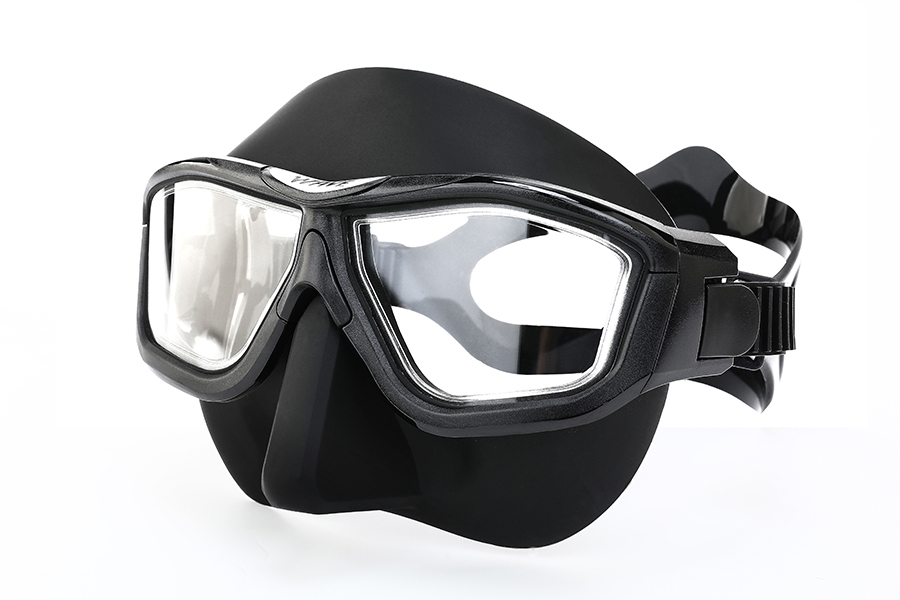
Retire a estrutura rígida e a máscara ficará mais próxima do rosto, com menos volume interior para equalizar e uma visão descendente mais ampla. Esta é a forma que os mergulhadores livres e viajantes experientes pedem pelo nome, e tem a margem por unidade mais forte em uma linha de máscara tradicional.
É também a construção que expõe a real capacidade de uma fábrica. Sem estrutura carregando carga mecânica, a lente vive ou morre por sua ligação ao silicone. Uma junta colada que sobrevive ao controle de qualidade na fábrica ainda pode rastejar sob o sol e a água salgada por uma temporada em um barco fretado. A co-injeção – moldar o silicone diretamente contra a lente em uma única etapa – existe justamente para resolver esse problema, e quando você compara fornecedores sem moldura, perguntar como a lente entra diz mais do que qualquer folheto. O processo de co-injeção patenteado da Vanguard está descrito no página de tecnologia de co-injeção; o raciocínio de nível material está em nosso guia de materiais para máscaras de mergulho.
Máscaras com moldura de lente única: o burro de carga do catálogo
Uma ocular panorâmica dentro de uma moldura é o caminho do meio: mais campo de visão do que lente dupla, menos risco de engenharia do que sem moldura, e uma estrutura que protege as bordas do vidro durante o manuseio no varejo. Para a maioria dos importadores, este é o SKU que define o mercado intermediário – é preciso embalagem premium, combina naturalmente com snorkels e nadadeiras em conjuntos, e suporta a mais ampla variedade de formatos de rosto em testes de ajuste.
Do ponto de vista das ferramentas, a estrutura é a decisão: adiciona um molde e uma etapa de montagem, mas desacopla as cargas da fivela da lente, é por isso que as máscaras de painel único baseadas em moldura toleram vidro mais barato e ainda passam nos testes de queda em um programa de controle de qualidade bem executado.
Fit é a outra razão pela qual esse tipo carrega programas de volume. Um painel emoldurado permite que a saia fique mais larga ao redor das maçãs do rosto sem afastar a lente dos olhos, que cobre mais formatos de rosto em um SKU – e em uma categoria onde uma vedação ruim vende uma máscara uma vez e uma vedação boa vende uma marca por anos, geometria de tamanho único vale dinheiro real na taxa de novos pedidos. Quando os compradores comparam este formato com silhuetas de desempenho mais estreitas, amplitude de ajuste versus amplitude de visualização é a negociação real que está sendo feita.
Máscaras de lente dupla: frotas de treinamento e caminhos de prescrição
Duas oculares separadas com um bolso nasal entre elas é a arquitetura de máscara mais antiga e ainda a mais versátil comercialmente em canais institucionais. Os centros de mergulho os compram em tamanhos, escolas os emitem em frotas, e os vãos curtos das lentes significam menos estresse no vidro e menor custo óptico por unidade.
Seu superpoder silencioso é a compatibilidade óptica: inserções de prescrição são montadas no interior de uma máscara de lente dupla com muito mais naturalidade do que em um único painel panorâmico. Para distribuidores que atendem 40+ programas demográficos ou de instrutor, que torna a lente dupla a plataforma para venda cruzada de acessórios com maior margem - dividimos as duas abordagens de prescrição no guia B2B de máscaras de mergulho prescritas.

Máscaras faciais completas: o produto de volume com um problema de instrução
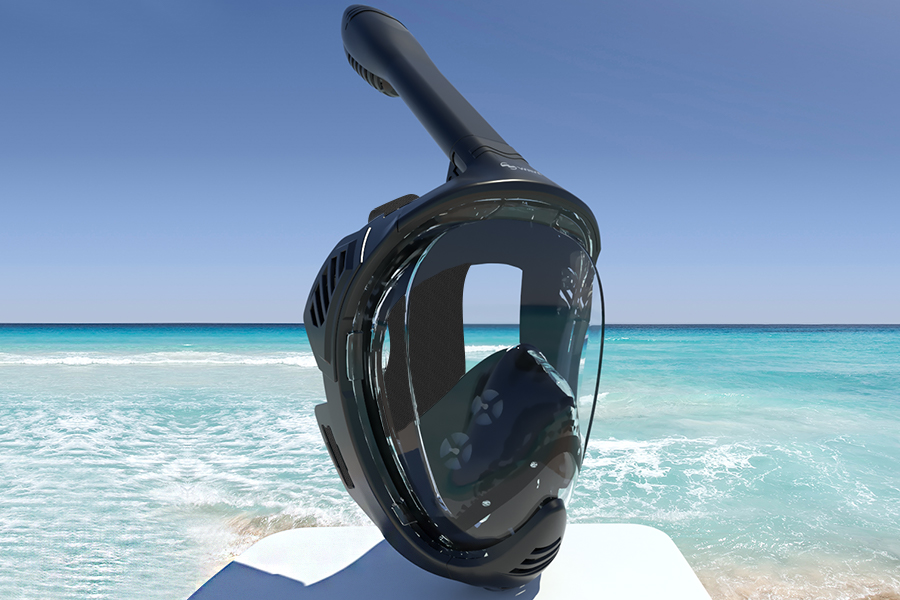
Os dados de vendas no varejo de praia e nos mercados têm sido inequívocos há anos: o formato full-face movimenta unidades como nada mais na categoria. A vista panorâmica, respiração natural pelo nariz ou boca, e o ajuste adequado aos óculos removem todas as barreiras tradicionais para tentar mergulhar com snorkel.
As compensações de engenharia são igualmente fixas. O volume de ar fechado é flutuante, o que torna o esforço de descida perceptível; não há caminho de equalização, então a profundidade permanece na profundidade do mergulho com snorkel; e os reguladores não anexam. Nada disso torna o produto errado – torna a embalagem e o merchandising errados quando implicam o contrário. Fazer com que a caixa diga exatamente o que a física permite é mais barato do que qualquer chamada de retorno pós-temporada, e é a diferença entre um programa full face que compõe e outro que queima o canal. Um programa presencial bem administrado vende honestidade: linguagem explícita de uso de superfície, um posicionamento flutuante e não mergulhador, e um design de canal de ar de qualidade. A máscara respiratória panorâmica M-1502 — a plataforma facial completa patenteada da Vanguard com design internacional e patentes de utilidade — foi projetada exatamente em torno desses padrões de reclamação, e ancora o linha de máscaras de mergulho e snorkel.
Quais tipos um primeiro catálogo deve realmente conter?
As fábricas citam uma máscara MOQ de 300 peças por cor ao longo da linha, então a largura do catálogo é uma decisão com dinheiro real, não é uma lista de desejos. Uma coleção de abertura defensável para um novo programa de esportes aquáticos:
- Um herói de cara cheia no formato líder de preço, estocado em duas ou três cores – este é o mecanismo de volume de verão e o ponto de entrada do comércio eletrônico.
- Uma máscara com moldura de painel único com lente temperada como o tradicional versátil, comercializado em conjuntos com snorkel e nadadeiras; a lógica set-build é abordada em conjuntos de mergulho.
- Um SKU de baixo volume sem moldura ou sem moldura para o canal especializado, mesmo em MOQ de cor única, para dar ao catálogo uma âncora superior.
- Opcional: um SKU de lente dupla se você tiver contas escolares ou de centro de mergulho, dobrando como plataforma de prescrição.
São três a quatro modelos antes dos primeiros navios porta-contêineres – o suficiente para cobrir os casos reais de uso do mercado, pequeno o suficiente para que os ciclos de reordenamento permaneçam gerenciáveis. Os distribuidores que testam a demanda antes de se comprometerem com as ferramentas normalmente partem de programas de estoque com envio rápido, qual é o caminho descrito em preço de atacado de máscara de mergulho; o lado da fábrica da mesma decisão é o lista de verificação do fabricante de sete pontos.
Perguntas frequentes
Uma máscara de snorkel facial completa pode ser usada para mergulho?
Não. Os designs de rosto inteiro envolvem o rosto sem um bolso nasal que possa ser apertado, então o mergulhador não consegue equalizar a pressão na máscara, e o volume fechado também traz flutuabilidade perceptível. São produtos de superfície, e embalagens que impliquem compatibilidade de mergulho criam uma exposição à segurança e um problema de devolução para o distribuidor.
Qual é a diferença entre uma máscara sem moldura e uma máscara de lente única?
Ambos usam um painel de lente, mas uma máscara sem moldura liga essa lente diretamente à saia de silicone, sem nenhuma estrutura rígida ao seu redor, dando menor volume e um ajuste mais próximo. Uma máscara de lente única emoldurada assenta o mesmo painel em uma estrutura rígida que carrega as fivelas e protege a borda do vidro. Frameless é a posição de desempenho; emoldurado é o meio de fácil manuseio.
Por que as máscaras de lente dupla ainda são comuns nas escolas de mergulho?
Porque eles são baratos para dimensionar, difícil de danificar, e fácil de adaptar. Duas lentes curtas custam menos em vidro do que um grande painel panorâmico, o formato aceita inserções de prescrição naturalmente, e as escolas podem emitir o mesmo molde em vários tamanhos de rosto. Para os compradores institucionais, a economia do formato de lente dupla ainda vence, apesar das silhuetas mais recentes nas prateleiras do varejo.
Quantos tipos de máscaras um novo distribuidor deve lançar?
Três modelos são uma abertura realista: um produto de volume facial completo, uma máscara tradicional de painel único, e um SKU de desempenho para ancorar a gama. Como o MOQ por cor normalmente é executado 300 pedaços, lançamentos mais amplos multiplicam seu estoque comprometido mais rápido do que a maioria das taxas de venda por distribuidores da primeira temporada podem justificar.