Personalizar uma máscara de mergulho para sua marca não é uma decisão única – é uma sequência de engenharia, projeto, e escolhas de produção que compõem seu produto final. Cada etapa do processo afeta o custo, linha do tempo, qualidade, e sua posição competitiva.
Este artigo orienta você por todo o processo de personalização do OEM – desde o envio inicial do projeto até a primeira remessa de produção em massa – com cronogramas reais, conquistas, e pontos de decisão. Usamos nossos próprios dados de produção como referência, incluindo o retorno do feedback do DFM, ciclos de desenvolvimento de moldes, e pontos de verificação de qualidade que definem nosso processo.
Visão geral do processo OEM
| Fase | Duração | Entrega principal | Sua ação |
|---|---|---|---|
| 1. Envio de projeto | Dia 1–3 | Desenhos técnicos, 3Arquivos CAD D, ou amostras de referência | Envie arquivos de design ou amostras físicas |
| 2. Feedback do DFM | Dia 3–5 | Relatório de design para fabricação | Revise e aprove recomendações de engenharia |
| 3. Desenvolvimento de Moldes | Dia 5–35 | Molde de produção usinado em CNC | Espere (ou solicite uma revisão do projeto do molde) |
| 4. Amostragem T1 | Dia 35–45 | Amostras do primeiro artigo com relatório dimensional | Revise amostras; aprovar ou solicitar alterações |
| 5. Amostragem T2 (se necessário) | Dia 45–55 | Amostras revisadas | Aprovação final |
| 6. Confirmação de pré-produção | Dia 55–60 | Amostra dourada assinada por ambas as partes | Assine a amostra dourada |
| 7. Produção em massa | Dia 60–120 | Produtos acabados | Organizar inspeção e envio de controle de qualidade |
Fase 1: Envio de projeto
Você pode iniciar um projeto OEM de três maneiras:
- Pacote técnico completo: 3Arquivos CAD D (ETAPA, IGES, ou formato SolidWorks) com desenhos 2D especificando dimensões, tolerâncias, material, cor (Pantone), e acabamento superficial. Este é o caminho mais rápido: nossos engenheiros podem iniciar a revisão do DFM imediatamente.
- Amostra de referência: Envie uma amostra física de uma máscara que você deseja replicar ou modificar. Nossa equipe de engenharia fará a engenharia reversa das dimensões, criar arquivos CAD, e propor modificações para capacidade de fabricação.
- Esboço de conceito + requisitos: Descreva seu mercado-alvo, recursos desejados (Por exemplo, “máscara de mergulho livre de baixo volume com vidro temperado e saia de silicone”), e direção estética. Nossa equipe de design cria conceitos iniciais para sua revisão.
Fase 2: Feedback do DFM (24–48 horas)
Nossa equipe de engenharia analisa seu projeto em relação às restrições de fabricação. O relatório DFM cobre:
| Categoria DFM | O que verificamos |
|---|---|
| Espessura da parede | Espessura de parede uniforme para fluxo uniforme de material; mínimo de 1,5 mm para molduras de PC, 2.0mm para saias de silicone |
| Ângulos de rascunho | Rascunho mínimo de 1° em todas as superfícies moldadas para ejeção limpa |
| Cortes inferiores | Identifique rebaixos que exigem ações laterais ou mecanismos de molde especiais |
| Viabilidade de co-injeção | Verifique se a geometria da estrutura suporta co-injeção de silicone (projeto de canal, áreas de tratamento de superfície) |
| Linha de partição | Otimize a posição da linha de partição para minimizar linhas de flash visíveis no produto acabado |
| Posição do portão | Recomendar a localização da comporta para um fluxo de material ideal e marcas mínimas de testemunhas |
| Acumulação de tolerância | Verifique se as tolerâncias de montagem entre a estrutura, saia, lente, e alças de cinta são alcançáveis |
| Recomendação de materiais | Sugira classes de materiais ideais com base em seus requisitos de desempenho e custo-alvo |
O relatório DFM inclui desenhos marcados destacando quaisquer áreas que precisam de modificação. A maioria dos projetos exige de 1 a 2 rodadas de revisão do DFM antes que o projeto esteja pronto para produção.
Fase 3: Desenvolvimento de Moldes (15–30 dias)
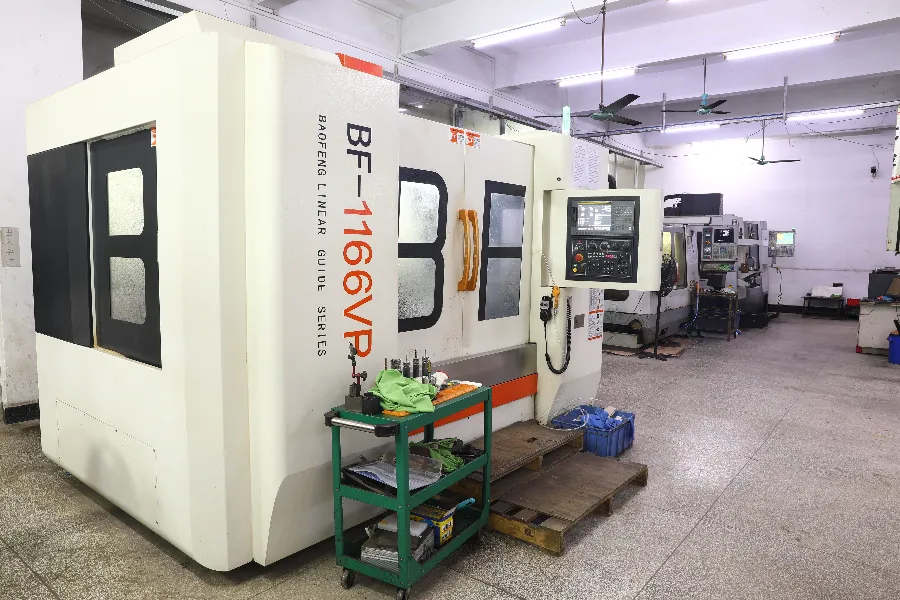
Assim que o DFM for aprovado, começa a fabricação do molde. Nosso centro interno de desenvolvimento de moldes CNC cuida de todo o processo:
Projeto de molde (3–5 dias)
Engenheiros de moldes criam o pacote de análise de fluxo de molde e projeto de molde. Isso inclui: layout da cavidade (cavidade única ou múltipla), projeto do canal de resfriamento, sistema de ejeção, mecanismos de ação secundária (se necessário), e acessórios de colocação de moldura para moldes de co-injeção.
Usinagem CNC (7–15 dias)
O bloco do molde é usinado em aço temperado (Grau P20 ou H13). Fresamento CNC, Música eletrônica (usinagem de descarga elétrica), e o corte do fio criam a geometria da cavidade com tolerância de ±0,02 mm. As cavidades das lentes requerem polimento de nível óptico.
Montagem de Molde & Teste (3–5 dias)
O molde concluído é montado, equipado, e testado na máquina de moldagem por injeção. Fotos iniciais (tiros curtos) verificar o fluxo de material, padrão de preenchimento, e dimensões da peça. Os ajustes são feitos até que o molde produza peças dentro da especificação.
Vantagem interna
Ter o desenvolvimento de moldes CNC internamente significa que controlamos o cronograma. Oficinas externas de moldes adicionam sobrecarga de comunicação e atrasos nas filas. Nosso prazo de entrega típico do molde é de 15 a 25 dias para uma máscara padrão de lente única; 20–30 dias para um molde de co-injeção com sistema de colocação de moldura.
Fase 4–5: Amostragem & Aprovação
Amostras T1 (Primeiros Artigos)
As primeiras amostras do novo molde são medidas e inspecionadas de acordo com as especificações do projeto original. Nós fornecemos:
- Relatório dimensional (dimensões principais medidas com CMM ou calibradores)
- Relatório de inspeção visual (qualidade da superfície, clarão, marcas de pia, tiros curtos)
- Teste funcional (ajuste de montagem, flexibilidade de saia, clareza da lente)
- Certificados de materiais (lote de resina, lote de silicone, teste de dureza)
Você recebe de 3 a 5 amostras com o relatório de inspeção completo. Revise as amostras de acordo com seus requisitos e forneça feedback. Solicitações de ajuste comuns: suavidade da saia (ajustar a dureza do silicone ±5 Shore A), posição da alça da cinta (±2mm), correspondência de cores (Verificação Pantone).
Amostras T2 (Revisão)
Se as amostras T1 exigirem alterações, o molde é modificado e amostras T2 são produzidas. A maioria dos projetos é concluída em 1–2 rodadas de amostragem. Projetos complexos com requisitos cosméticos rigorosos podem exigir 3 rodadas.
Fase 6: Amostra Dourada & Pré-produção
Depois que as amostras forem aprovadas, ambas as partes assinam um “amostra dourada” — a referência física que define a qualidade aceitável para produção em massa. A amostra dourada é lacrada e mantida na linha de produção. Cada unidade produzida é comparada com ela durante o CQ.
Fase 7: Produção em massa (30–60 dias)
Cronograma de Produção
| Etapa | Duração | Portão de controle de qualidade |
|---|---|---|
| Aquisição de materiais (Resina PC, LSR, vidro temperado, alças) | 5–10 dias | QI: inspeção de entrada de material |
| Moldagem por injeção (quadros, saias) | 5–15 dias | IPQC: verificações dimensionais em processo |
| Corte e têmpera de lentes | 3–5 dias | QI: qualidade da borda da lente, clareza óptica |
| Conjunto (quadro + saia + lente + alça) | 5–10 dias | IPQC: ajuste de montagem, teste de vedação |
| Inspeção final | 3–5 dias | CQF: 100% visual + Teste funcional AQL |
| Embalagem e rotulagem | 3–5 dias | OCC: auditoria pré-embarque |
Controle de qualidade: Sistema de Quatro Portas
| Portão | Nome | O que acontece |
|---|---|---|
| 1 | QI (Controle de qualidade de entrada) | Matérias-primas inspecionadas: dureza do lote de silicone, qualidade da borda da lente de vidro, Verificação do grau de resina de PC |
| 2 | IPQC (Controle de qualidade em processo) | Verificações em linha durante a moldagem e montagem: força de ligação da saia, alinhamento da lente, função da válvula snorkel |
| 3 | CQF (Controle de Qualidade Final) | 100% inspeção ou amostragem AQL após a montagem: teste de estanqueidade, teste de duração antiembaçante, inspeção visual |
| 4 | OCC (Controle de qualidade de saída) | Auditoria pré-embarque: integridade da embalagem, precisão de rotulagem, verificação de quantidade, testes de função aleatória |
Quantidade mínima, Preços & Condições de pagamento
| Item | Termos Padrão |
|---|---|
| Quantidade mínima (design personalizado) | 300 peças por cor |
| Quantidade mínima (projeto de estoque, marca personalizada) | 50–100 unidades |
| Custo do molde | $1,500–$ 5.000 por componente (dependendo da complexidade) |
| Custo da amostra | $100–$500 (reembolsado contra o primeiro pedido acima de MOQ) |
| Prazo de produção | 30–60 dias após a aprovação da amostra |
| Condições de pagamento | 30% depósito, 70% antes do envio (padrão); negociável para pedidos repetidos |
Perguntas frequentes
Posso visitar a fábrica durante a produção?
Sim. Congratulamo-nos com visitas à fábrica para testes de moldes, aprovação de amostra, e inspeção pré-embarque. Agende pelo menos 2 semanas de antecedência para que possamos organizar o tour da linha de produção e demonstração de controle de qualidade.
E se eu precisar modificar o design após o início da produção?
Pequenas modificações (mudança de cor, ajuste da alça) geralmente pode ser acomodado sem interromper a produção. Principais modificações (geometria do quadro, tamanho da lente) exigir mudanças de molde e uma nova rodada de amostragem. Quanto mais cedo você finalizar o design, mais econômico será o projeto.
Você fornece suporte contínuo após o primeiro pedido?
Sim. Mantemos seu molde em nosso depósito. Os novos pedidos usam o mesmo molde comprovado - não é necessária nova amostragem, a menos que você solicite alterações. O prazo de entrega do novo pedido é normalmente de aproximadamente 30 dias (mais rápido que o primeiro pedido, pois o molde é comprovado e os parâmetros do processo são definidos).